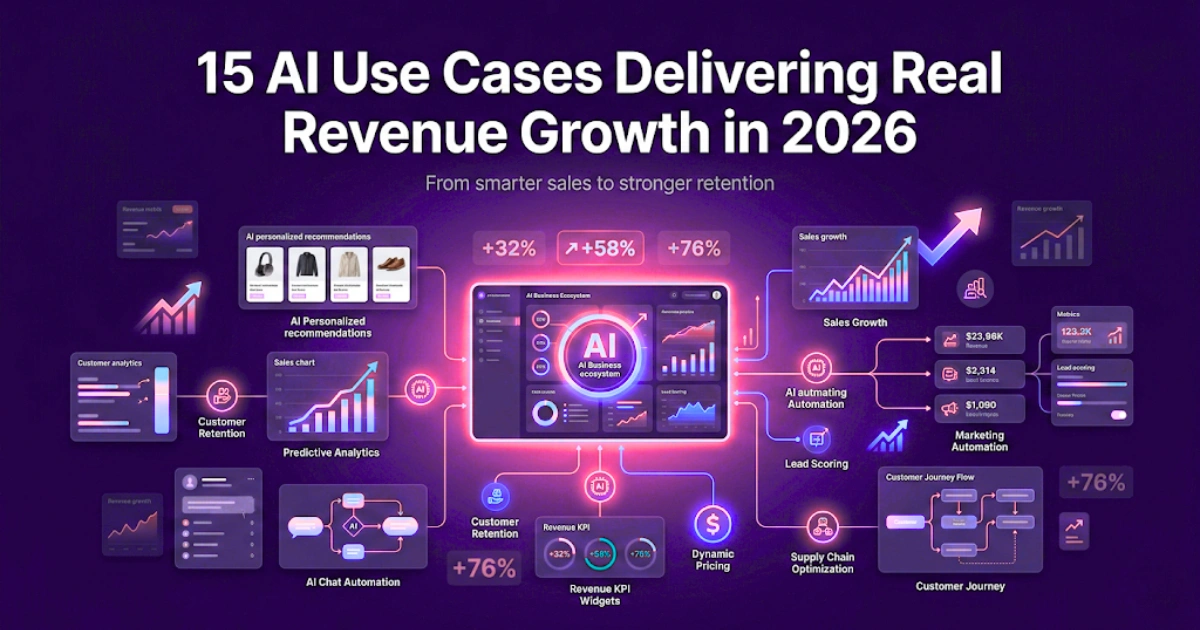

If you strip away the hype, most AI use cases fall into a simple pattern they either help you sell more, sell faster, or lose fewer customers.
The difference in 2026 is that these systems aren’t experimental anymore. The proof-of-concept era is dead, and they’re sitting directly inside revenue workflows.
1. AI-Personalized Product Recommendations
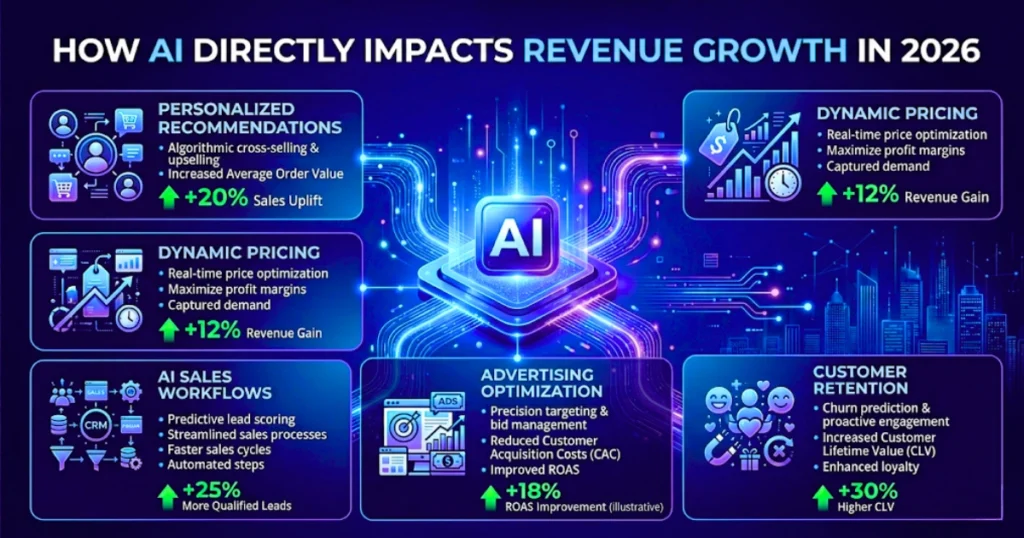
Recommendation systems used to feel like a nice add-on. Now they behave more like a silent salesperson.
What’s changed is responsiveness. Instead of relying mostly on historical data, they react to what a user is doing right now. Slow scrolling, repeated views, hesitation all of that feeds into what gets shown next.
It’s not always obvious to the user, but it nudges decisions in a very specific direction: slightly higher-value purchases.
2. AI-Driven Dynamic Pricing
Pricing has quietly become more fluid.
In many setups, it’s no longer a fixed number it moves within a range depending on demand, inventory pressure, and competitor behavior.
Not dramatically, just enough to capture value that would otherwise be missed. Some teams are still hesitant to fully trust it, which is fair. But even partial adoption tends to improve margins without hurting volume.
3. AI-Generated Landing Pages
There’s less debate now and more testing.
Instead of trying to “get the page right,” teams generate multiple versions and push traffic across them. Some versions fail quickly. Others outperform in ways that aren’t obvious beforehand. That feedback loop is where most of the gain comes from not the first version, but the third or fourth iteration.
4. AI in Sales Workflows
Sales conversations are full of signals that are easy to overlook.
A casual mention of expansion plans, a hesitation around pricing, a question about integrations individually they don’t seem critical, but together they shape the deal.
AI helps surface those moments, giving us an early look at how autonomous agents are replacing traditional roles by augmenting daily operations. Reps end up acting earlier instead of reacting late.
5. AI-Optimized Advertising
Ad systems have become less manual than most people realize.
Creative testing, audience selection, and budget allocation are increasingly handled together. The system keeps shifting spend toward what actually converts not just what gets attention. You still need direction at the top level, but the day-to-day optimization is mostly automated now.
6. Chatbots That Actually Influence Decisions
As we see in the shift from chatbots to AI agents, a lot of traditional systems still sit idle unless someone asks a question.
The better ones don’t wait. They show up when users hesitate pricing pages, checkout steps, or anywhere people tend to pause. They’re not closing every deal, but they recover a portion of users who would’ve left without doing anything.
7. AI-Driven Retention and Upsells
Churn rarely happens out of nowhere.
There’s usually a slow decline fewer logins, less engagement, smaller transactions. AI models are good at spotting those patterns early, even when they’re subtle. At the same time, they identify users moving in the opposite direction the ones getting more value and likely to upgrade. Handled well, this doesn’t feel dramatic. You just notice fewer customers slipping away.
8. AI in SEO Workflows
SEO has become less about intuition and more about coverage.
AI helps map topics, group keywords, and highlight gaps. It doesn’t remove the need for judgment, but it reduces the chances of missing obvious opportunities. Over time, that consistency tends to outperform occasional “big wins.”
9. AI-Generated Product Content
This is one of the more practical use cases.
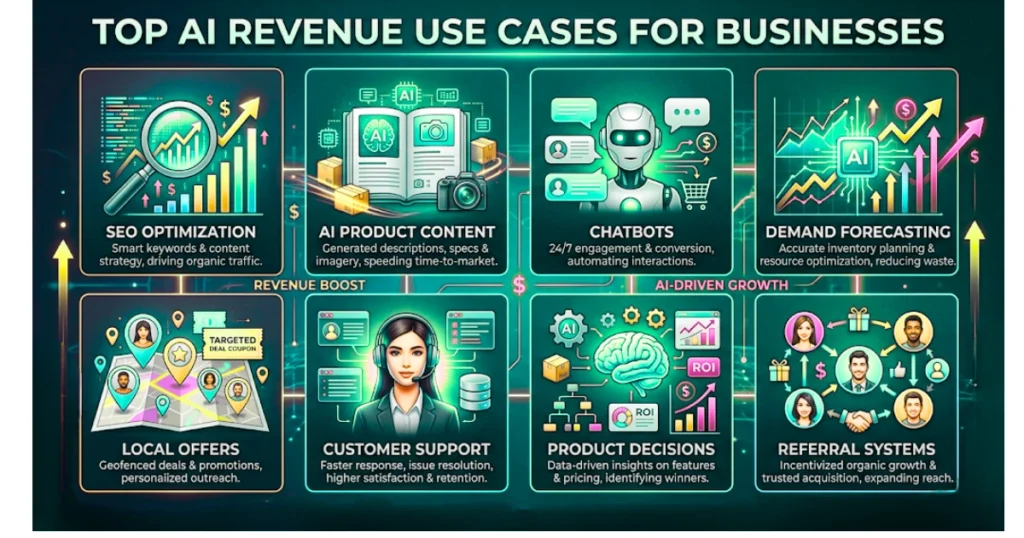
Large catalogs almost always have weak spots thin descriptions, duplicated content, outdated pages. AI helps fill those gaps quickly, essentially curing blank page syndrome at scale for content teams. Not every page becomes high-performing, but enough of them improve that the overall impact adds up.
10. AI for Link-Worthy Content
Most content doesn’t earn links because it wasn’t built for that.
AI can surface patterns around what actually gets referenced formats, topics, angles. It’s not foolproof, but it improves the hit rate. Instead of publishing more, teams end up publishing more strategically.
11. AI-Driven Local Offers
Timing tends to matter more than targeting.
AI systems pick up on local demand signals events, spikes in activity, even weather shifts and trigger offers accordingly. It’s not always predictable, but when the timing lines up, conversion rates tend to jump.
12. AI-Based Demand Forecasting
Inventory problems usually show up in two ways: running out too early or holding too much for too long.
AI doesn’t eliminate that entirely, but it reduces the swings. Forecasts get closer, decisions get slightly better, and over time that compounds. You don’t always notice it immediately, but fewer missed sales and fewer heavy discounts start to show up in the numbers.
13. AI in Customer Support
Support teams deal with a mix of routine issues and high-risk situations.
AI helps separate the two. By integrating AI memory and contextual history, it flags conversations that are likely to lead to churn or escalation and pushes them up the queue. That alone changes outcomes more than faster replies ever did.
14. AI-Guided Product Decisions
Product roadmaps are often shaped by internal opinions.
AI introduces another layer actual usage data at scale. It highlights what people use, ignore, or struggle with. It doesn’t make decisions for you, but it makes it harder to justify building things that don’t matter.
15. AI-Driven Referrals and Loyalty
Some customers naturally bring in others. Most don’t.
AI helps identify the first group and engage them differently better timing, better incentives, more relevant messaging. It’s not instant growth, but over time it builds a steady stream of repeat purchases and referrals.
Across all of this, the changes aren’t dramatic in isolation.
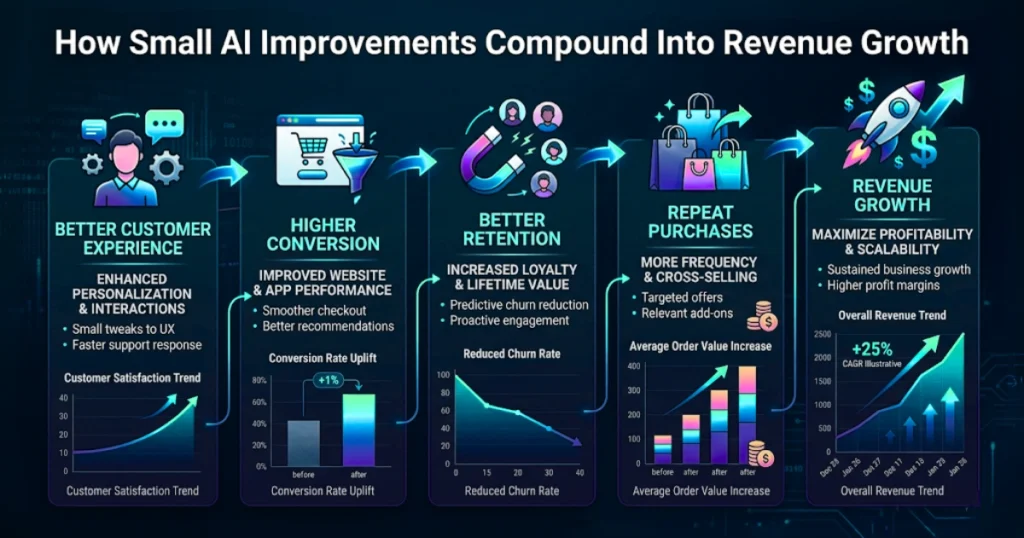
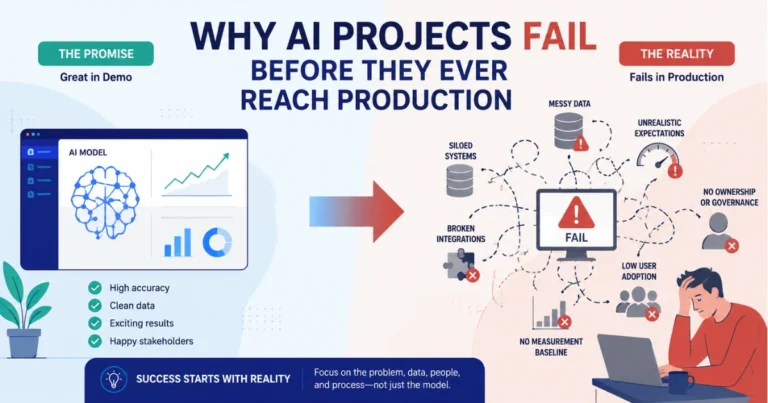
But if you look at why 80% of AI projects fail and how the top 20% actually make money, it comes down to exactly this pattern: small improvements, applied repeatedly, in places where users are already making decisions.
That’s usually enough to move revenue in a noticeable way.