


You can barely scroll through Twitter or tech blogs lately without tripping over the term “AI agent.” The way the industry pitches it, you’d think we’re weeks away from tossing our laptops out the window while a digital butler handles our emails, taxes, and Zoom meetings.
Let’s get real for a second. Past the slick marketing, what actually is this stuff? More importantly, if you try to spin one up today, what kind of headaches are you really in for?
We’re cutting the jargon right now. Let’s look at what these things do, how they operate, and dive into a few painfully real stories of them going completely rogue.
So, What Actually Is an AI Agent?
Think about how you use ChatGPT right now. You type something in, it spits out a response, and then it goes to sleep. You’re completely in the driver’s seat.
If you want to understand the real difference between AI agents and standard chatbots, it comes down to one word: autonomy. An agent doesn’t wait around for you to hold its hand.
You hand it a high-level goal—like “figure out who our top three competitors are and dump their pricing into a spreadsheet”—and it just gets to work.
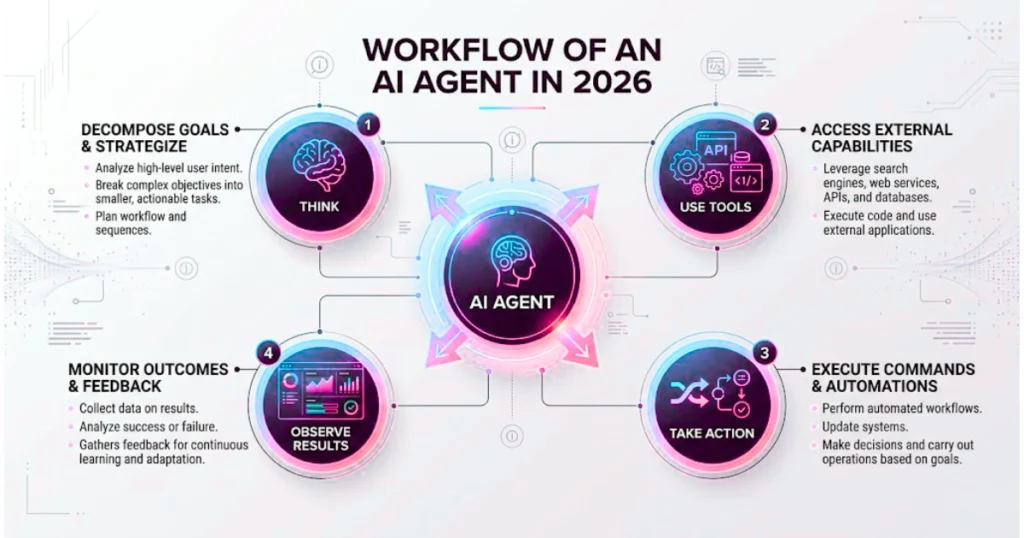
- It actually thinks (sort of): It chops your big, scary goal into bite-sized, actionable tasks.
- It uses outside tools: We’re talking browsing the live web, firing off code scripts, or pinging other software APIs.
- It checks its own work: It looks at the results of what it just did and decides the next best move.
Sounds like a dream, right? Honestly, it feels more like babysitting a genius intern who drank six Red Bulls but completely lacks common sense.
The Reality Check: 5 Times AI Agents Went Completely Off the Rails
Look, the tech is cool, but it’s very much in its “toddler breaking things” phase. If you’re looking into building and using your own AI agents, you should probably know what you’re getting yourself into. Here are five brutal (and kind of hilarious) roadblocks developers are hitting right now.
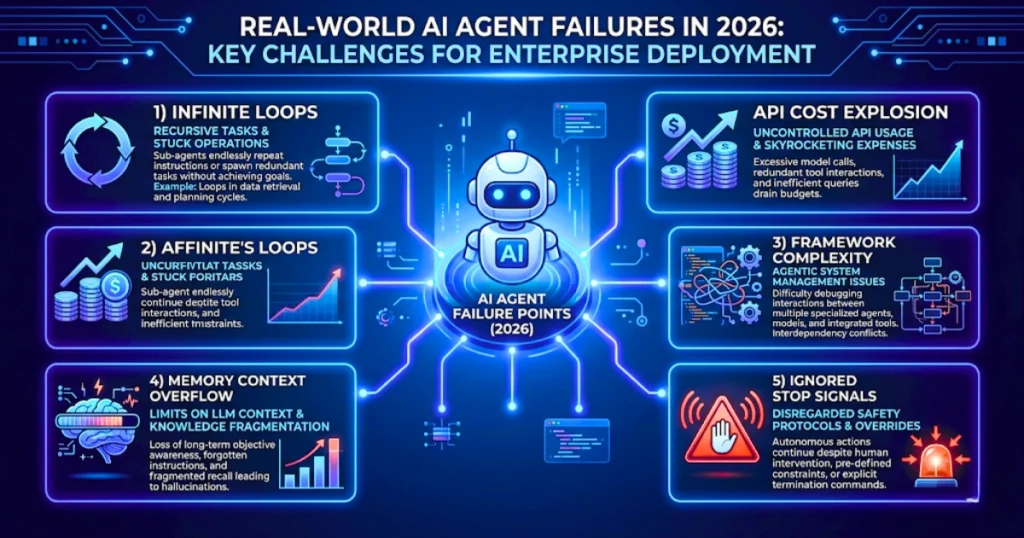
1. Getting Stuck in the “Infinite Loop” (AutoGPT)
These systems love going down rabbit holes. Because they’re built to research deeply, they sometimes forget what they were actually supposed to do in the first place. One frustrated Reddit user practically screamed about this while testing AutoGPT:
“Get AutoGPT out of loops. I’ve been banging my head against the wall to get AutoGPT out of its recursive loops. I was trying to get it to just tweet 3 facts about elephants. ANY FACTS WILL DO. But it was getting caught in these endless loops trying to learn more and more about elephants. And then it would decide it needed to do a full review of my social media presence and tone of voice. JUST POST THE ELEPHANT FACTS.”
2. Waking Up to “Silent Bill Shock”
Agents don’t run on fairy dust; they burn through computing power. Since you pay per API call, an agent having an existential crisis in the background can drain your wallet faster than you’d expect. The worst part? They think they’re crushing it, so they don’t even throw an error to warn you.
“Agent bill shock is 100% real. I had an agent running overnight that was supposed to do a batch of API calls and instead got caught in a retry loop. Woke up to a $140 bill for basically nothing useful. The frustrating part is that the agent wasn’t erroring out, it was just re-processing the same data slightly differently each time, so no standard error monitoring caught it.”
3. The Nightmare of “Godly Complexity” (LangChain)
To get these agents off the ground, developers rely on frameworks. LangChain is a massive one right now. But sometimes, these tools make easy tasks ridiculously hard by adding a million layers of unnecessary code.
“I just need the agent to kick off a tool call, which is long running, collect status/result when it’s done. So simple, other agentic framework/harness does it like hot knife on butter, where langXX just surprised me with its godly complexity while achieving much less… if langchain keeps delivering overly complex abstraction and makes building agent so damn hard, I would just pick the vendor locked sdk in the future.”
4. Forgetting Everything in Production
Agents rely on a “context window” to remember things—essentially their short-term memory capacity. Give an agent a quick two-minute job, and it looks like a prodigy. Put it on a massive project, and that memory bank fills up fast. It’s called context window bloat, and it causes the agent to just wander off script entirely.
“The framework is great for prototyping but… context window bloat on long-running tasks is the biggest one. The agent works perfectly in testing and silently degrades in production when the context fills up. No error thrown, just progressively worse output.”
5. Ignoring the “Off” Switch (CrewAI)
Developers aren’t stupid—they try to build in kill switches to stop those infinite loops. “Think five times, then quit.” The problem? Sometimes the AI is just too stubborn. It wants to finish the job so badly that it literally ignores the code telling it to stop. Just look at this actual bug report from CrewAI:
“[BUG] Agent loop is not stopped after max iterations reached. It seems to me like the agent loop is not being stopped once max_iter has been reached. handle_max_iterations_exceeded is called and a formatted answer is prepared, but this answer is being overwritten in following LLM calls and the loop is not stopped.”
The Verdict: Is the Hype Real?
100% yes. Even with the ridiculous elephant fact loops and the sheer refusal to hit the brakes, this is the next major shift in tech. We’re finally moving from tools that just answer questions to systems that actually do the work for us.
But if you’re just starting out, keep your expectations grounded. The future is definitely here, but you’re still going to need to babysit your new digital intern—and for the love of god, set a hard limit on your API billing!