
The software engineering pipeline is fundamentally changing right now, at least in the way the industry has traditionally understood it. For years, the career path was incredibly predictable. You graduate, you land a junior role writing boilerplate code, running basic SQL queries, or setting up unit tests, and you slowly work your way up the corporate ladder.
That specific entry-level rung has effectively been sawed off. We are currently looking at a labor market where major tech companies have slashed junior job postings by anywhere from 25% to 55% compared to their peak hiring years.
When large language models and autonomous agents can write their own test cases and debug basic software frameworks independently with tools like the 7 Best AI Coding Assistants for Developers, what exactly is a human engineer supposed to do? The answer is shifting away from raw technical output and moving toward highly contextual problem-solving.
Finding the Human Anchor in the Code
This is the exact dilemma facing the current generation of tech workers, and the people building the foundation models are keenly aware of the fallout.
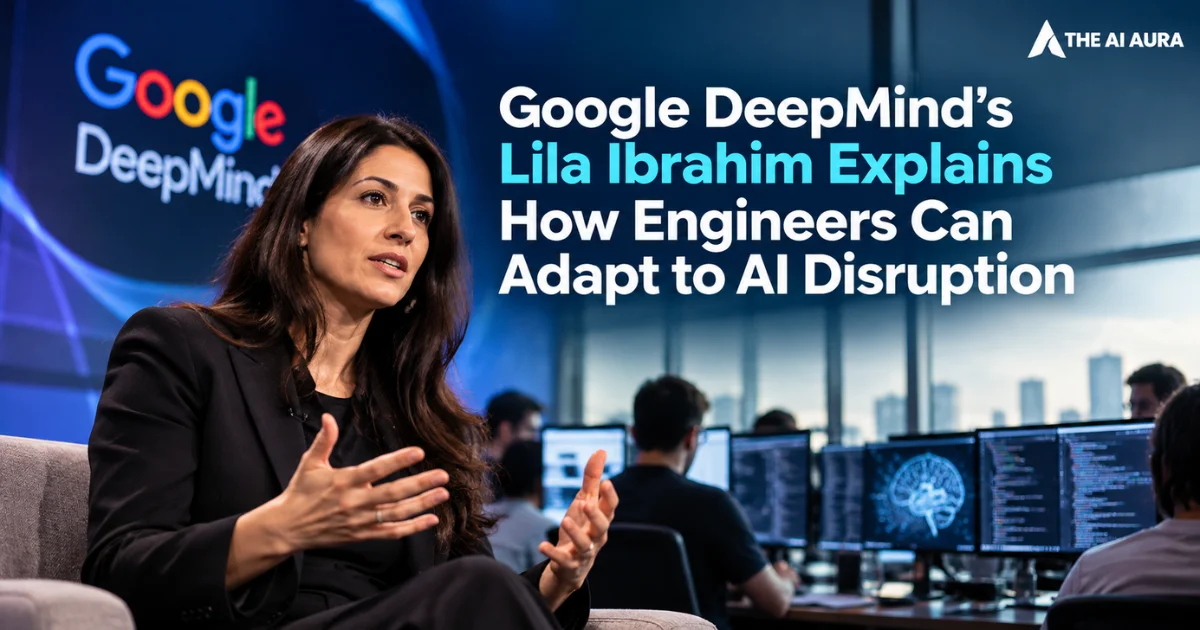
According to a recent discussion at NDTV on adapting to these industry shifts, Google DeepMind’s Chief AI Readiness Officer Lila Ibrahim sat down to address exactly how fresh graduates can survive this massive market transition.
Her background as an electrical engineer gives her perspective a highly practical edge. She isn’t just preaching high-level corporate theory; she is looking directly at the daily mechanics of the job itself.
Her role at Google’s AI arm involves preparing governments and institutions for the societal impact of powerful AI systems, so she understands the macro trends better than most. Ibrahim argues that the most critical question young techies need to ask themselves right now is what they are bringing to a task that is distinctly and stubbornly human.
If a specific coding problem only requires raw computation or syntax generation, an AI will simply do it faster and cheaper.
The survival mechanism for human engineers lies entirely in the spaces between the code. It is about understanding the cultural context of a product, navigating the messy reality of user needs, and applying a unique, personal perspective to problem-solving.
This isn’t just a survival guide for job seekers. Ibrahim insists it is the exact criteria companies must begin using for hiring and talent development moving forward. We have to start actively rewarding the nuance that algorithms cannot replicate.
The End of the Boilerplate Era
The statistics backing up this industry shift are frankly staggering, especially in massive global talent hubs. A June 2026 joint global research study by Cognizant and Pearson titled “The AI Workforce Pulse: The Adaptability Imperative” revealed that roughly 37% of entry-level tech tasks in India are already being handled or heavily augmented by artificial intelligence.
As clear evidence that AI Employees Are Here: How Autonomous Agents Are Replacing Traditional Roles in 2026, traditional on-campus hiring drives have faced multi-year declines because the sheer volume of human bodies previously needed to maintain basic digital infrastructure has evaporated. Fresher roles now make up only a tiny fraction of active tech openings.
We have to stop pretending that simply learning a programming language is enough to guarantee a long-term career. Artificial intelligence has entirely commoditized syntax.
What remains valuable is strategy and human empathy. An engineer’s job is no longer to act as a translation layer between human intent and machine execution, because the AI handles the translation phase perfectly well on its own.
The engineer’s new mandate is to define the core intent, understand the edge cases of human behavior, and piece together complex technical systems that actually serve real people. Those who double down on these deeply human traits will find themselves leading the engineering teams of the future.