
The influence of technology in the workplace has shifted dramatically with the integration of artificial intelligence. We are well past the point of treating automation as a futuristic concept. Today, algorithms handle coding, draft legal contracts, analyze massive datasets, and manage customer service queues with frightening efficiency.
Naturally, this rapid capability expansion triggers anxiety about widespread job displacement. However, understanding how artificial intelligence actually works reveals its hard limitations.
Algorithms are brilliant at pattern recognition and predictive data matching, but inside AI: how modern language models really work. shows that they lack true comprehension, physical adaptability, and emotional resonance.
The narrative that robots are coming for every paycheck ignores the fundamental nature of complex human labor. Instead of wiping out the workforce, technology is isolating routine tasks while placing a massive premium on roles that demand high emotional intelligence, physical dexterity, and strategic creativity.
The Irreplaceable Power of Emotional Intelligence
Artificial intelligence thrives in environments governed by rules and historical data, but human interaction is notoriously messy and unpredictable. This is exactly why the healthcare and education sectors remain fiercely protected from total automation.
A medical system can monitor vital signs and cross-reference a patient’s symptoms against millions of medical journals in seconds. Yet, when it comes time to deliver a difficult diagnosis or read the subtle behavioral shifts of a patient in pain, the algorithm is entirely useless. Nurses and physicians make critical, ethical decisions based on nuance that machines simply cannot perceive.
The same principle applies to mental health and social work. Psychotherapy requires a deep, intuitive understanding of individual circumstances and non-verbal cues. Building trust cannot be automated.
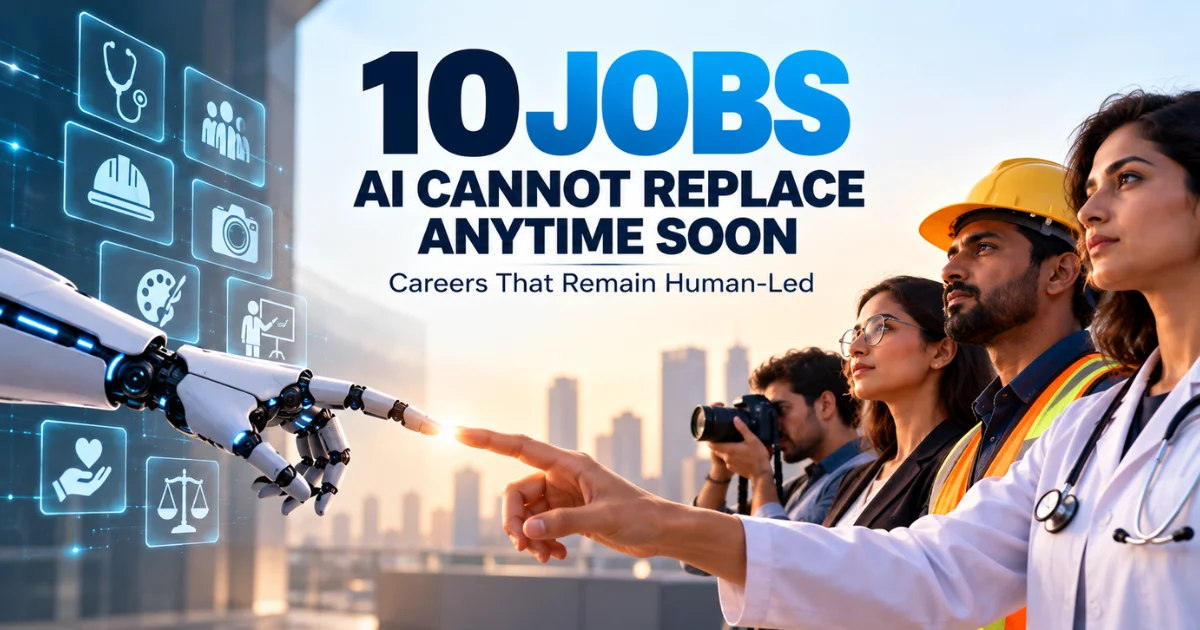
According to a recent analysis at Rediff highlighting the 10 jobs AI cannot replace anytime soon, roles grounded in empathy and emotional support are highly insulated against technological shifts.
Instructors and educators fall into this exact category. While an application can generate a customized lesson plan or instantly grade a test, it cannot inspire a struggling student or identify the unspoken emotional hurdles holding a child back in a classroom. True education is about fostering social connection and curiosity, a fundamentally human exchange.
Navigating the Chaos of Physical Realities
Beyond the realm of empathy, AI struggles immensely with the unpredictability of the physical world. Software operates in pristine digital spaces, but skilled trades operate in the chaotic real world. Consider the daily reality of electricians, plumbers, and mechanics.
No two worksites are ever identical. A plumber navigating a decayed pipe behind an irregularly shaped, undocumented wall must rely on tactile feedback, field experience, and improvisation. While diagnostic software can point a skilled technician toward a failing vehicle component, the actual physical extraction, troubleshooting, and repair remain entirely manual.
This physical unpredictability extends to high-stakes environments. Construction specialists and builders constantly adapt to sudden weather shifts, material shortages, and immediate structural complications on the site.
Drones and robotic tools might assist in surveying hazardous areas, but they lack the agility to safely navigate and adjust to an active, ever-changing construction zone.
Emergency responders face even greater extremes. Paramedics and firefighters make split-second decisions with limited information under massive psychological pressure. Technology might optimize dispatch routes, but human intervention is required to physically pull a person to safety.
Even in the modern creative sphere, where AI generates art in seconds, the role of a creative director remains vital. An algorithm can produce an image, but understanding the automation ceiling: where AI actually stops adding business value makes it clear that human cultural awareness, aesthetic taste, and strategic vision are required to decide if that work truly connects with an audience.
The future workplace belongs to those who let machines handle the routine while leaning into the uniquely human traits of adaptability and insight.