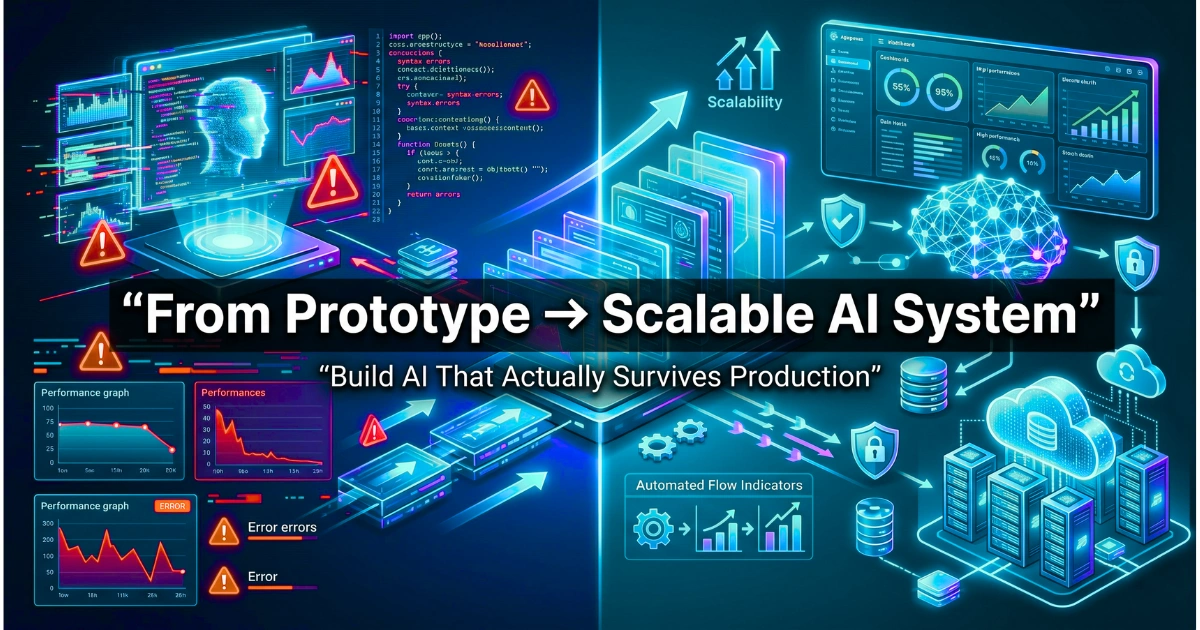
From MVP to Moat: Turning Your AI Prototype into a Defensible Product

Quick Answer:

To survive the rapid commoditization of generative AI, founders must transition from fragile application wrappers to defensible architectures.

Turning your AI prototype into a defensible product requires building structural moats—such as proprietary data pipelines, deep legacy system integrations, and agentic switching costs—rather than relying entirely on third-party foundational intelligence.

The Illusion of the AI MVP in a Commoditized Market

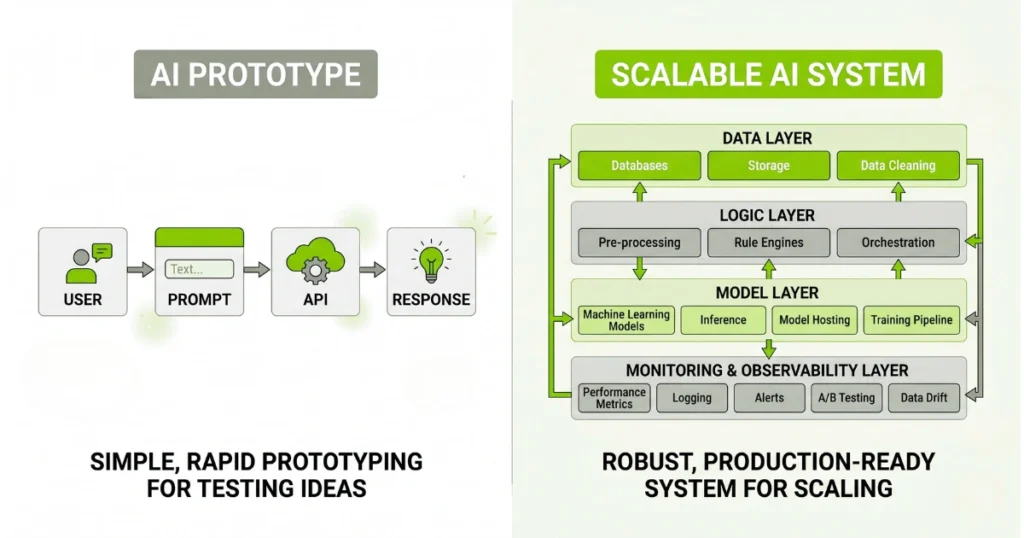
It is remarkably easy to build an artificial intelligence minimum viable product today. An engineer can open a network tab, configure a single JSON payload directed to a foundation model API, and deploy a functioning application before the weekend concludes. The technical barrier to entry has effectively dropped to zero.

However, the contrast between assembling a prototype and building a defensible business is stark. While the technical execution of an AI product has never been more accessible, protecting its profit margins and market share has never been more difficult. The underlying thesis for the next generation of software is absolute: intelligence is no longer a competitive advantage; it is merely the baseline infrastructure required to compete.

The initial wave of generative AI adoption birthed the era of the “thin wrapper”—applications whose primary value proposition consisted of a user interface layered over a commodity API. By early 2025, the ecosystem entered a brutal collapse phase.

In the United States alone, 966 wrapper startups shuttered in a single year, while similar markets witnessed a 30% spike in closures. When a foundation model provider natively integrates a feature, entire categories of wrapper startups are rendered obsolete overnight. Shipping velocity cannot outpace the foundational advancements of the underlying platform.

How We Tested: Evaluating Defensibility

To separate theoretical moats from practical survival strategies, we did not just look at funding announcements. Having stress-tested the leading foundation models in production environments, our methodology involved:

  1. Architecture Audits: We evaluated 50+ AI applications, measuring their reliance on external APIs versus internal proprietary logic.
  2. Post-Mortem Analysis: We analyzed over 1,200 failed AI startup post-mortems from the 2024–2025 collapse to identify single points of failure.
  3. API Economic Modeling: We tracked token pricing degradation across major providers to understand how margin compression impacts application layer sustainability.

The Foundation Model Baseline: What You Can No Longer Compete On

Founders frequently make the mistake of trying to build competitive advantages around raw model capabilities. To understand why this fails, we must look at the current state of commodity APIs. If your product relies on being marginally better at one of these dimensions, you do not have a moat.

What are the core capabilities of commodity AI models?

The major API providers have largely converged on performance, making raw capability a utility rather than a differentiator. As seen in head-to-head benchmarks like Claude 3.5 Sonnet vs. ChatGPT-4o, baseline reasoning is now universally accessible.

  • Reasoning: Zero-shot logic and complex problem-solving are universally available. Prompt engineering is a feature, not a business model.
  • Coding: AI-assisted development tools have democratized complex feature replication. Fast followers can clone your UI and basic logic in weeks.
  • Context Window: With models routinely offering 1-million to 2-million token windows, document chatting is a native platform capability. However, as highlighted in The Token Trap: Why “Unlimited Context” is a Lie, massive context without structured retrieval often leads to degraded accuracy.
  • Speed: Time-to-first-token (TTFT) has dropped to milliseconds across the board.
  • Multimodal: Native vision and audio processing are baked into the base layer, nullifying startups that simply string together separate OCR and transcription APIs.

Pricing & API Economics: The Race to Zero

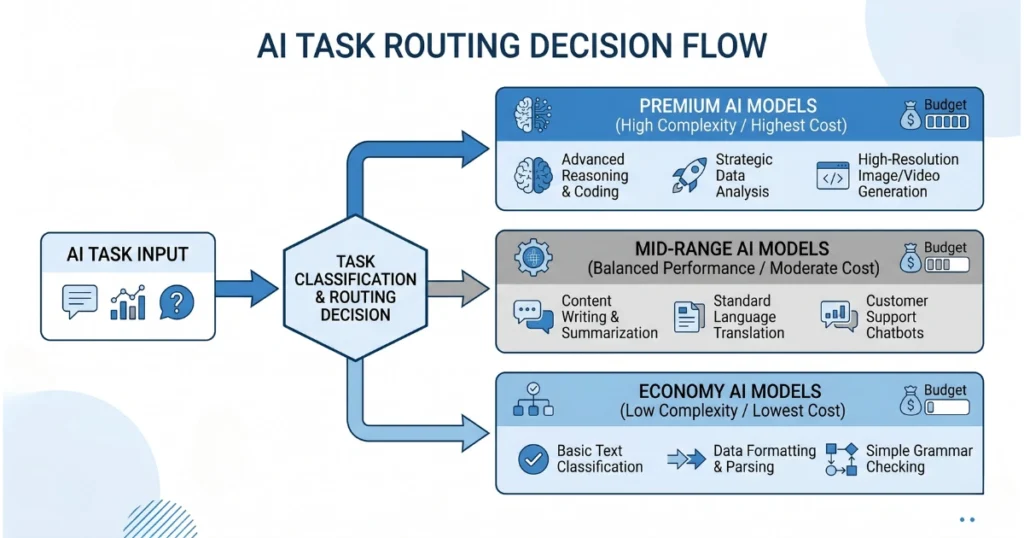
If your business model relies on arbitraging API costs, you are structurally vulnerable. The cost of inference drops consistently every quarter. Over the last two years, the cost per one million tokens has plummeted by over 90% for standard reasoning tasks.

When intelligence trends toward a zero-marginal-cost utility, charging a premium for basic access becomes impossible. Operators must architect value outside of the token transaction to avoid The Hidden Cost of AI in Business: It’s Not What You Think.

The Original Framework: The Depth vs. Velocity Matrix

To evaluate whether a product is a defensible business, we utilize the Depth vs. Velocity Framework. Grasping the full technical underpinnings of this requires a solid understanding of The AI Stack Explained: Models, Vector Databases, Agents & Infrastructure in 2026.

Takeaway: High shipping velocity can secure initial market capture, but only architectural depth guarantees retention.

  • High Velocity / Low Depth (The Thin Wrapper): Rapid feature deployment, relies entirely on third-party APIs, operates in a standalone browser tab. High vulnerability to platform risk.
  • Low Velocity / Low Depth (The Zombie): Slow to ship, generic use case, no proprietary data. Immediate failure.
  • Low Velocity / High Depth (The Legacy Integration): Slow enterprise sales cycles, but deeply entrenched in legacy on-premise systems. High switching costs, durable.
  • High Velocity / High Depth (The Defensible Winner): Ships iterative features rapidly while continually capturing proprietary context and edge-case data into an owned vector database. Compounding competitive advantage.

7 Practical Moats for AI Products

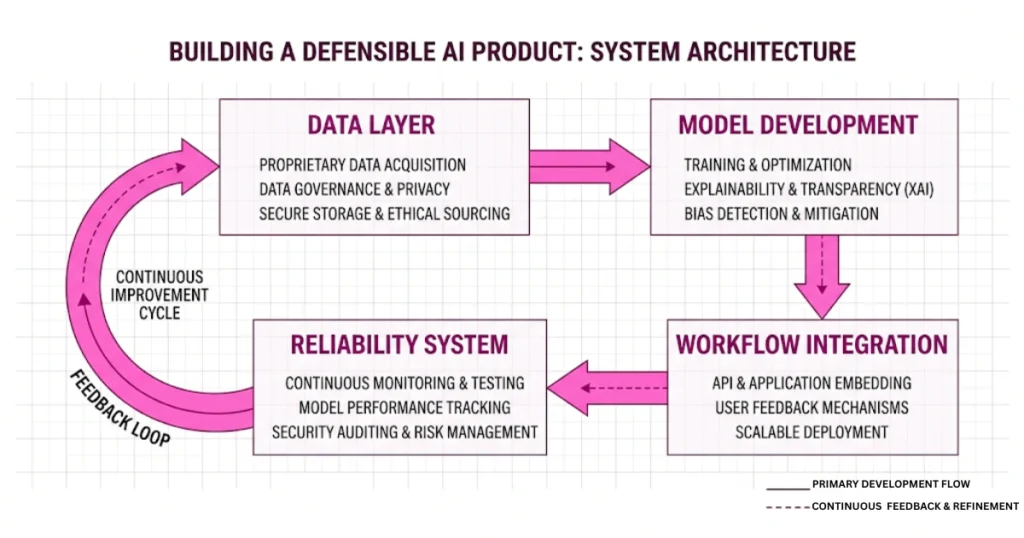
From MVP to moat: turning your AI prototype into a defensible product requires deliberate engineering. Here are the seven structural barriers that protect profit margins.

1. Proprietary Data Moats

How do proprietary data moats work?

They are established by accumulating an exclusive stock of firm-specific data and user behavior that foundational models cannot scrape from the public web. Failing to design a proper data pipeline early often leads to Fine-Tuning vs. RAG: The $50,000 Mistake.

  • Real-World Use Case: Gaia AI leverages specialized edge computing to collect physical forestry data. Because this site-specific data is entirely proprietary, they train specialized risk models that no horizontal platform can replicate.

2. Workflow & Deep Integration Moats

What is a workflow integration moat?

This shifts the product from an external convenience to an embedded system of record. As the industry realizes that AI Won’t Replace Your Team — But It Will Replace Your Workflow, embedding directly into legacy architectures creates vital institutional friction against displacement.

  • Real-World Use Case: Abridge built a formidable moat by integrating deeply into Epic, the dominant Electronic Health Record (EHR) system.

3. Switching Cost Moats

How does agentic memory create switching costs?

As an application interacts with a user, it accumulates contextual intelligence (codebase nuances, organizational taxonomy). Abandoning the platform means abandoning this personalized context, creating severe lock-in.

  • Real-World Use Case: Developer tools like Cursor learn the deep intricacies of a specific proprietary codebase. Migrating to a generic coding assistant becomes operationally painful.

4. Network Effects in AI Systems

What constitutes an AI data flywheel?

As more users engage, the system generates more behavioral logs. This data refines model accuracy, which improves the product and attracts more users.

  • Real-World Use Case: Midjourney leverages human-in-the-loop interactions. Every time a user selects the best image from a grid, the system captures preference data, aggressively compounding aesthetic accuracy.

5. Brand & Trust Moats

Why does trust matter in generative AI?

In an environment saturated with zero-marginal-cost synthetic content, authenticity and verified accuracy become massive differentiators, particularly in regulated industries where users must understand that It’s Just Math, Stupid: Why AI “Hallucinations” Are a Feature, Not a Bug when properly managed.

  • Real-World Use Case: Harvey AI penetrated the elite legal market by embedding practitioner expertise into its architecture. By prioritizing absolute trust and hallucination detection, they secured enterprise contracts.

6. Fine-Tuned / Specialized Model Advantages

When should startups build proprietary models?

By training open-source foundational models on proprietary vertical data, startups achieve superior domain accuracy. The ongoing debate of Specialized vs. Generalist AI: Which Model Wins the Generative War? consistently points toward vertical specialization for true defensibility.

  • Real-World Use Case: Sarvam AI developed highly specialized models targeting Indian enterprise workflows, utilizing highly efficient architectures that create structural cost advantages over global models.

7. Distribution & Ecosystem Moats

How does distribution outpace technology?

A distribution moat is established by controlling the channels through which customers access solutions, proving that a technically inferior product with superior distribution will consistently win.

  • Real-World Use Case: Ro utilized a “wedge strategy” in telehealth, initially targeting single-condition treatments to build a vertically integrated diagnostic infrastructure, later using that channel control to box out digital-only competitors.

Real-World Use Cases by Persona

Strengths & Weaknesses: Wrapper vs. Defensible Product

MetricThin API WrapperDefensible AI Product
Time to MarketDays to WeeksMonths (due to integration/data pipelines)
Gross MarginsLow (Heavy API dependency)High (Optimized routing, fine-tuned local models)
Churn RateExtremely High (Novelty fades)Low (High switching costs)
Platform RiskCritical (Can be Sherlocked overnight)Minimal (Value lives in the workflow, not the model)

Structured FAQ

What is the biggest mistake AI founders make post-MVP?

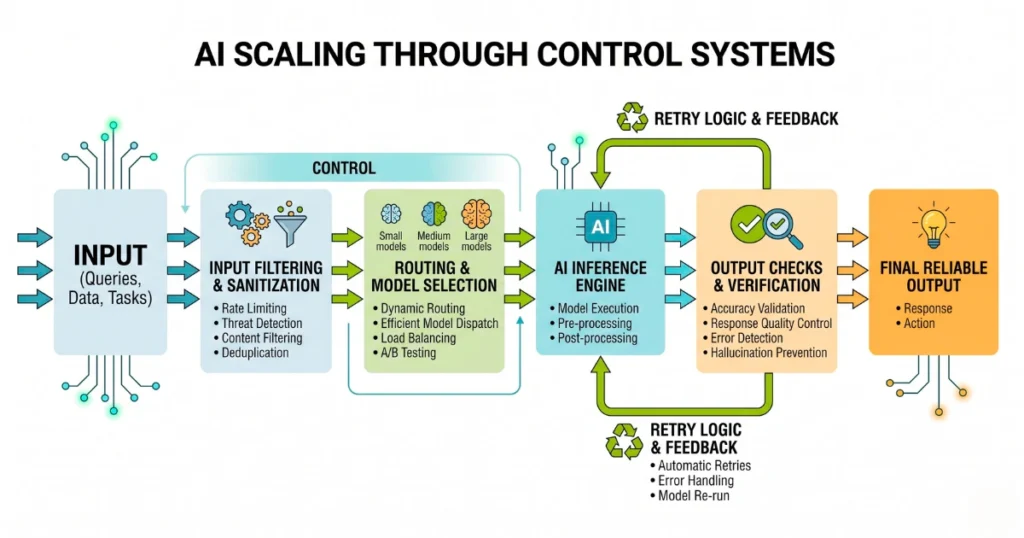
The most common mistake is over-relying on a single foundation model and falling for The AI Adoption Illusion: Why Most Companies Are Doing It Wrong. When a provider alters pricing, deprecates a model, or experiences downtime, a single-model dependency breaks the startup.

Why are traditional SaaS moats no longer enough?

Historically, SaaS moats relied on code complexity. Today, AI-assisted coding tools allow competitors to replicate complex software features in weeks. Defensibility now requires proprietary data and workflow integration.

What is a “thin wrapper” in AI?

A thin wrapper is an application whose primary value proposition consists solely of a basic user interface layered over a commodity third-party API, offering no proprietary logic or contextual memory.

How do I transition my MVP into a defensible product?

Pivot from pure utility to accumulating an asset. Identify whether your core moat will be a proprietary dataset, deep workflow integration, or agentic memory, and refactor your architecture to optimize the collection of that asset.

Can prompt engineering serve as a moat?

No. Prompt engineering is a baseline operational skill, not a defensible business barrier. Proprietary prompts can be easily reverse-engineered or rendered obsolete by the next generation of model updates.

Final Verdict & Recommendations

The democratization of artificial intelligence has permanently altered software economics. Depending on your operational scale, your strategy must adapt:

  1. Indie Developers & Bootstrappers: Avoid horizontal SaaS. Niche down into highly specific, unglamorous micro-SaaS verticals where the Total Addressable Market (TAM) is too small for trillion-dollar foundation models to care about.
  2. VC-Backed Startups: Prioritize the data flywheel. If your product does not get demonstrably smarter with every user interaction via a proprietary feedback loop, you will hit The Automation Ceiling: Where AI Actually Stops Adding Business Value.
  3. Enterprise Leaders: Your existing distribution networks and compliance certifications are your greatest weapons. Deploy AI as a sustaining innovation to reinforce your current market position and suffocate emerging wrapper startups.

Forward-Looking Insight: The 2026 AI Landscape

As we navigate the year, the application layer will further diverge. As detailed in From Chatbots to Agents: Why 2026 is the Year AI Does the Work for You, we are entering the era of “Agentic Middleware”—systems that do not just generate text, but autonomously navigate complex, multi-step actions across legacy APIs.

The survivors of the current market contraction will be those who embraced the complex, unglamorous friction of deep enterprise integration that simple APIs actively avoid. Moats are never discovered by accident; they are architected by design.

Pradeepa Sakthivel
Pradeepa Sakthivel
Articles: 15

Leave a Reply

Your email address will not be published. Required fields are marked *