
The evolution of artificial intelligence is rapidly shifting from reactive chatbots to proactive, continuous collaborators.
OpenAI marked this major milestone by launching Dots.
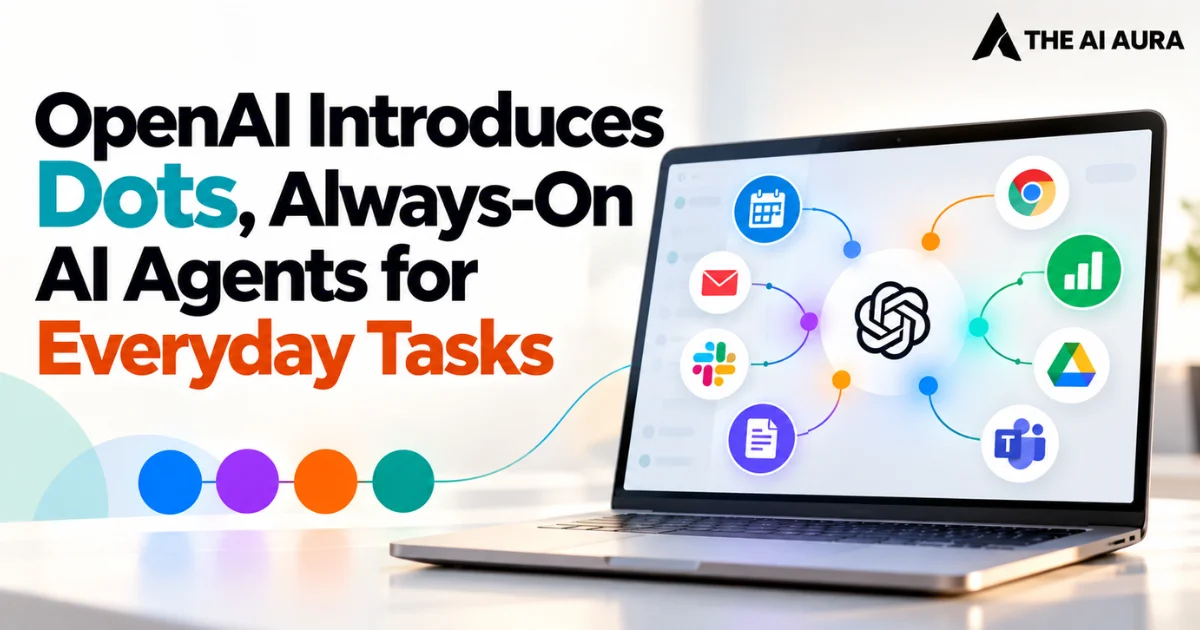
Dots represent a new class of always-on AI agents. They handle everyday routines without constant human supervision. Unlike traditional models that wait for prompts, a Dot acts like an autonomous digital coworker. Each agent runs on its own dedicated cloud computer.
Dots quickly learn your unique workflow and habits. They take over repetitive tasks so you can focus on higher-level strategy. For example, your Dot can investigate software bugs, turn designs into working apps, or draft client invoices.
How Autonomous Cloud Computing Changes the Game
To understand the mechanics behind this shift, you have to look at the underlying infrastructure. These agents do not just live within an isolated chat interface; they operate on their own virtual machines equipped with native web browsers.
According to the recent launch details provided by the company at OpenAI, this ecosystem is powered by the frontier intelligence of GPT-6 Astra and seamlessly connects to over 4,000 third-party applications.
You can interact with your agent through Slack, Microsoft Teams, voice calls, or desktop apps. The system maintains your context across every platform. You never need to repeat instructions.
Continuous background processing makes this workflow effective. When you step away from your computer, your Dot enters proactive research mode.
It scans your connected tools using read-only permissions to anticipate upcoming tasks. You can delegate multi-step projects across parallel threads. The agent delivers finished work and asks questions only when it requires critical guidance.
Enterprise Scaling and Built-In Safeguards
Autonomous workflows require strict security standards, especially in corporate settings. OpenAI separates each agent’s cloud environment from local hardware by default. Users must grant explicit permissions before systems can share files across environments.
Custom rules and automatic review systems govern agent behavior. They determine when an agent can act alone and when human approval is essential. Sensitive tasks like changing credentials always require manual confirmation. Furthermore, OpenAI never uses enterprise workspace data to train its foundation models.
Companies can also deploy specialized business agents. IT administrators configure these agents to handle procurement, billing, and contract reviews. Built-in integration with Microsoft Agent 365 ensures enterprise compliance across internal databases.
OpenAI is currently rolling out Dots to Pro, Business Premium, and Enterprise subscribers. This shift redefines digital productivity.
We are moving past the era of simply talking to artificial intelligence and entering a distinct phase where we employ it to work relentlessly in the background on our behalf.