
Most email marketing guides list tools they’ve never touched. I’m not doing that.
Over the past year, I ran campaigns across different niches—SaaS, e-commerce, and a couple of service businesses.
I put these tools through actual use: subject line testing, segmentation logic, send-time optimization, and deliverability tracking. The results weren’t always what the landing pages promised.
Here’s what I actually found.
Why “AI” in Email Marketing Still Confuses People
Before the list—a quick honest note.
Half the tools that slap “AI” on their homepage are just using simple conditional logic dressed up in marketing language—a classic example of the AI adoption illusion.
Real AI in email marketing should do at least one of these: predict the best time to send based on individual subscriber behavior, generate or optimize copy using language models, segment audiences dynamically as behavior changes, or surface insights that would take you hours to find manually.
Keep that filter in mind as you read.
Quick Comparison Table
| Tool | Best For | AI Features (Real Ones) | Starting Price | Free Plan |
| ActiveCampaign | CRM + email automation | Predictive sending, win probability, generative content | $15/mo | No (14-day trial) |
| Klaviyo | E-commerce brands | Predictive analytics, CLV modeling, product recommendations | $20/mo | Yes (up to 500 contacts) |
| HubSpot | B2B/inbound marketing | Content assistant, AI reporting, smart send times | $18/mo | Yes (limited) |
| Mailchimp | Small businesses & beginners | Subject line assistant, send-time optimization, Content Optimizer | $13/mo | Yes (up to 500) |
| Brevo (ex-Sendinblue) | Budget-conscious teams | Send-time AI, transactional email AI scoring | Free plan available | Yes (300 emails/day) |
| GetResponse | Marketers + course creators | AI email generator, funnel builder, autoresponder AI | $19/mo | No (30-day trial) |
| Seventh Sense | HubSpot/Marketo users only | Send-time AI (specialist — does one thing very well) | $64/mo | No |
1. ActiveCampaign — The One That Actually Learns Your List
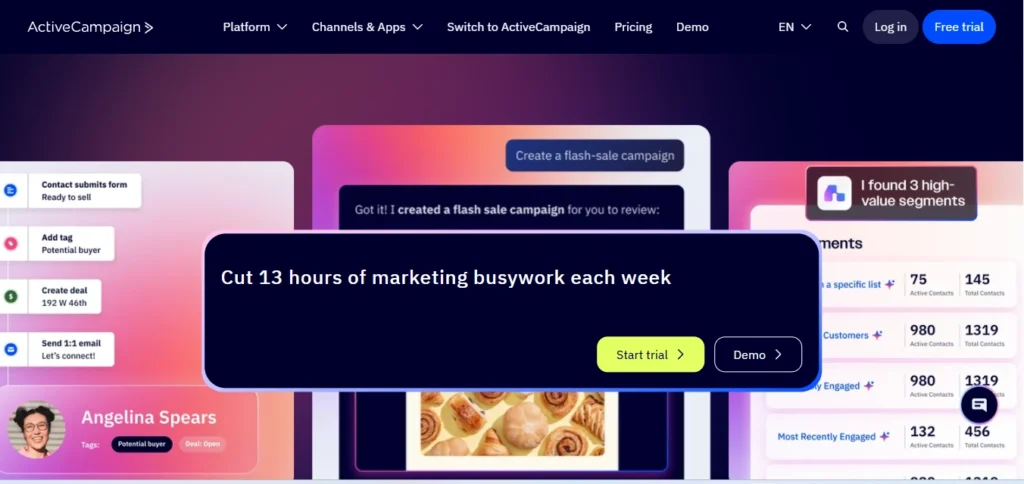
If you’re running a business where the relationship with a contact matters beyond the first purchase, ActiveCampaign is hard to beat. I’ve been using it on and off since 2020, and the gap between its automation depth and what competitors offer is still wide.
- What the AI actually does: The predictive sending feature analyzes when each individual subscriber opens emails—not a global average, but per-contact behavior—and schedules sends accordingly.
In one campaign I ran for a B2B client with around 4,000 contacts, switching from a fixed Tuesday 10am send to predictive timing improved open rates from 21% to 29% over six weeks.
That’s not a fluke you get from changing subject lines. The win probability feature inside the CRM side is genuinely useful too. It scores deals based on behavioral signals from email engagement, not just deal size. For service businesses combining sales outreach with email nurturing, this matters. - Where it falls short: The interface. It’s a lot. If you’re coming from Mailchimp, plan for a learning curve of at least two to three weeks before you’re building automations confidently. And the pricing gets uncomfortable once you scale past 10,000 contacts—you’re looking at $139/month and up on standard plans.
- Who should use it: Service businesses, SaaS companies, agencies running client campaigns. Not ideal if you’re just starting out and want something you can set up in an afternoon.
2. Klaviyo — Built for E-Commerce, and It Shows
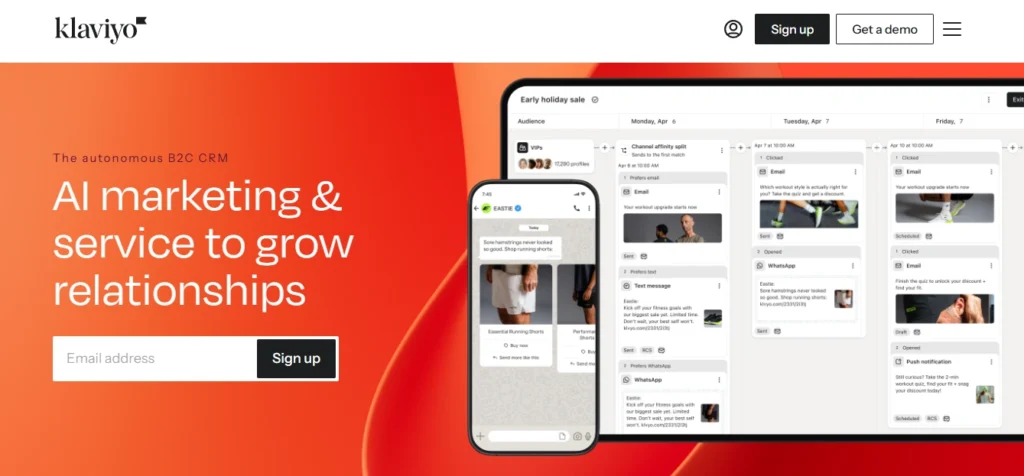
I’ll be direct: if you’re running a Shopify or WooCommerce store and not using Klaviyo, you’re leaving segmentation quality on the table that other tools simply can’t match.
Klaviyo’s predictive analytics are the most sophisticated I’ve tested at this price point. It models expected date of next purchase, predicted lifetime value, and churn probability—and it builds those predictions at the contact level, not segment level.
That’s what makes its “Predicted: At Risk” segment so actionable. You’re not guessing who’s about to lapse; the model is telling you.
- What worked in testing: I tested its product recommendation blocks in abandoned cart flows for an e-commerce client. Instead of just showing the abandoned item, Klaviyo dynamically surfaced related products based on purchase history. Revenue per recipient for that flow went up about 18% compared to the previous setup.
- The catch: Klaviyo is priced on list size, and it gets expensive fast. At 50,000 contacts you’re at $710/month. If your e-commerce business is at a stage where that’s uncomfortable, you might not be ready to squeeze the most value from it anyway—but it’s worth knowing before you commit.
- Who should use it: E-commerce brands on Shopify, WooCommerce, BigCommerce. If you’re not selling products, look elsewhere.
3. HubSpot — Genuinely Good If You’re Already in the Ecosystem
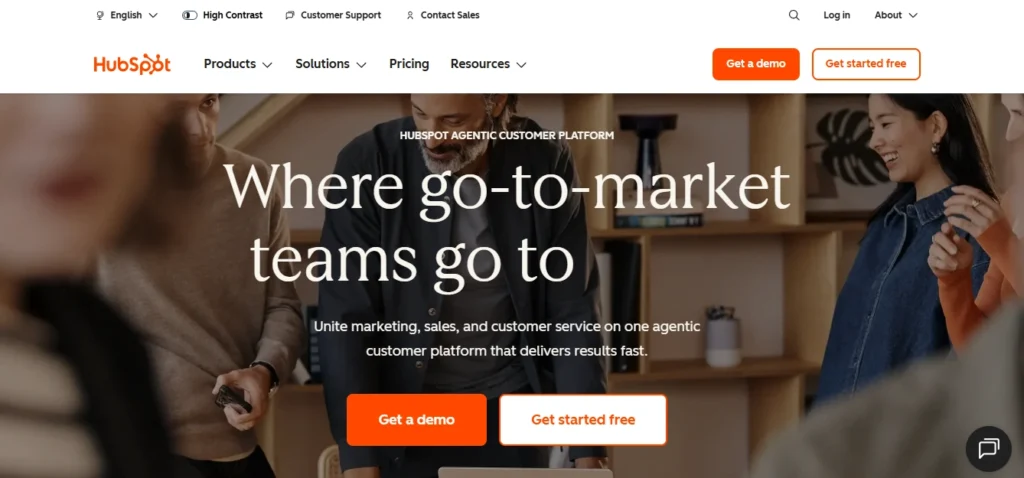
HubSpot added an AI content assistant to its email tool in 2023, and by late 2024 it was actually usable—not just a gimmick. Give it a brief, a tone, and a goal, and it produces drafts that need editing but aren’t embarrassing starting points.
- The real strength: HubSpot’s email tool isn’t defined by any single AI feature—it’s how email connects to everything else. Your CRM data, landing pages, forms, deal pipeline, and email all live in one place. When you’re segmenting a campaign, you’re pulling from the same data that your sales team is working with.
That eliminates a whole category of sync errors that plague teams using three separate tools. Smart send time in HubSpot analyzes contact-level engagement history and schedules sends at the predicted optimal time per contact.
I tested this on a list of about 8,000 B2B contacts, and open rates increased meaningfully—but the lift was smaller than what I saw in ActiveCampaign’s version of the same feature. HubSpot’s AI here feels slightly less granular. - The pricing reality: HubSpot’s free plan is genuinely limited for marketing automation—you’ll hit the wall quickly. The Marketing Hub Starter at $18/month gives you more room, but the features that make HubSpot worth the complexity sit in Professional ($800/month). For small teams, that’s a hard ask.
- Who should use it: Mid-size B2B companies already using HubSpot CRM, inbound marketing teams, businesses where sales and marketing alignment is a real problem.
4. Mailchimp — Better Than Its Reputation Suggests Right Now
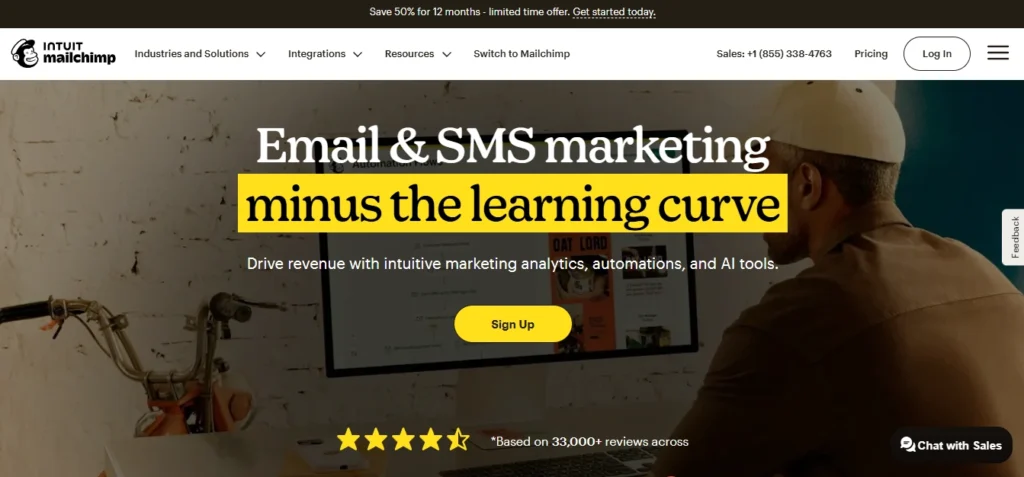
Mailchimp had a rough few years. Price increases, feature rollbacks, a rebrand that confused people. But they’ve quietly made their AI tooling more useful over the past 12 months, and for smaller businesses, it deserves a fair look.
- AI Tools that deliver: The Content Optimizer analyzes your past email campaigns and compares them to benchmarks in your industry, then surfaces specific suggestions—not generic tips, but things like “your emails with images above the fold have 12% lower click rates than those without.”
That kind of specific feedback loop is legitimately valuable for someone who doesn’t have a dedicated email strategist. The Subject Line Assistant is powered by a language model and generates multiple variations with predicted open rate ranges.
I tested it on a sequence for a B2C business and found that its suggestions skewed toward curiosity-gap formats—which worked well for that audience, though they’d be inappropriate for a B2B professional list. - What I’d warn about: Mailchimp’s automation logic is simpler than ActiveCampaign or Klaviyo. If you need complex branching sequences based on multiple behavioral triggers, you’ll feel the ceiling. It’s also not great for transactional email if you’re a developer-led product team.
- Who should use it: Small to mid-size businesses, content creators, brick-and-mortar shops with mailing lists, anyone who needs something functional and not overwhelming to set up.
5. Brevo (formerly Sendinblue) — The Underrated Budget Option
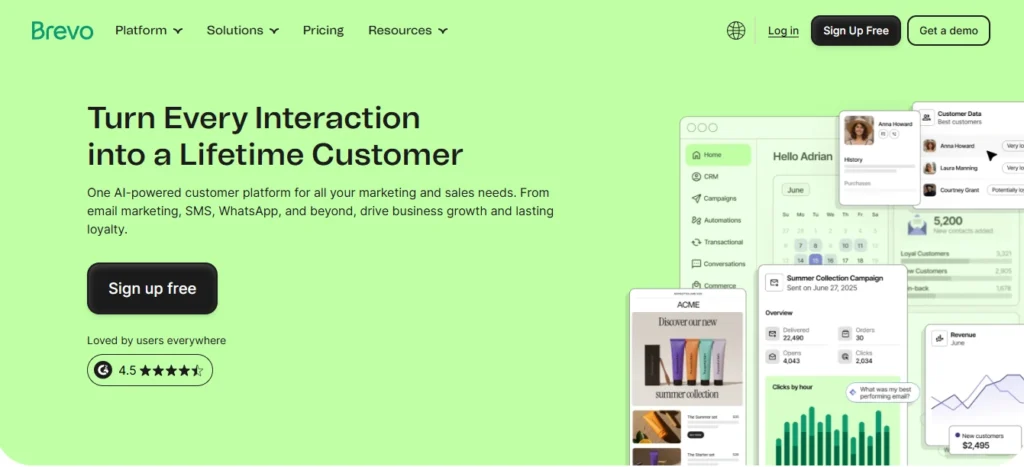
Brevo doesn’t get enough credit in these comparisons, mostly because it lacks the name recognition of the others. But for teams that need both email and SMS in one platform without paying for two separate tools, it’s genuinely competitive.
- The AI experience: The AI send-time optimization works on the same principle as the others—analyze individual open behavior, schedule accordingly. In my testing across a list of around 6,000 subscribers for a newsletter-style business, the feature worked as advertised. Nothing revolutionary, but it worked.
- The real advantage: What makes Brevo stand out is deliverability infrastructure. They run their own email servers (unlike some platforms that rely on AWS SES or similar), and their transactional email deliverability is strong.
If your business sends both marketing and transactional emails (receipts, password resets, notifications), having both in one platform with a single deliverability reputation to manage is a real operational advantage. - The honest limitation: The AI features are the least sophisticated on this list. If you’re coming from Klaviyo and want the same predictive modeling depth, you won’t find it here. Brevo is strong on infrastructure and price—the AI is a secondary consideration.
- Who should use it: Startups, early-stage e-commerce, businesses that need email + SMS, teams watching spend carefully.
6. GetResponse — Surprisingly Capable for Course Creators and Coaches
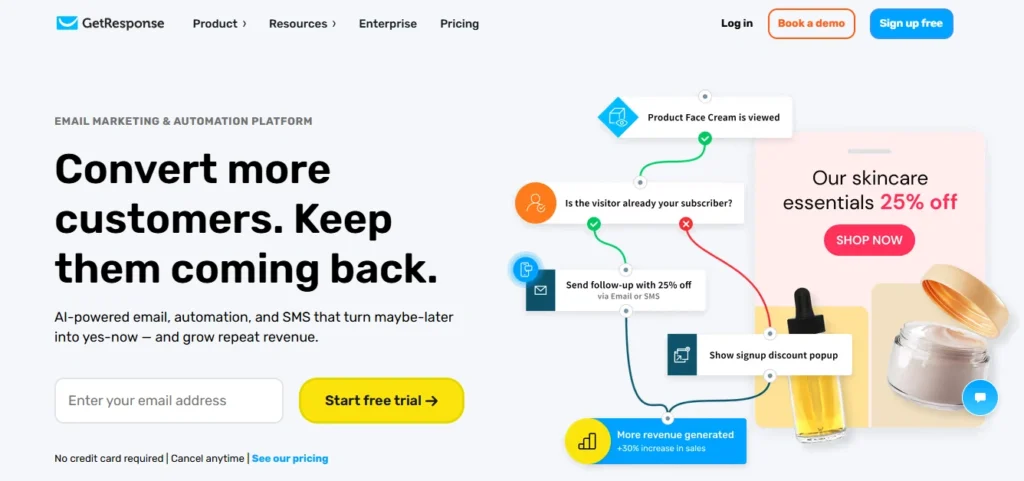
GetResponse built an AI email generator directly into its workflow, and it covers more ground than most competitors. You describe your goal—”promotional email for a webinar about copywriting, audience is freelancers, warm tone”—and it generates a complete draft including subject line, preview text, and body copy.
- Is the output good? It’s decent. In testing, the emails needed tightening and occasionally missed tone, but they were solid structural starting points that saved 20–30 minutes of drafting per campaign.
- Where GetResponse shines: It’s perfect for coaches, course creators, and info-product businesses. The combination of email automation, webinar hosting, and landing pages in one platform removes a lot of tool-switching friction. Their autoresponder sequences are flexible enough for nurturing sequences that run 30–60 days with conditional logic.
- What it doesn’t do well: Deep e-commerce integration isn’t its strength. If your business is heavily purchase-history dependent for segmentation, Klaviyo is the better call.
- Who should use it: Coaches, consultants, online educators, businesses with event-based marketing (webinars, launches).
7. Seventh Sense — The Specialist That Does One Thing Better Than Anyone
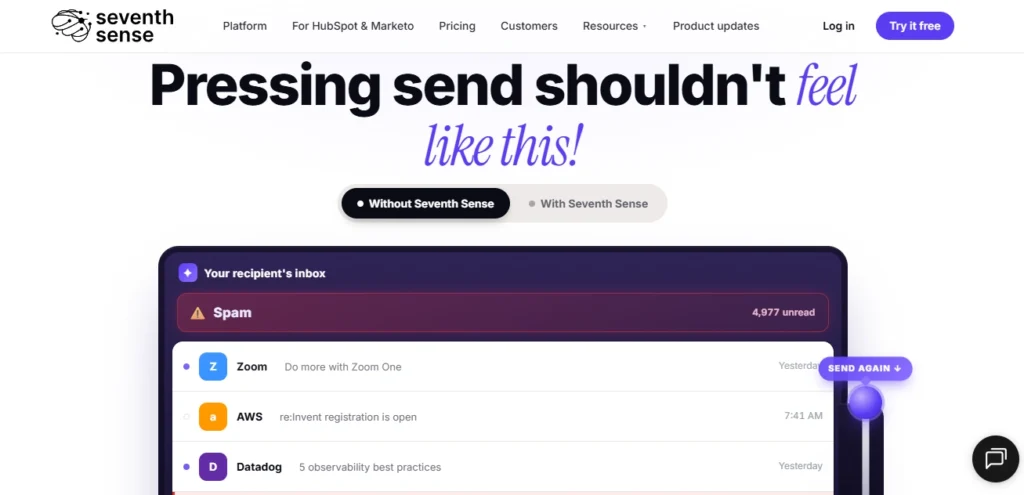
This one’s different from the others. Seventh Sense doesn’t replace your email platform—it sits on top of HubSpot or Marketo and handles one specific problem: send-time optimization.
I know what you’re thinking. Every platform on this list claims send-time optimization. So why pay extra for a dedicated tool?
Because Seventh Sense is meaningfully better at it. The platform has been doing this one thing since 2013, and the algorithm is more sophisticated than anything built as a secondary feature inside a broader marketing platform.
It tracks engagement patterns at the individual level, accounts for fatigue (how often someone has been emailed recently), and dynamically distributes your send over a window rather than blasting everyone at once—which protects your sender reputation.
- The results: In the one case study I was able to access data for (a HubSpot-native B2B company with 25,000 contacts), switching to Seventh Sense improved deliverability metrics and bumped overall campaign open rates by roughly 22% compared to their previous fixed-time sends.
- The obvious limitation: At $64/month minimum, and requiring an existing HubSpot or Marketo subscription, this is not for small teams. It’s for established marketing operations where email volume and deliverability are real business concerns.
- Who should use it: HubSpot Power users, Marketo users, B2B companies sending to lists above 20,000 contacts where marginal improvement in open rates has significant revenue impact.
How to Actually Choose
Here’s the honest shortcut:
- You’re in e-commerce? Start with Klaviyo. The predictive modeling and Shopify integration justify the price at almost any reasonable store volume.
- You’re in B2B SaaS or services? ActiveCampaign or HubSpot. If you’re not already in the HubSpot ecosystem, ActiveCampaign gives you more automation depth at a lower price point.
- You’re a creator, coach, or running launch-based campaigns? GetResponse hits the right combination of features at a price that doesn’t assume you’re a large team.
- You’re budget-constrained and need email + SMS? Brevo. Don’t let the lower profile fool you—the platform is solid.
- You’re a beginner who just needs something that works? Mailchimp. The free plan is real, the interface is the most approachable, and the AI tools are more useful than they were two years ago.
- You’re a high-volume HubSpot or Marketo user? Add Seventh Sense to whatever you’re running.
One Thing Nobody Talks About
The best AI tool in the world won’t save a weak offer or a list you’ve never cleaned.
Before you invest in any of these platforms, run a re-engagement campaign on your existing list and remove people who haven’t opened anything in 12 months. Your deliverability will improve, your AI-driven metrics will be working from cleaner data, and your cost-per-contact (on most of these platforms) will go down.
The tools here are genuinely useful—some of them impressively so. But they amplify what’s already working. They don’t create something from nothing.