

Just a year ago, the primary anxiety keeping tech executives awake at night regarding artificial intelligence was deeply financial. Until 2025, boardrooms collectively obsessed over return on investment, questioning whether the massive capital poured into large language models would actually translate to a tangible impact on the bottom line.
But as the underlying technology has matured and shifted from passive chatbots to autonomous systems, the narrative has drastically changed. The dominant question in 2026 is no longer about value; it is about trust and safety.
As artificial intelligence evolves into agentic AI capable of executing complex, multi-step tasks without human oversight, business leaders are increasingly hesitant to hand over the keys to critical decision-making processes.
The Shift from Operational Value to Safety
A clear consensus emerged at the recent Madrona IA40 Summit. Zico Kolter, chair of OpenAI’s safety committee, spoke candidly about this industry shift. He emphasized that enterprises do not trust AI with high-stakes decisions yet.
Kolter highlighted a growing challenge for modern companies. Governance and safety controls must advance as fast as raw capabilities. If controls lag behind, developers may have to slow progress intentionally.
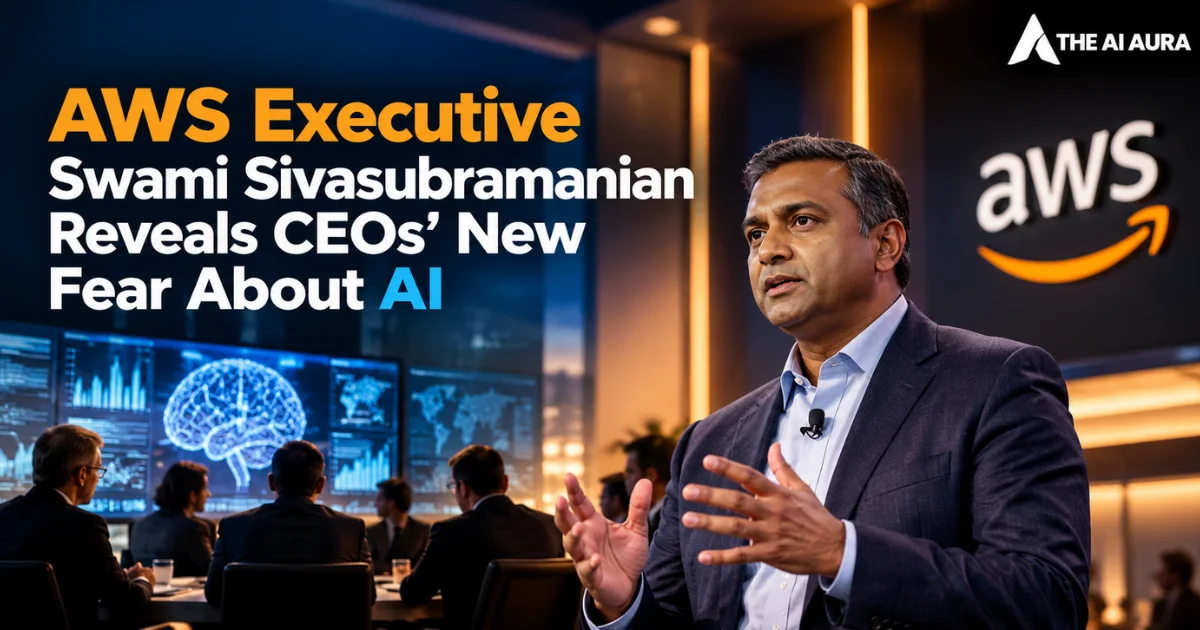
Swami Sivasubramanian echoed these exact concerns. He leads Agentic AI and Emerging Technologies at Amazon Web Services. When Sivasubramanian meets with enterprise CEOs, one fear dominates every discussion.
Leaders demand proof that agents will follow internal policies and regulatory standards.
According to a detailed report on the summit published recently by the Times of India, Sivasubramanian identified this exact apprehension as a very real barrier to enterprise adoption.
To counter this hesitation, he suggested that businesses can preserve the generative creativity of these models by pairing them with independent, secondary systems explicitly designed to evaluate the primary model’s outputs against strict corporate guidelines, thereby catching any potential violations before they impact the business.
Solving the Enterprise Data Dilemma
Beyond the conceptual fear of runaway agents, there is an equally daunting technical hurdle delaying wide-scale rollout: data integration.
Sivasubramanian pointed out that one of the most chronically underappreciated challenges of making agentic AI function properly is securely feeding it the correct internal company data. He shared an anecdote about internal teams at Amazon building incredibly impressive agent prototypes in just a matter of weeks.
Yet, when questioned about deployment timelines, nearly every development team admitted that pushing the software to production was stalled by unresolved issues surrounding user identity, monitoring protocols, and data security guardrails.
To address this massive bottleneck, Amazon Web Services launched AWS Context earlier this year. This service acts as an infrastructure layer designed to map complex data relationships across a company’s internal network, making it safely accessible for autonomous agents.
Sivasubramanian envisions cross-platform tools like this becoming foundational enterprise architecture over the next two decades, much in the same way cloud storage revolutionized software development twenty years ago.
Despite these ongoing infrastructure challenges, the financial upside is already materializing. While McKinsey reports that roughly forty percent of companies have seen profit bumps from AI integration, only six percent describe those gains as substantial.
The industry consensus remains that while enterprise returns on autonomous agents are still in their infancy, the eventual payoff is completely inevitable for those willing to invest in the right safety and data frameworks today.



