

Finding developers who can tinker with large language models is relatively easy. Finding enterprise engineers who can take a conceptual artificial intelligence project and safely integrate it into a sprawling corporate infrastructure is nearly impossible.
The talent gap between building a neat prototype and deploying a secure, production-ready AI system has become the defining bottleneck of the generative tech boom.
Traditional computer science programs cannot keep up with this demand. Therefore, Anthropic is taking matters into its own hands with a $100 million educational investment. The company has officially launched the Claude Frontier Academy.
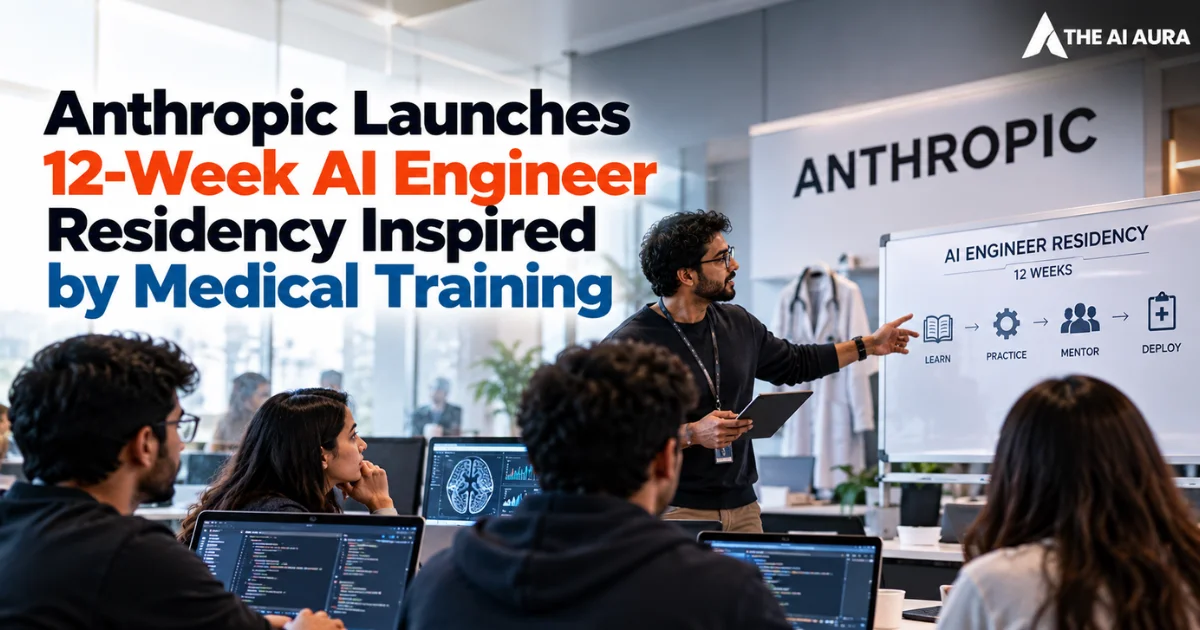
This program trains elite enterprise integration specialists. In addition, its teaching framework is unique. Anthropic did not choose standard bootcamps or self-paced video modules. Instead, the company borrowed its training blueprint directly from medical residency programs.
Simulating the Clinical Rotation for Software
The comparison to medical school is deliberate. Enterprise deployments carry huge stakes for data security and stability. For example, doctors do not learn surgery simply by reading textbooks. Instead, they train under experienced physicians and treat real patients before practicing alone.
Anthropic now maps this clinical model onto software engineering. The program begins with an intensive in-person workshop led by core developers. During this phase, participants work inside a simulated enterprise deployment environment.
According to recent coverage detailing the program’s structure from the Times of India, engineers must prove their competence across the entire deployment lifecycle, from selecting viable use cases to executing strict security reviews and managing client handovers.
After passing a practical exam, candidates earn a Claude Resident Engineer badge. Consequently, developers advance from the simulation into the field. During this 12-week residency, they return to their companies to lead a real Claude project. Meanwhile, Anthropic engineers supervise their daily progress just like hospital attendings.
Engineering the Enterprise Deployment Force
Anthropic is not opening this program to the general public. Instead, companies must directly nominate their strongest software developers. Furthermore, every candidate must arrive with an approved project ready to build. Current cohorts already include engineers from McKinsey, Deloitte, Morgan Stanley, and Novo Nordisk.
The program aims to train 10,000 Frontier Deployed Engineers (FDEs) by 2027. This title draws inspiration from Palantir’s forward-deployed engineering model. As a result, demand for this hybrid skill set is surging across consulting firms.
Tech hiring is cooling elsewhere, but enterprise AI engineering continues to grow. Therefore, Anthropic is building the workforce needed to embed its models into global corporations.



