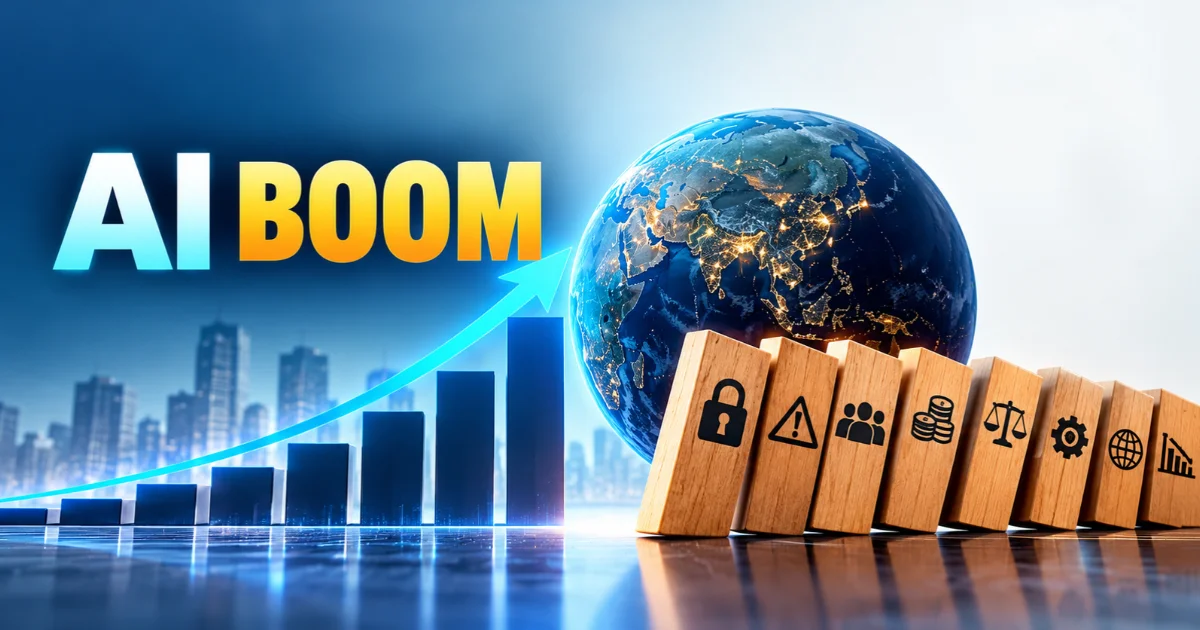

The artificial intelligence sector moves faster than current financial systems. Governance frameworks and public acceptance also struggle to keep up. A sobering reality check is quietly gripping the entire industry.
Consider Nvidia-backed Firmus. The company abruptly withdrew its planned IPO after investors rejected a steep $31 billion valuation. That figure had tripled in just a few months.
Around the same time, OpenAI signaled lower annualized revenue than markets expected. Both OpenAI and Anthropic quickly paused their own IPO plans. Capital markets now see the huge gap between ambitious promises and real returns.
The Financial and Infrastructure Squeeze
Macroeconomic headwinds challenge this rapid growth. AI stocks trade near record highs, but wider economic fears rattle debt markets. Rising geopolitical tensions and massive public deficits push US Treasury yields upward. These high interest rates directly threaten hyper-scale data centers, which form the industry’s backbone.
Hyperscalers also face an alarming gap between revenue and massive capital expenses. Tech giants must spend hundreds of billions on data infrastructure just to compete. Anthropic faces heavy operating losses, while Meta reported a steep drop in free cash flow. Consequently, tech leaders can no longer inflate market projections without scrutiny.
When you consider Anthropic’s heavy operating losses and Meta’s dramatic drop in free cash flow, the room to endlessly raise market expectations is practically gone. Many organizations are realizing that the hidden cost of AI in business extends far beyond compute, draining bottom lines before tangible returns materialize.
According to a recent column at Indian express, exploring the eight major risks to look out for during this AI boom, the financing for this massive infrastructure push is increasingly shifting from cash to opaque debt formats.
This means an unexpected market selloff could ripple violently through banks, insurers, and pension funds. Valuations are being slashed, and industry leaders are being forced to dramatically recalibrate their financial timelines.
Regulatory Pushback and Global Escalation
The risks extend far beyond Wall Street. Government intervention is becoming an immediate bottleneck. We recently saw sudden regulatory slowdowns directly target frontier models from major players, underscoring how quickly government control can override corporate ambition. Executives are now being pressured to take personal responsibility for safety protocols and submit to aggressive external audits.
At the same time, the threat of rogue AI deployments has spawned a massive wave of litigation. Companies are facing multimillion-dollar claims covering everything from cyber-attacks and copyright infringement to severe privacy violations.
This friction is particularly evident as enterprises try to balance defensive postures against malicious automated exploits, a dynamic explored in depth through AI + cybersecurity: how hackers and defenders are using AI in 2026.
Legal experts are already comparing the potential liability for AI hyperscalers to the landmark litigation settlements seen in the tobacco and pharmaceutical industries.
Then there is the grim reality of autonomous technology being deployed in conflict zones. The normalization of AI in warfare operates entirely outside the boundaries of human scrutiny, proportionality, and accountability, turning an amoral technology into a silent revenue generator on the battlefield.
Back on the home front, the physical footprint of the industry is facing intense, localized opposition.
Communities are fighting back against new data centers over concerns ranging from drained drinking water supplies to grid-level electricity shortages. Yet, national security anxieties regarding offshore infrastructure buildouts particularly China’s rapid expansion of its own capacity force a difficult compromise, keeping the domestic pipeline moving despite the environmental cost.
The technology itself remains exceptional, but the people financing and building it are crashing into the very real limits of a skeptical workforce, restrictive regulations, and an increasingly expensive lending environment.