
The enterprise software industry faces a brutal reality check. Established giants realize past success guarantees nothing in the AI era. Generative AI is rewriting the rules of engagement. This affects companies with massive recurring revenue in traditional customer service.
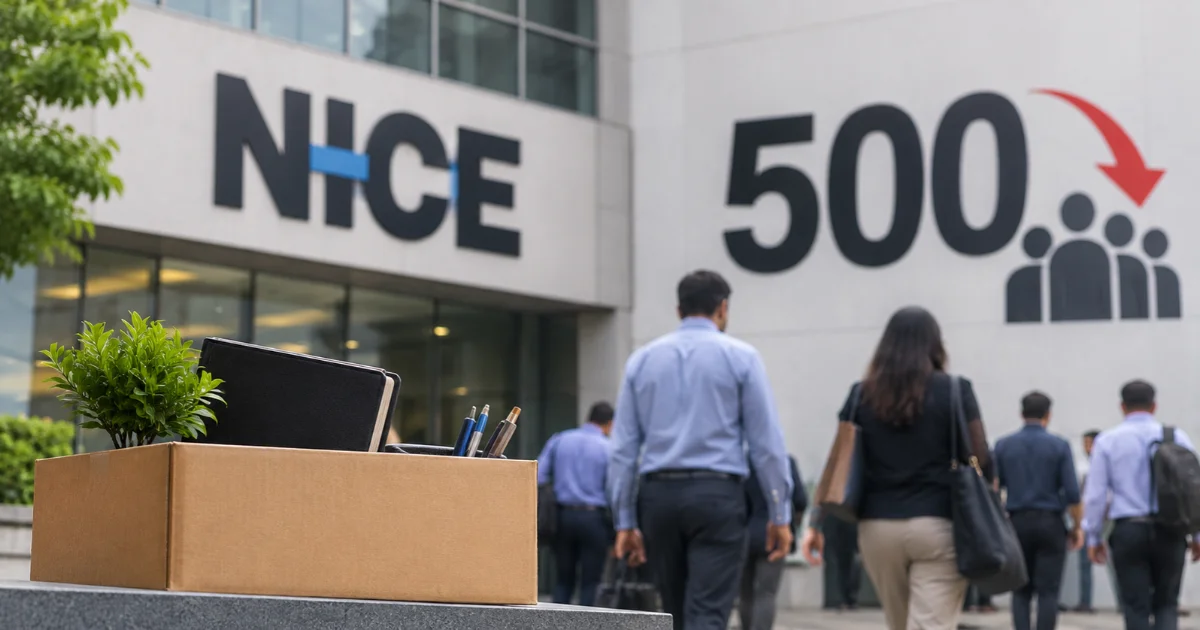
NICE is a prominent player in this sector. It is the latest to publicly confront this disruption. The company is initiating layoffs affecting about 500 global employees. This reduction is roughly 5% of its 10,000-person workforce. It signals a sharp pivot in operational priorities.
Maintaining the status quo is no longer a viable business strategy. Clients are pausing massive legacy software contracts. They want to evaluate cheaper, faster AI alternatives. CEO Scott Russell and his team are making tough calls.
They must trim the workforce to free up capital. This prepares the company for the next computing wave.
Navigating the Generative AI Disruption
Understanding why a highly profitable, entrenched software provider is suddenly shedding staff requires looking at exactly how market demands are shifting beneath their feet.
For years, NICE dominated by providing complex, human-operated software suites to enterprise giants like Marriott, Lufthansa, and Disney.
Today, the very nature of a contact center is transitioning toward automated, AI-driven agents that can handle intricate customer interactions without a human operator in the loop.
To survive this massive market pivot, NICE is attempting a difficult balancing act of aggressive expansion and strategic contraction.
According to a recent report detailing the corporate restructuring at Calcalistech, the company is seeking to offload non-core assets like its Actimize division while simultaneously pouring heavy capital into artificial intelligence capabilities.
This is evidenced by their recent billion-dollar acquisition of a German AI-agent startup, a move designed to directly address the automation threat. The layoffs are fundamentally a byproduct of this rapid realignment.
Management is shedding roles tied to older software paradigms while actively repositioning the entire product ecosystem to cater to clients who are demanding next-generation efficiency over bloated legacy systems.
Strategic Restructuring Over Immediate Profitability
Financial realities drive this 500-person workforce reduction. The company is fighting to stabilize its long-term valuation. They are not just looking for a quick quarterly win. During the pandemic, NICE saw its market capitalization hit $20 billion. Shifting investor sentiment and AI disruption dragged it to $6.5 billion.
The distribution of these job cuts reveals internal priorities. In July, Russell promised no workforce reductions in Israel. About 1,000 of its employees are based there. Global cuts are significant, but Israeli operations face minimal impact. This region remains the core hub for research and development.
Even as the firm expects to cross the $3 billion annual revenue mark for the first time, earnings per share are projected to decline due to margin pressures and heavy operational investments.
Leadership is essentially swallowing the bitter pill of restructuring today, prioritizing crucial AI acquisitions and leaner global operations over short-term profitability margins, all to ensure the software giant does not become obsolete in the very market it helped build over the last two decades.