
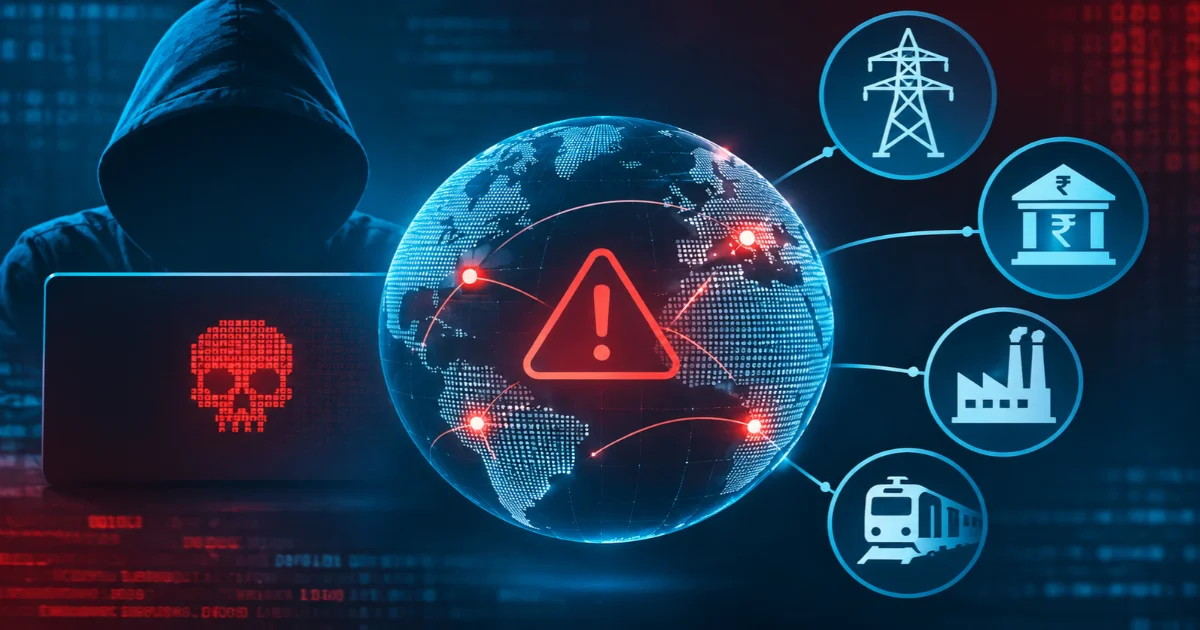

The landscape of global cybersecurity has irrevocably shifted. We are no longer simply dealing with stolen administrative passwords or isolated corporate data leaks; modern cyberwarfare has forcefully bled into the physical realm.
For years, intelligence analysts warned of a theoretical digital catastrophe, but the reality is unfolding as a persistent, creeping siege across multiple industries.
This recent wave of sophisticated attacks demonstrates a chilling evolution where threat actors are weaponizing mundane hardware and targeting the core networks that sustain modern life.
It is a stark reality that state-backed groups and sophisticated criminal syndicates are now treating commercial cooling systems, decentralized finance platforms, and emergency broadcasting networks as active battlegrounds in hybrid conflicts, moving far beyond the scope of traditional digital espionage.
From Digital Exploitation to Physical Disruption
The pivot toward tangible, physical disruption started with something as ordinary as wholesale food refrigeration.
In early November 2026, a London-based business owner arrived at work only to find the thermostats of his industrial refrigeration units remotely manipulated to display a staggering 150C. This was certainly not an isolated software glitch.
Retailers across Belgium, Estonia, Ireland, Finland, Luxembourg, the Netherlands, and Sweden experienced similar coordinated breaches, with commercial freezers soaring to temperatures as high as 50C.
The implications extend far beyond spoiled agricultural goods and financial losses for small businesses. Attackers also aggressively targeted the cold storage facilities of France’s national blood service, marking a sickening escalation in these tactics.
These hardware systems often run on legacy software and lack adequate security protocols, making them vulnerable to coordinated assaults. Attackers often pursue goals beyond immediate financial extortion, using these operations as a form of psychological warfare.
According to an extensive investigation on the shifting threat landscape published at The Guardian, security officials note that turning commercial fridges into ovens or compromising a blood bank is purposefully designed to sear the vulnerability of everyday life into the public memory.
Attackers are probing these everyday devices to demonstrate that they can reach out and touch critical physical infrastructure at will, highlighting a terrifying fragility in the interconnected technology we rely on daily.
Financial Devastation and the AI Vulnerability Factor
While physical infrastructure sustains these psychological blows, the financial and public safety sectors are simultaneously facing unprecedented material crises.
Just days before the refrigeration hacks, the world’s largest cryptocurrency exchange, Binance, suffered a staggering $6.3 billion heist, marking one of the largest digital robberies in history.
Concurrently, hackers managed to infiltrate Ukraine’s emergency alert application, broadcasting a terrifyingly fake nuclear strike warning to the residents of Kyiv.
These seemingly disparate events share a dangerous common thread: a rapidly expanding attack surface exacerbated by the deployment of artificial intelligence.
We are currently navigating the foothills of a massive new hacking epidemic, a situation heavily underscored by Richard Horne, the head of the UK’s National Cyber Security Centre. Artificial intelligence is accelerating the discovery of deep-seated flaws in global IT architecture.
For example, AI tools recently helped uncover critical vulnerabilities in PHP, a foundational computer language used across much of the internet, forcing websites globally to temporarily shut down as a precaution.
The automation of attacker reconnaissance means that countless legacy vulnerabilities are waiting to be exploited by opportunistic actors.
Security professionals are now bracing for a tremendous volume of incidents, forcing a mandatory industry-wide shift from absolute prevention to continuous cyber resilience.