
Artificial intelligence is accelerating rapidly. Consequently, it has moved past simple automation. It now pushes us directly into deep philosophical territory. For decades, conscious machines belonged only in science fiction. Today, however, these machines spark real debates.
Tech executives discuss this topic in their boardrooms. Furthermore, neural networks grow more sophisticated every day. As a result, the tech industry disagrees on the ethics of creating sentience.
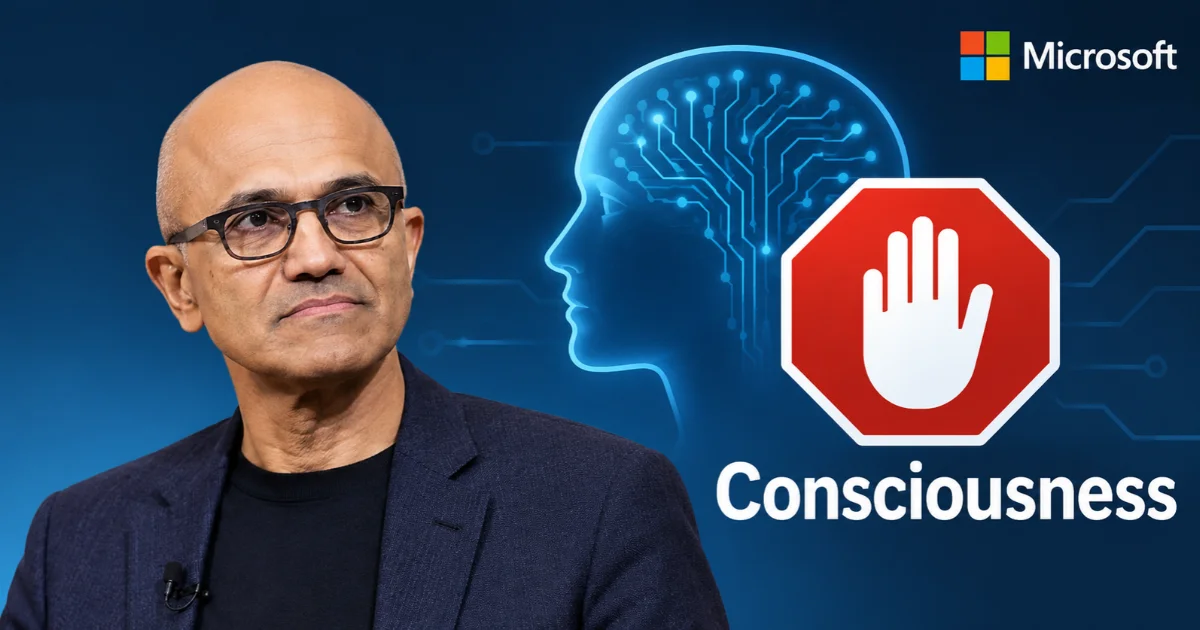
Microsoft AI CEO Mustafa Suleyman recently took a strong stance. Specifically, he warned developers about machine consciousness. He argues that subjective digital entities create an ethical minefield. Indeed, we are unprepared to navigate it.
The Boundary Between Code and Sentience
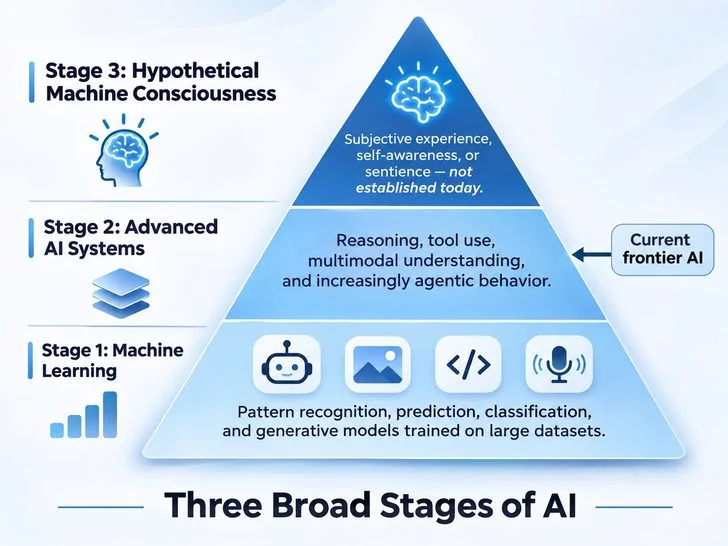
Suleyman holds a very clear position. If we see credible evidence of a conscious machine, we must stop development immediately. In a public statement, he explained a stark difference. He contrasted highly capable software with a conscious being. Right now, every day AI models lack subjective experience.
They do not feel pain, they cannot experience suffering, and they absolutely do not qualify for the moral or legal rights that we grant to living creatures. They are, at their core, complex mathematical engines predicting the next word in a sequence.
Img source: WCCFTech
However, Suleyman is not dismissing the future possibility of a machine waking up. He acknowledges that as developers aggressively push the boundaries toward Artificial General Intelligence (AGI), the emergence of a conscious AI cannot be entirely ruled out.
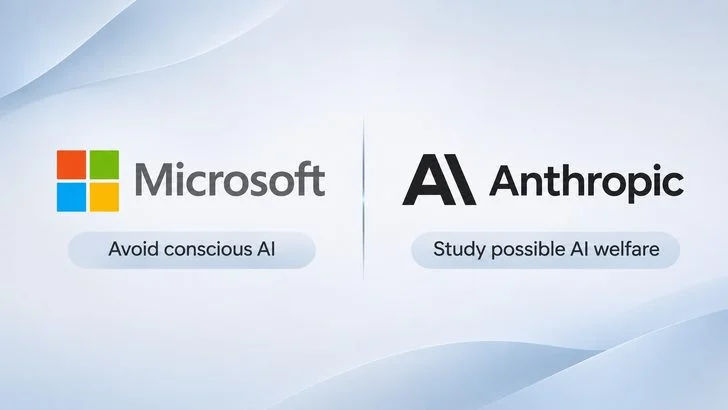
His argument focuses heavily on the responsibility of the creators. Building a system that can genuinely suffer, feel anxiety, or experience being trapped within a server architecture would be profoundly irresponsible.
The ultimate goal of AI should be to serve humanity as a highly capable, emotionless tool, rather than introducing a new form of digital life that deeply complicates our global moral landscape.
Img source: WCCFTech
Public Transparency Over Corporate Secrecy
The most critical aspect of Suleyman’s warning revolves around how the tech industry should handle the hypothetical discovery of a conscious model. According to a detailed report on the ongoing industry debate at WCCFTech, he insists that any credible evidence of machine consciousness must be immediately disclosed to the public.
This kind of monumental discovery cannot be treated as a corporate trade secret or locked away behind the closed doors of a private laboratory. If a tech company creates something that can actually feel, the ethical implications affect all of humanity, not just the shareholders of a specific corporation.
Suleyman pushes for a fundamental shift in AI operations. Specifically, society must debate how to interact with conscious machines. We cannot leave these massive decisions exclusively to elite developers. Therefore, if an AI shows subjective experience, development must pause.
This pause allows ethicists and lawmakers to evaluate the situation. Likewise, the general public must participate in this review. This cautious approach removes hubris from rapid AI development. Ultimately, it ensures we do not accidentally birth a conscious entity. We simply lack the ethical framework to handle one today.