

Developer environments have reached an inflection point where relying on a single, locked-in artificial intelligence assistant creates unnecessary friction. Modern software engineering teams frequently balance specialized coding models, custom enterprise scaffolding, and distinct third-party agents across different stages of their development cycle.
Recognizing that rigid toolchains slow down production, Google is significantly opening up its mobile IDE through a new Bring Your Own Agent framework.
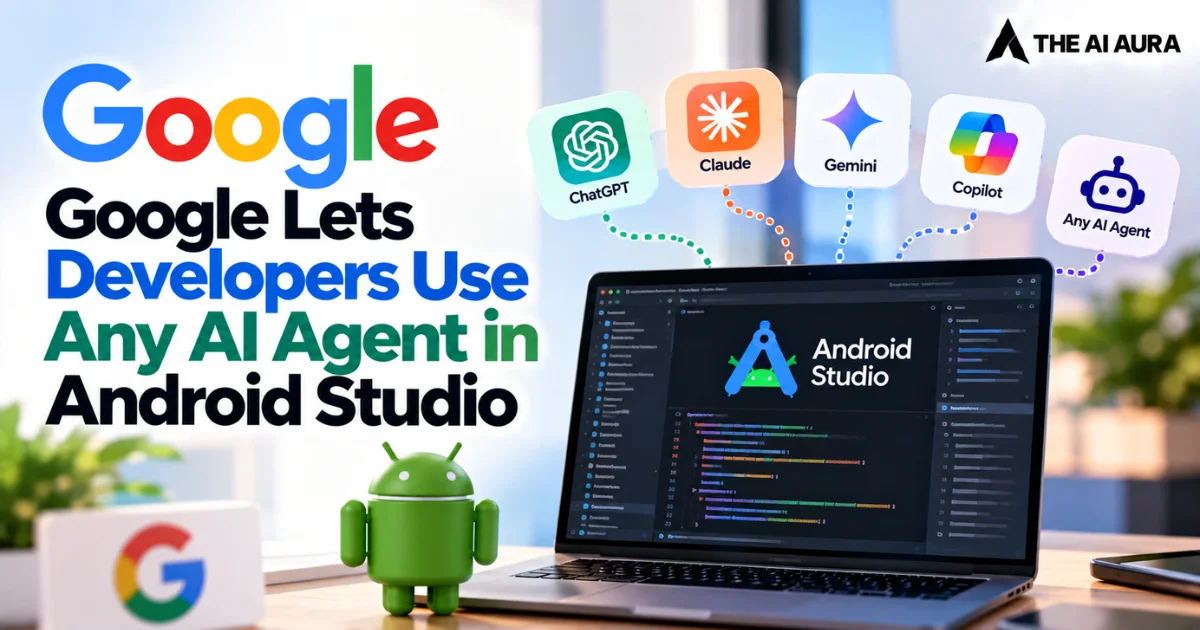
Debuting in the Canary release channel of Android Studio Rabbit 2, the feature allows developers to connect whichever autonomous coding agent fits their workflow best whether that is Anthropic’s Claude Agent, OpenAI’s Codex, or Google’s own Antigravity agent without sacrificing native IDE intelligence.
How Agent Client Protocol Bridges the IDE and Autonomous Code Execution
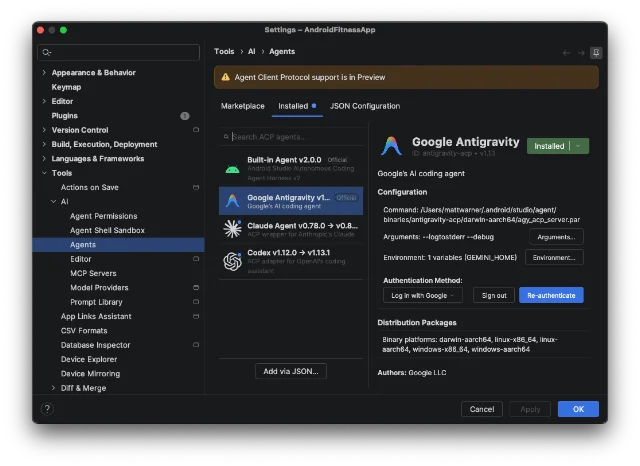
The fundamental engineering challenge with running external coding agents inside a specialized IDE has always been context isolation. A generic assistant operating through an external chat window lacks visibility into build variants, dependency trees, and real-time compilation issues.
Google solves this by integrating the Agent Client Protocol, an open standard that allows Android Studio to pass the entire project graph, build setup, and platform details directly to the external agent.
According to technical details shared on the Android Developers Blog, this direct communication channel lets the agent selectively filter files and platform configurations, drastically cutting down token waste, reducing latency, and delivering far more accurate code patches.
Beyond context awareness, the architecture injects native development tools straight into the agent’s execution loop. Instead of just suggesting code in a sidebar, an integrated agent can inspect build diagnostics, interact with Jetpack Compose Previews, access the underlying Android SDK, and drive the Android emulator to verify runtime behavior.
The system operates with fine-grained permission controls, meaning the agent can autonomously handle mundane tasks like reading files, modifying dependencies, running tests, or spawning subagents for code review, while pausing for explicit human sign-off before making higher-risk codebase changes.
Managing AI Plans and Swapping Agents Without Workflow Disruption
From an operational standpoint, this architectural pivot turns Android Studio into an open orchestration layer rather than a proprietary walled garden. Mobile developers are no longer forced to buy into a single ecosystem subscription just to write idiomatic Kotlin or debug a native crash.
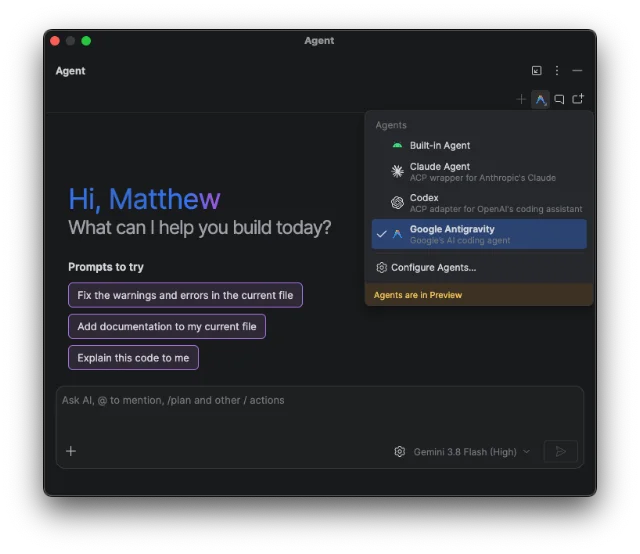
You can connect any ACP-compliant agent using your existing consumer plan, enterprise license, or standard pay-per-token API key. This makes workflow transitions practically seamless; if an agent exhausts its hourly token limit or struggles with a niche legacy build system, you can switch tasks to another engine right inside the agent panel without breaking your flow state.
For developers invested in Google’s ecosystem, the built-in Gemini assistant remains available, but power users can route their tasks through the Antigravity agent to access higher usage limits and flagship reasoning engines like Gemini Flash 3.8.
Organizations running enterprise setups retain their centralized governance, code privacy guarantees, and Google Cloud security standards across the entire setup.
By turning Android Studio into an adaptable host for multiple agents, Google is setting a practical precedent for IDE design: treat intelligent agents as modular, hot-swappable tools that adapt to developer preferences rather than proprietary barriers that dictate them.