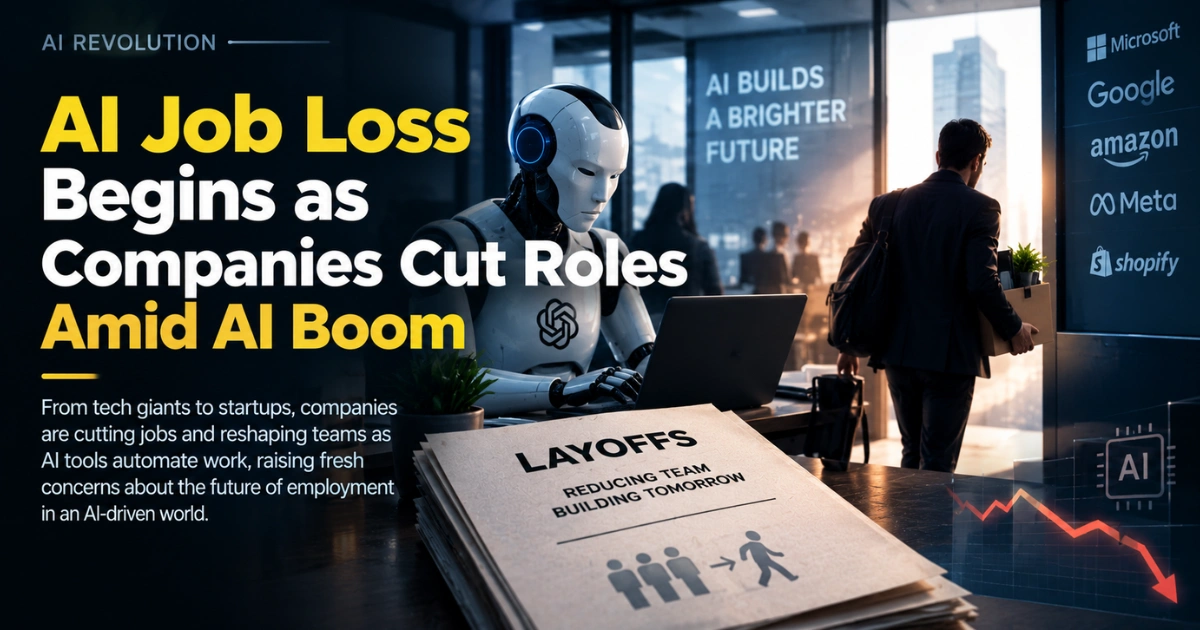

We have spent the last two years bracing for the moment artificial intelligence learns to do our daily work, with algorithms replacing traditional roles by writing enterprise code, drafting marketing copy, and managing global logistics. But the actual first wave of AI-driven job destruction looks completely different than the automation narrative we expected.
It isn’t happening because the technology is outperforming human workers. It is happening because the sheer resource gravity of the AI boom is financially suffocating traditional business lines.
Look closely at Samsung India’s recent move to quietly terminate 80 to 100 executives across its television and home appliance divisions. On the surface, this reads like a standard corporate restructuring in a tough consumer market. Dig a little deeper, and you find a classic supply chain casualty driven directly by the tech sector’s obsession with artificial intelligence.
The Supply Chain Squeeze of the AI Gold Rush
For decades, consumer electronics relied on cheap, predictable supplies of conventional memory chips. The rise of large language models quickly rewrote semiconductor priorities.
Foundries now aggressively divert production capacity away from everyday silicon. Instead, they prioritize lucrative high-bandwidth memory chips for hyperscale servers.
When factories pivot production, raw supply plunges. As a result, prices rise quickly. The cost of conventional memory for TVs, refrigerators, and laptops has skyrocketed. For consumer tech brands, these rising component costs destroy profit margins.
To protect margins, leadership must slash overhead elsewhere. Samsung India’s appliance executives did not lose their jobs to an AI chatbot. Software did not sell televisions better than they did.
Instead, distant AI server farms consumed the available silicon. This made building appliances too expensive to support their salaries.
Competing Against an Invisible Giant
This dynamic exposes a critical, often ignored reality of the modern economy regarding the hidden cost of AI in business: artificial intelligence is a ravenous consumer of physical and financial resources.
Before an AI model can even attempt to automate a human role, it must consume staggering amounts of capital, compute power, and electricity.
This creates a secondary, structural threat to the modern workforce. Employees no longer have to worry solely about whether an algorithm can mimic their specific daily tasks; they have to worry about whether their entire department can afford to exist in an AI-dominated resource market.
If corporate capital is overwhelmingly funneled into AI research and data center infrastructure, non-AI business units are immediately starved of operational investment.
Furthermore, as AI data centers draw massive amounts of power from the grid, commercial electricity rates face upward pressure, increasing basic operational costs for traditional manufacturing and logistics.
The modern workforce is beginning to realize that the AI revolution does not require a software program to learn your job to cause disruption. The disruption happens upstream in the ledger.
When a single technological trend monopolizes the foundational building blocks of an industry whether that is silicon capacity, grid electricity, or venture capital the financial shockwaves eventually reach the payroll department.
The first true casualties of the AI boom aren’t being replaced by algorithms; they are simply being priced out of existence by the sheer cost of building them.
Source: The Economic Times, "AI's Left Hand Begins to Take Away Jobs Before Its Right Hand Can"