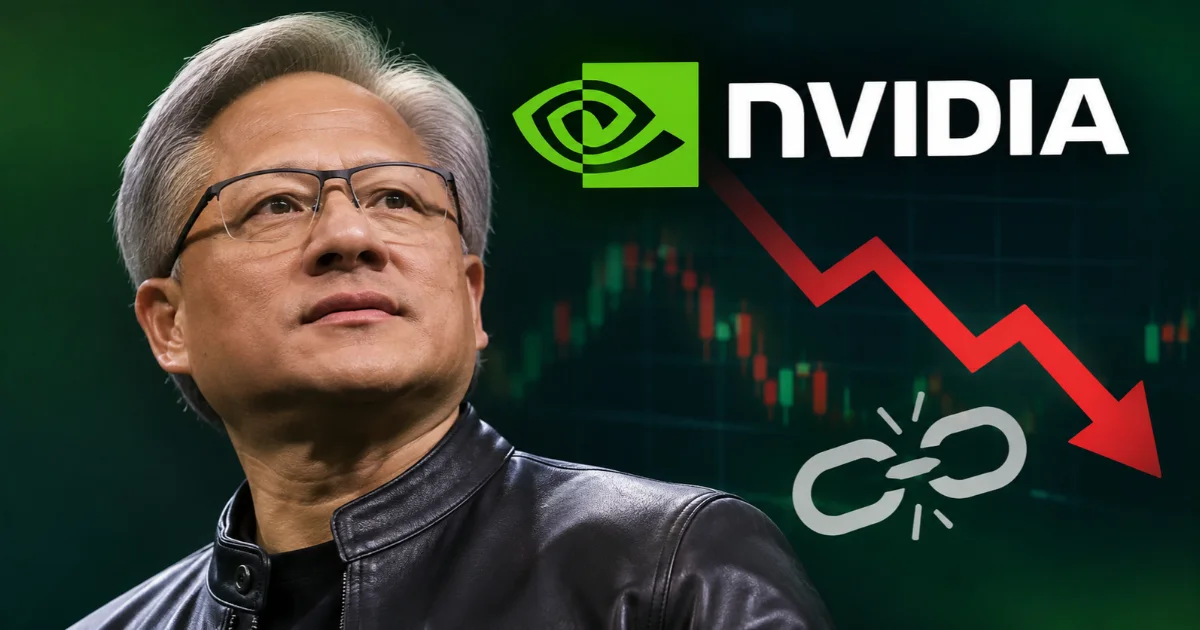
Jensen Huang suddenly resigned in November 2026. This scandalous exit shocked Silicon Valley. It erased over $1.6 trillion from Nvidia’s market cap in just days. For three decades, Huang drove the AI hardware revolution. He transformed a niche graphics card maker into the world’s most valuable company.
His departure followed revelations of an affair with a tech executive. Officials suspect she has ties to Chinese intelligence. However, this is not just a tabloid spectacle. This crisis fundamentally destabilizes the global AI supply chain.
Huang was never just a figurehead. He acted as the primary sales engine and chief product visionary. He also served as the undisputed geopolitical diplomat for a company at the center of the modern tech economy. His absence suddenly shifts Nvidia from an offensive juggernaut. Now, the company scrambles to manage a massive crisis.
A Leadership Vacuum in the Middle of an AI Boom
Nvidia’s current predicament is uniquely precarious. The company built its entire operational structure around Huang’s centralized authority. He personally drove the aggressive chip roadmaps.
He orchestrated massive customer deals and navigated complex regulatory ties. Now, Chief Financial Officer Colette Kress is stepping in as interim CEO. She is pivoting the company toward a more cautious approach. Wall Street highly respects Kress for her financial skills.
However, she faces a monumental task. She must replace Huang’s charismatic influence and aggressive risk tolerance. The internal friction is already palpable. Kress and the board are auditing Nvidia’s ambitious venture capital investments. They are closely examining circular financing deals. In these deals, Nvidia funded cloud startups that later purchased its GPUs.
The structural risks facing the chipmaker go far beyond a temporary dip in stock price or a single quarter of cautious guidance.
According to The Economist, the sudden absence of its visionary founder strips Nvidia of the aggressive dealmaking and unified strategic vision that kept it miles ahead of fierce industry competition.
This disruption comes precisely at a time when the AI market requires aggressive, continuous capital expenditure to sustain momentum. Rivals such as Advanced Micro Devices (AMD) and hyperscalers developing their own custom silicon like Google and Amazon are already capitalizing on the uncertainty.
For years, buyers willingly accepted Nvidia’s premium pricing and strict allocation terms because they bought into Huang’s unshakeable vision of the future. Without him delivering keynote speeches in his signature leather jacket, the hype cycle that fueled infinite demand could begin to normalize, forcing Nvidia to compete on traditional metrics rather than pure technological inevitability.
The situation is further complicated by intense regulatory heat. The US Securities and Exchange Commission has initiated a probe into the company’s disclosures following the resignation, while the Treasury Department is actively demanding answers from the board.
The allegations surrounding Huang’s relationship with Megaspeed International executive Alice Huang have dragged the company into a geopolitical firestorm, with US intelligence agencies investigating whether advanced chips or sensitive roadmaps were covertly funneled to China, bypassing strict export controls.
The End of Founder-Led Invincibility
The tech community launched a massive outcry. Over 165,000 people signed a petition demanding Huang’s return. Elon Musk even joined the effort. However, Nvidia’s board firmly shut the door on a comeback.
Chairman Harvey Jones led the first earnings call without Huang. He decisively stated that the board will not reinstate him. This rigid stance disappointed many hopeful investors. They wanted a Steve Jobs-esque return. Now, the company must move forward without its talisman.
This governance crisis fundamentally alters institutional investor views. Markets are pricing a persistent governance discount into the shares. Short sellers like Muddy Waters are taking aggressive positions against the company.
Nvidia’s era as AI’s open checkbook is effectively over. The new leadership must prioritize compliance and internal audits. Risk management will replace the breakneck innovation of Huang’s tenure.
Demand for data center GPUs remains incredibly strong right now. However, long-term execution risks have multiplied exponentially. The company relied entirely on the instincts of one founder.
Now, it must learn to operate as a traditional corporation. That transition is rarely seamless. Generative AI moves at lightning speed. Even a momentary lapse could permanently erode Nvidia’s dominant moat. Jensen Huang spent thirty years building that advantage.