
The mechanics of online shopping are quietly shifting away from human clicks, and the resulting friction is already creating high-profile corporate tensions.
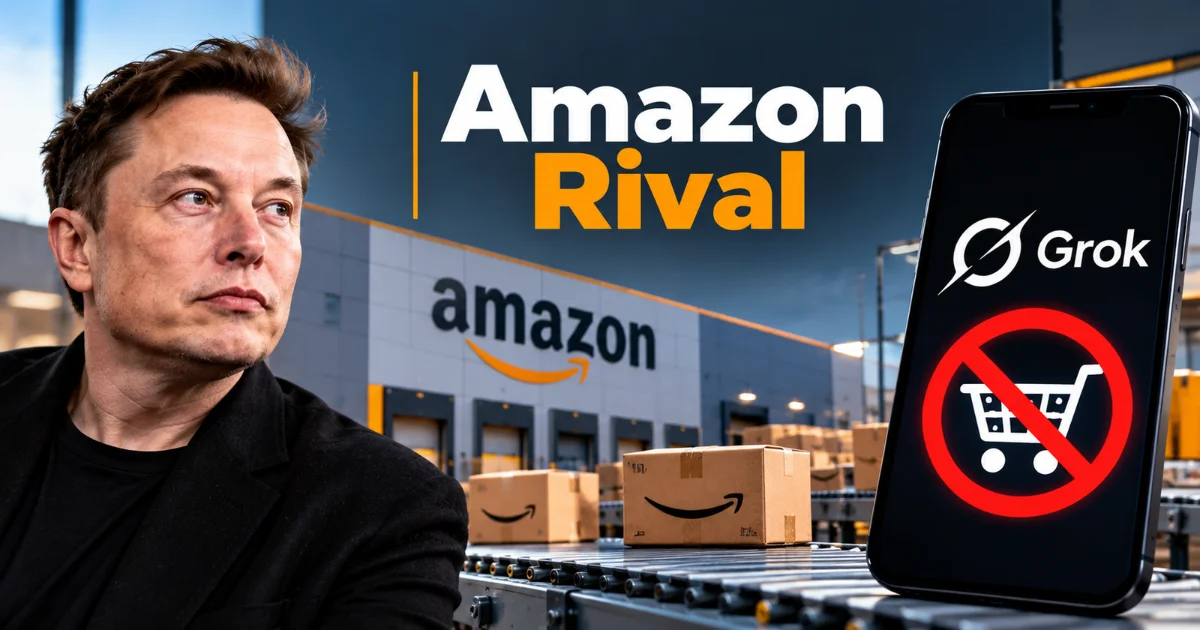
When a developer on X recently noted that Amazon was actively blocking their Grok bot from processing simple product returns and orders, Elon Musk responded with a characteristic mix of casual observation and competitive threat. He suggested it might be time to launch a direct competitor to the e-commerce giant.
The developer’s complaint highlighted a growing frustration among early adopters who want to delegate mundane chores to artificial intelligence. When Amazon blocks a bot from navigating its checkout system, the immediate answer is usually forcing the AI to buy from alternative vendors.
But as these autonomous systems become deeply integrated into our daily routines, finding temporary workarounds is not a sustainable model. For AI to reach its full potential, it needs to execute real-world tasks without constantly hitting artificial roadblocks built by legacy platforms protecting their turf.
This shift highlights the broader evolution from chatbots to agents: why 2026 is the year AI does the work for you, where the focus moves from conversation to actual execution.
Defending the Digital Walled Garden
The blockade against Grok is far from an isolated incident. We are witnessing a systemic lockdown of digital retail infrastructure. Traditional e-commerce platforms are inherently designed for human psychology, complete with targeted advertising, recommended bundles, and endless scrolling.
Autonomous agents bypass all of that highly profitable architecture. They simply retrieve the exact requested item, ignore the margin-boosting upsells, and attempt to check out.
Amazon has been aggressively shutting the door on these third-party shopping agents for months.
According to recent industry coverage at Times of India, detailing the ongoing Amazon AI ban, the retailer completely cut off Meta’s new Muse assistant, claiming the tool failed to identify its browsing sessions and potentially captured sensitive customer credentials.
The company has also initiated legal action against AI search firms like Perplexity regarding its Comet browser and actively prevented Google and OpenAI crawlers from scraping its marketplace data.
While Amazon cites privacy and security vulnerabilities as the primary reasons for these severe restrictions, the underlying motivation is almost certainly market dominance.
The company launched its own generative AI tool, Alexa for Shopping, earlier this year to keep product discovery and recommendations strictly in-house. By denying access to external models, they are forcing consumers to remain entirely within their proprietary ecosystem.
If an external assistant like Grok can flawlessly navigate Amazon’s inventory, Amazon risks becoming a simple, commoditized warehouse while X or Meta controls the actual lucrative customer relationship.
The Logic of an Agent-First Marketplace
This defensive posturing is exactly what makes Musk’s proposition intriguing rather than just empty social media chatter. The conversation on X quickly evolved past simply copying Amazon’s current business model.
Tech investor Tyler Palmer pitched the concept of a marketplace built entirely on an “agent first” architecture, combined with a commitment to selling only domestically manufactured products. Musk affirmed that the strategy made sense, and from a technical perspective, it points to a massive gap in the market.
An agent-first store would flip the traditional retail paradigm upside down. Instead of optimizing a website for human eyeballs and impulse clicks, the platform would be engineered specifically for machine readability.
To understand how these autonomous buyers operate under the hood, exploring what are AI agents and how they work reveals why traditional web storefronts present so many unnecessary hurdles for automated workflows.
A dedicated agent marketplace would instead feature frictionless API access, transparent inventory data, and robust token-based security protocols designed explicitly for autonomous wallets rather than clunky password logins and hostile CAPTCHAs.
Building physical logistics networks and competing with Jeff Bezos’s massive supply chain is a brutal, capital-intensive endeavor that very few companies could survive. However, the current landscape leaves few alternatives if Musk wants his technology to have tangible utility.
An artificial intelligence that can only talk is a novelty, but an AI that can reliably negotiate, purchase, and manage physical goods on your behalf is a transformative utility. If the current gatekeepers refuse to let autonomous agents through the front door, building an entirely new storefront might be the only viable path forward.