
For decades, enterprise software has been fragmented across customer databases, email platforms, code repositories, and shared drives. Employees often have to switch between these disconnected systems to complete routine tasks, effectively serving as the link between them.
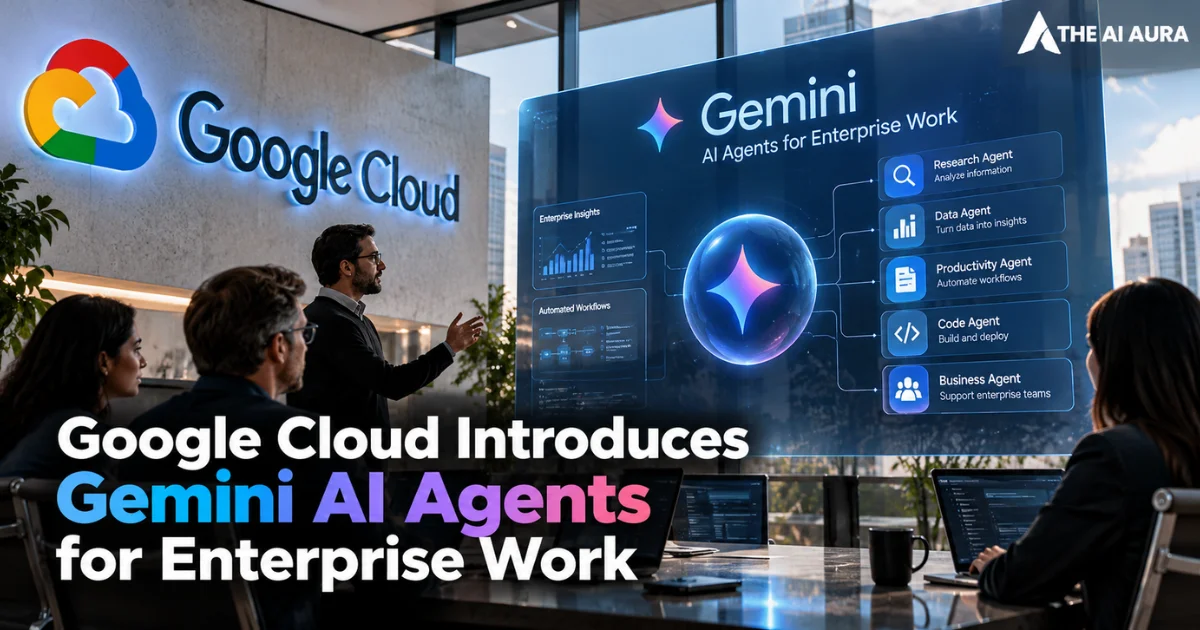
At the Gemini at Work 2026 event, Google Cloud introduced the Gemini agent, signalling a potential shift toward a more unified approach to workplace productivity. The goal is to help employees access information and carry out tasks across business workflows through a single AI-powered interface.
Gemini is positioned as a universal workplace agent that changes how employees approach their work. Instead of switching between applications to collect information, analyze data, and produce deliverables, employees can manage these tasks through a single prompt-based interface.
The prompt window becomes a central workspace, helping streamline workflows and reduce the need to navigate multiple disconnected tools.
This is not just another conversational chatbot bolted onto a word processor or a spreadsheet; understanding AI agents vs chatbots: the real difference makes clear that this is a fundamental rewiring of how complex enterprise tasks are initiated, managed, and ultimately executed.
By collapsing the distance between intention and action, Google is betting that the future of enterprise software relies entirely on natural language orchestration.
Re-engineering the Workflow Pipeline
This universal agent goes beyond basic text generation by integrating deeply with an organization’s business systems. When employees submit complex requests, Gemini can access relevant company data and business context while respecting existing permissions.
The agent supports tasks such as summarizing documents, answering operational questions, creating marketing content, and writing code through a single interface. This unified approach helps employees work more efficiently without switching between multiple tools.
It also helps coordinate everyday workflows by interpreting goals, identifying the necessary steps, selecting relevant tools, and connecting with existing business systems to complete tasks.
According to the recent updates detailed at Google Cloud, this multi-step process happens seamlessly behind the scenes without user intervention. The agent then pushes the finished product directly into the native environments where employees already spend their time.
It deposits a completed data analysis into a shared document, drops a nuanced drafted response directly into an inbox, or injects functional, tested code into a specialized developer environment.
The shift proves that AI won’t replace your team — but it will replace your workflow, turning the human worker from a manual laborer of digital tasks into a high-level orchestrator.
The Infrastructure of Enterprise Adoption
Building an AI tool to draft a polite email is relatively straightforward. However, deploying a semi-autonomous agent across a large corporate network introduces significant logistical, financial, and security challenges. Google Cloud recognizes that enterprise AI adoption depends not just on capability, but also on control.
To improve efficiency, the Gemini agent uses dynamic model routing. It evaluates each prompt’s complexity and selects the most suitable model for the task.
This approach also supports cost management, helping businesses avoid using expensive, high-powered models for simple requests. By optimizing model selection in real time, companies can scale AI adoption while keeping computing costs more predictable.
Security and compliance are equally important. The agent operates within enterprise-grade security, administration, and governance frameworks designed for business environments. These safeguards include data isolation, role-based access controls, and compliance monitoring.
When accessing sensitive information, such as internal financial records, the agent must respect established permissions and access restrictions. These controls help businesses deploy AI more confidently, moving beyond experimental demonstrations toward practical, secure enterprise applications.