

Japan is confronting an unprecedented surge in human-bear conflicts, recording 13 deaths and over 220 injuries between April 2025 and March 2026.
Driven into urban centers by climate-induced food shortages and the erosion of rural buffer zones, Japan’s estimated 57,000 native brown and black bears are increasingly scavenging for human waste.
In response, municipalities are deploying a hybrid strategy of autonomous technology, data aggregation, and canine conservation to safely manage the wildlife boundary and avoid lethal culling.
Deploying AI, Drones, and Animatronic Wolves
While the government has outlined a roadmap to reduce the bear population through culling by 2030, regions prone to frequent encounters are prioritizing non-lethal, tech-driven deterrence. To manage the 50,000 sightings recorded last year, prefectures have integrated specialized hardware:
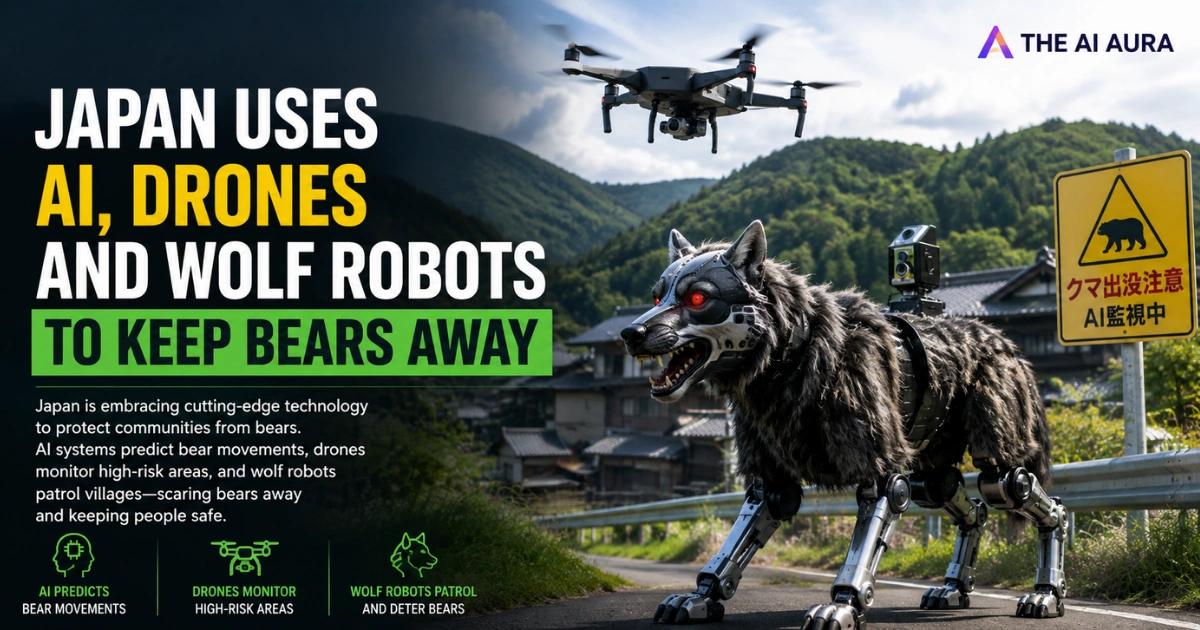
- AI-Powered Surveillance: Forests surrounding residential areas in Gunma, Toyama, and Ishikawa are monitored by AI-equipped cameras. Developed by Hokuriku Electric Power Company, these systems instantly identify approaching bears and dispatch automated warnings to local officials, allowing teams to intercept the animals before they enter town limits.
- Rapid-Response Drones: In Hokkaido, KDDI SmartDrone operates automated drone ports capable of launching within 10 minutes of a reported sighting. The drones track the bear’s movements and utilize aerial hazing techniques to safely herd it away from human settlements.
- The “Monster Wolf” Robot: For agricultural and property defense, the $4,000 solar-powered “Monster Wolf” animatronic has seen a massive spike in adoption. The robotic deterrent relies on motion sensors to trigger flashing lights and the recorded howl of the extinct Japanese wolf. Manufacturer Wolf Kamui Co. is currently testing an 8-inch plush “Mini” variant designed specifically for hikers and anglers.
Data Tracking and the Return of Bear Dogs
Hardware solutions excel at perimeter defense, but their high costs and localized scopes do not provide immediate situational awareness for the general public. To support safe coexistence on a national scale, experts are leveraging both digital aggregation and traditional ecological deterrents.
The Kumamap Ecosystem
Prior to 2025, Japanese bear incident data was scattered across disparate municipal PDFs, physical maps, and press releases. Following a fatal attack on Mount Rausu, engineer Danyel Koca developed Kumamap to centralize this fragmented intelligence.
- Aggregates local government data, national news, and verified community reports into a single live map.
- Empowers nearly 6 million active users to check route safety before entering bear habitats.
- Currently tracks over 156,000 public records, shifting the focus from reaction to avoidance.
Karelian Bear Dogs
Despite the influx of AI and robotics, Liam Adcock of the Picchio Wildlife Research Center emphasizes that managing the bear population still requires active ground operations.
His organization relies on Karelian bear dogs to replicate Japan’s historical use of semi-wild deterrents. These specially trained canines safely track, bark at, and chase bears away from residential zones, resulting in significantly lower encounter rates in participating towns.
| Deterrent Strategy | Primary Application | Target Audience | Impact Type |
| AI Camera Networks | Perimeter alerts for rural towns | Municipal Authorities | Non-lethal monitoring |
| Monster Wolf | Crop and private property defense | Farmers & Landowners | Auditory/Visual hazing |
| Kumamap App | Pre-trip route planning | Hikers & General Public | Preventative avoidance |
| Karelian Bear Dogs | Active tracking and boundary setting | Wildlife Professionals | Non-lethal physical hazing |
| State Culling | Emergency population control | Licensed Hunters | Lethal reduction |
Source: CNN, "Japan Using AI Drones and Wolf Robots to Keep Bears at Bay"