

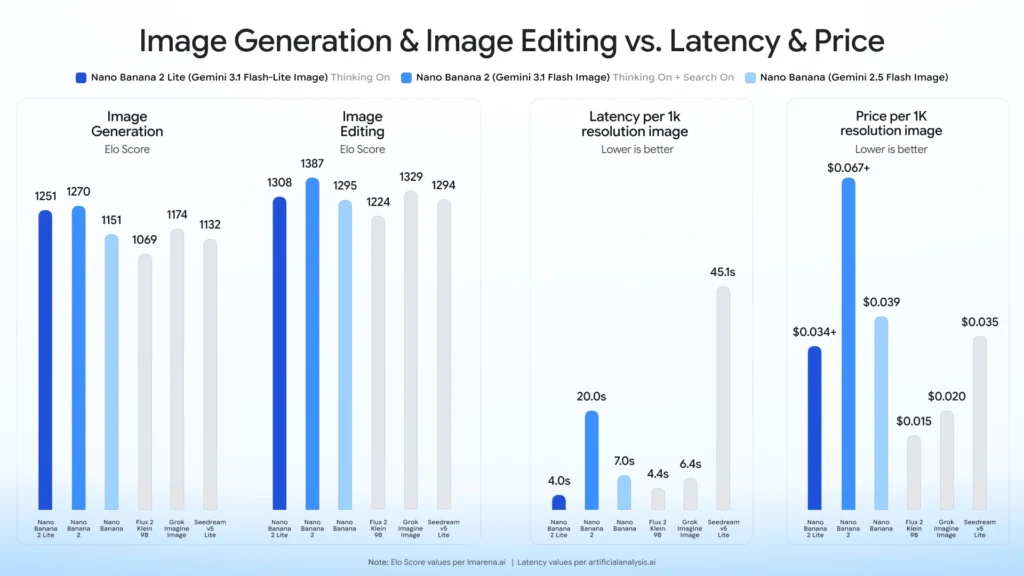
Google shipped two generative media models on June 30, and the more interesting story isn’t either one on its own, it’s what happens when developers chain them together. Nano Banana 2 Lite generates images in about four seconds.
Gemini Omni Flash turns those images into video using plain-language editing commands. Individually, both are incremental upgrades. Paired, as Google’s own announcement makes clear, they form a pipeline that changes what’s economically worth producing at scale.
What each model actually does
Nano Banana 2 Lite, model ID gemini-3.1-flash-lite-image, is now available through Google AI Studio, the Gemini API, and the Gemini Enterprise Agent Platform, with a parallel rollout across consumer surfaces including AI Mode in Search, the Gemini app, NotebookLM, Google Photos, Stitch, Google Flow, and Google Ads.
It produces text-to-image outputs in roughly four seconds at $0.034 per 1K-resolution image, and Google is positioning it as the direct replacement for the original Nano Banana (gemini-2.5-flash-image), with no meaningful workflow changes required to switch over.
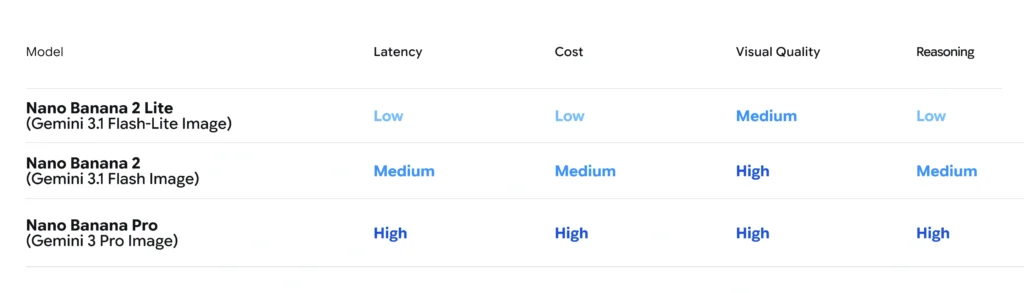
It sits below Nano Banana 2, the mid-tier “generalist” model, and Nano Banana Pro, which trades speed for the reasoning and control needed on complex professional jobs.
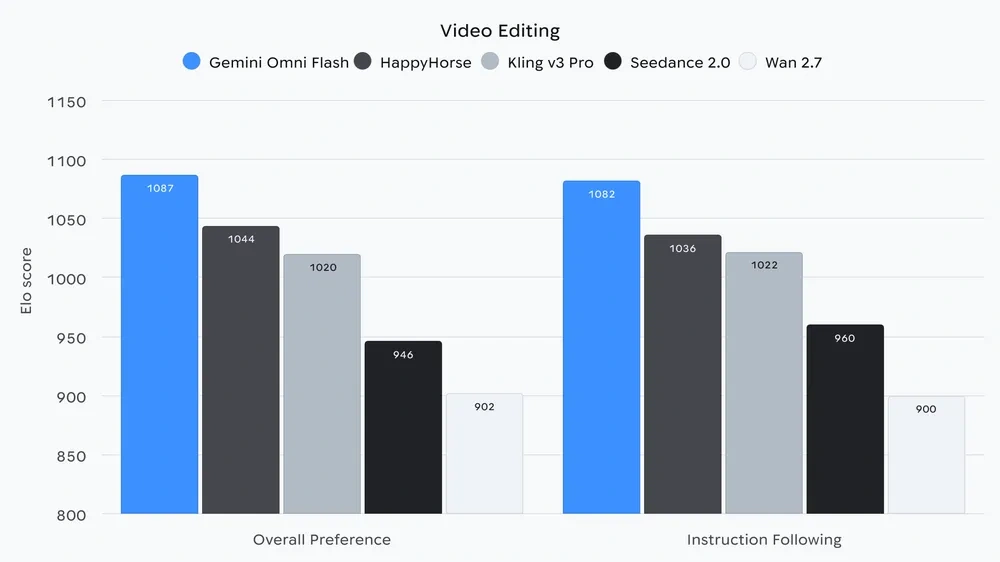
Gemini Omni Flash, first shown at Google I/O and now reaching developers through the Gemini API and AI Studio in public preview, handles video generation and conversational editing from a mix of text, image, and video inputs.
It’s priced at $0.10 per second of output, matching Veo 3.1 Fast. Editors describe changes in natural language rather than timeline scrubbing, and the model draws on Gemini’s broader knowledge base to keep scenes coherent.
At launch, clips top out at ten seconds, audio-reference uploads aren’t supported in the API yet, and character consistency can slip during scene changes or camera pans. Google has been upfront that this is preview-grade software, not something to wire into a customer-facing pipeline untested.
Why the chaining matters more than either spec sheet
The economics are the actual news here. Video generation has always been the expensive, slow step in any creative pipeline, which limits how much a team is willing to test before committing budget.
A four-second, three-cent image draft removes that friction from the front end. Generate the still cheaply with Nano Banana 2 Lite, validate the concept, then only spend on animating it with Omni Flash once it’s worth the cost.
The Interactions API adds session memory on top of that loop, letting a user stack up to three sequential video edits without losing context.
Google’s launch demos make the intended use case explicit rather than aspirational. “Omni Product Studio” turns static product photography into cinematic e-commerce video. “Space Lift” takes a photo of a room and generates a cinematic walkthrough of a redesigned version.
Early partner reactions reinforce the same read: Adobe is bringing both models into Firefly, and WPP has already run localization and product-swap tests inside its agentic marketing platform, WPP Open, according to comments Google included in its own announcement.
What’s still rough, and who should care
None of this makes Omni Flash a finished product. The ten-second cap, the missing audio-reference support, and the scene-consistency issues are real constraints for anyone building past a prototype.
But the intended audience right now is exactly that: teams prototyping high-volume creative work, not ones ready to automate a finished ad campaign.
For marketing, e-commerce, and social teams running dozens of visual variants a week, the combination of a near-instant image model and a per-second video model priced at parity with Google’s own frontier video tool is the more consequential shift, regardless of how many rough edges the preview still carries.
Source: Official Google AI announcement, "Start Building with Nano Banana 2 Lite and Gemini Omni Flash"