
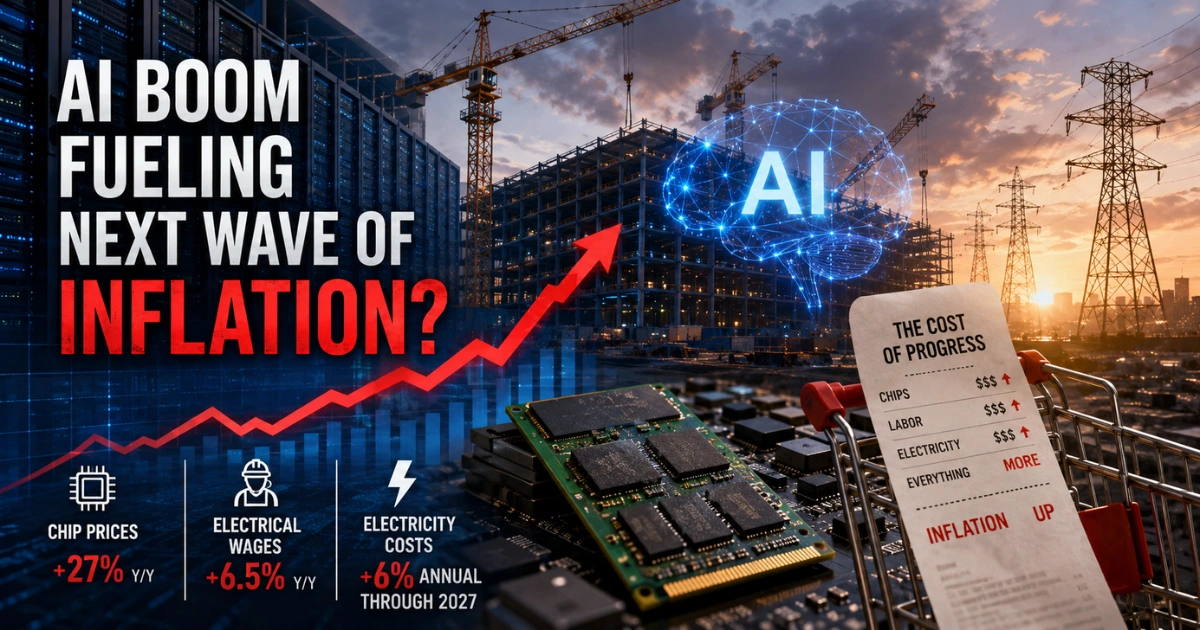

The rapid expansion of AI infrastructure is emerging as a new driver of inflation, even as traditional pressures such as oil prices and tariffs begin to ease.
A new analysis suggests that the unprecedented demand for AI data centers is pushing up the costs of chips, skilled labor, and electricity, creating fresh price pressures across multiple industries.
AI Data Center Expansion Is Driving Inflation
The growing demand for AI computing infrastructure is already affecting supply chains and consumer prices.
- Hardware costs: According to recent data, U.S. wholesale prices for electronic components and accessories rose 27% year over year in May, driven largely by increased demand for memory and storage chips used in AI servers and cloud infrastructure.
- Consumer impact: Apple recently raised prices for several Mac and iPad models by 15% to 25%, highlighting how rising component costs are influencing product pricing.
Beyond hardware, AI data center construction is increasing demand for skilled workers. Wages for electrical and wiring-installation contractors climbed 6.5% year over year in April, well above the average private-sector wage increase.
At the same time, electricity demand continues to rise as new AI facilities require enormous amounts of power.
Goldman Sachs estimates that data centers could account for nearly half of all U.S. electricity demand growth through 2030, with consumer electricity prices expected to increase by around 6% annually during 2026 and 2027.
Massive AI Investment Could Keep Prices Elevated
Unlike inflation caused by temporary supply disruptions, economists believe the AI infrastructure boom represents a long-term demand-driven trend.
Alphabet, Amazon, Meta, Microsoft, and Oracle are expected to invest about $741 billion in capital expenditures this year, nearly 75% more than in 2025.
The companies will use much of that funding to expand AI infrastructure, including new data centers, networking equipment, and advanced computing hardware.
Economist Stijn Van Nieuwerburgh estimates that global AI infrastructure investment could approach $8 trillion by 2032.
Meanwhile, Federal Reserve Governor Lisa Cook has noted that only a small share of announced data center projects has actually begun construction, indicating that the current wave of investment is still in its early stages.
Because demand continues to outpace available resources, economists expect upward pressure on prices to persist as companies compete for chips, electricity, construction materials, and specialized workers.
Productivity Gains May Take Years to Offset Inflation
Many economists agree that artificial intelligence has the potential to improve productivity over the long term, which could eventually help reduce inflationary pressures.
However, analysts at UBS believe those productivity benefits are still several years away. Until productivity gains arrive, businesses and consumers will likely continue paying higher prices for technology, labor, and energy.
- A recent survey by the National Association for Business Economics found that 81% of economists expect AI infrastructure expansion to contribute to inflation over the next year.
- Economists are also watching inflation expectations closely. If consumers and businesses begin to assume higher prices will continue, those expectations can influence wage negotiations and pricing decisions, making inflation more difficult to control.
With AI investment continuing at an unprecedented pace and hundreds of billions of dollars still planned for new data center projects, the coming years will determine whether productivity gains can eventually offset the inflationary pressures created by the AI infrastructure boom.
Source: The Wall Street Journal – "The Data-Center Boom Is Sparking a Third Wave of Inflation"