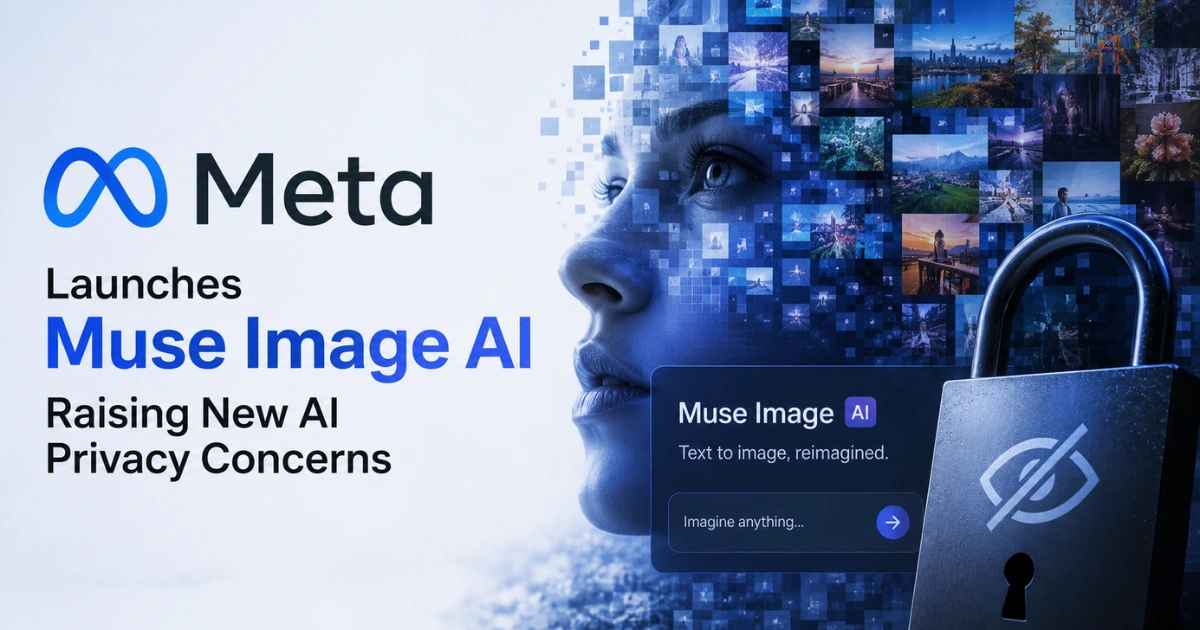

Meta shipped its first image-generation model built entirely in-house on July 7, and the technical story got buried within a day.
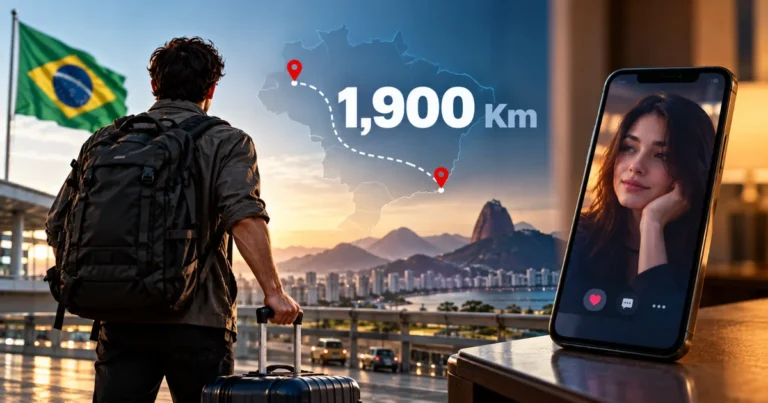
Muse Image, developed by Meta Superintelligence Labs under Chief AI Officer Alexandr Wang, lets anyone inside the Meta AI app @-mention a public Instagram username and pull that person’s public photos in as visual references for a newly generated image.
It does this by default, for every public account, unless the account holder finds the setting and turns it off first.
How the opt-out actually works
The toggle sits four menu layers deep: Instagram profile, the menu icon, “Sharing and reuse,” then switching off both Posts and Reels under “Allow people to use your content on Instagram and with AI features on Meta.”
Meta’s own help documentation states plainly that users won’t be notified when someone generates an image using their content, and the opt-out only blocks future generations; anything already created stays in the system regardless of what a user changes afterward.
The backlash arrived almost immediately. Creative Artists Agency publicly called on Meta to flip the model to opt-in, arguing that no one’s name, image, or likeness should be usable by an AI system without documented consent.
Many critics compare Meta’s approach with OpenAI’s Sora launch. Last year, Sora sparked a similar opt-out debate after talent agency WME removed its entire client roster from the platform. OpenAI later reversed the default setting and eventually shelved the model.
Why experts say this changes what “public” means
Industry analysts frame the shift less as a technical issue and more as a redefinition of what having a public account means.
Prachir Singh of Counterpoint Research noted that a public Instagram profile used to simply mean more visibility; now it also means strangers can generate new images built on that person’s face without ever asking, a risk Singh says lands hardest on creators and influencers whose likeness carries direct commercial value.
Prabhu Ram of CyberMedia Research made a similar point about the mechanics of the setting itself, arguing that opt-out defaults structurally favor user inertia over informed choice, and that businesses using an AI-generated ad image containing someone’s face without consent—not Meta—would likely be the ones facing legal exposure.
The timing adds regulatory weight in Europe specifically: the EU AI Act’s Article 50 transparency rules, which require clearly labeling AI-generated content depicting real people, take effect August 2, 2026, just weeks after this launch. Meta hasn’t announced any GDPR-specific adjustments to how Muse Image handles EU user data.
The company’s answer so far is Content Seal, an invisible watermark that survives cropping, compression, and screenshots, but critics note a watermark only proves where an image came from after the fact. It does nothing to stop the image from being generated in the first place.
Meta has framed Muse Image as a creative tool and plans to extend it into advertiser-facing products within weeks, a commercial push that sits uneasily next to a default setting that assumes consent rather than asking for it.
Source: Official Meta Newsroom, "Introducing Muse Image: Image Generation Built for Your World"