
The global aviation industry is currently undergoing a massive structural shift, driven heavily by the rapid advancement of artificial intelligence and the urgent need to modernize aging digital infrastructures.
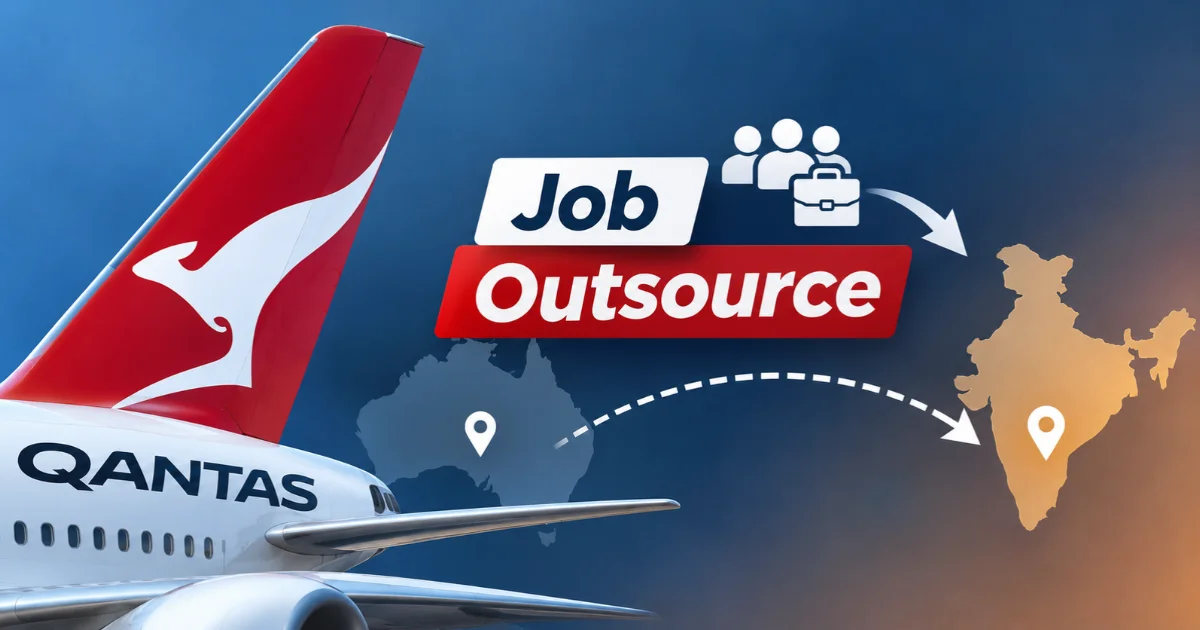
In a significant operational pivot, Qantas Airways has announced a sweeping overhaul of its corporate functions, a move that will result in the outsourcing of 850 Australian jobs to the global consulting firm Accenture.
For a legacy carrier that employs roughly 28,000 staff domestically, this transition represents one of the most aggressive technological realignments in recent corporate history.
The restructuring, slated to begin in mid-2027, will primarily impact back-office operations, including finance, procurement, human resources, and marketing departments.
While corporate restructuring is standard in the airline sector, the scale of this offshore transition to India signals a broader industry trend where heavy investments in automation are replacing traditional administrative roles.
CEO Vanessa Hudson recently addressed the workforce, acknowledging the difficulty of the transition while pointing to the unprecedented speed at which AI technology is evolving.
This internal shift coincides with external financial pressures, as the airline simultaneously navigates rising fuel costs and necessary adjustments to flight schedules and passenger fares.
The Drive Toward Automation and System Modernization
At the core of this major workforce disruption is a fundamental need to untangle decades of digital fragmentation. Like many legacy corporations, Qantas operates on a complex web of outdated technology that struggles to support the demands of a modern, data-driven business.
The airline currently spends over one billion dollars annually on its technological infrastructure, yet much of this capital goes toward maintaining obsolete frameworks.
According to coverage of the internal announcement at BBC News, the company relies on more than a thousand legacy applications that were designed for a different era and were never built to communicate with one another.
This deep-seated inefficiency creates massive duplication of effort across corporate functions, draining resources that Qantas could otherwise direct toward customer experience and strategic growth.
By handing these fragmented systems over to Accenture, Qantas intends to redesign and drastically simplify its backend operations. The immediate goal is to streamline daily workflows, allowing remaining corporate personnel to focus on high-value tasks rather than navigating clunky software.
However, the long-term strategy relies heavily on artificial intelligence integration, which requires a clean, cohesive digital foundation to operate effectively across a global enterprise.
Offshoring to India and the AI Horizon
The strategic partnership with Accenture will see the company relocate most of these newly streamlined roles to India, with a small fraction remaining in Australia. This geographic shift is not merely about immediate labor cost arbitrage; it also lays the foundation for aggressive automation.
Qantas has openly stated that Accenture will take control of these corporate functions and progressively transform the work through advanced AI applications.
Thousands of Qantas employees are already utilizing machine learning tools in their day-to-day operations, but this multi-year deal accelerates the company’s timeline for enterprise-wide AI adoption.
The reality for the Australian workforce is undeniably stark, though the airline has committed to redeploying affected personnel into new domestic roles wherever possible.
By stripping away redundant manual processes and shifting the remaining administrative burden offshore, Qantas is positioning itself to run a leaner, highly automated corporate backend.
This aggressive modernization reflects a harsh new reality for legacy businesses: adapting to the era of artificial intelligence often requires painful, structural dismantling of the human workflows that built the company in the first place.