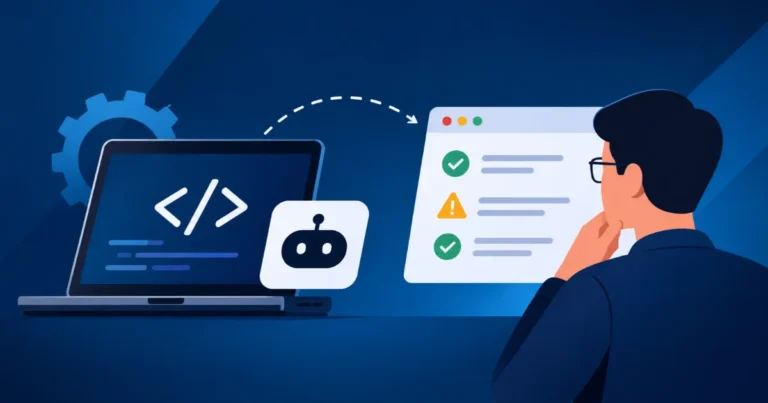

Coding agents have definitively mastered syntax, but syntax alone is not software engineering. Tools like Cursor, Claude Code, and Codex can spit out functional scripts in seconds, yet they frequently stumble when tasked with system architecture, edge-case debugging, or navigating undocumented legacy codebases.
The immediate bottleneck in development is no longer code generation capability; it is operational friction and workflow orchestration.
Developers are quickly realizing that simply asking a large language model to build a feature leads to unpredictable results, wasted compute, and messy regressions. In the broader debate around AI Agents vs Prompt Engineering: What Actually Works in 2026?, raw prompting consistently falls short for complex software tasks.
To make these tools reliable in enterprise environments, engineering teams are adopting AI agent skills. These are reusable, structured instructions that lock down exactly how an agent plans, tests, and ships code, completely eliminating the need to repeatedly prompt basic best practices.
Shifting Toward Structured Engineering Workflows
The open-source ecosystem is aggressively solving this orchestration problem by treating agent behavior as infrastructure. Instead of relying on ad-hoc conversational prompts, developers are turning to modular repositories that enforce standard software lifecycles. Jesse Vincent’s Superpowers repository shifts the focus entirely toward strict methodology.
Rather than just giving an agent random utilities, it enforces test-driven development, parallel processing, and structured root-cause debugging. It stops agents from blindly mutating code until something passes, forcing them to brainstorm and verify logic before committing any changes.
Matt Pocock takes a different architectural angle with his Skills for Real Engineers project. His approach strips away the monolithic workflow in favor of composable, hyper-specific utilities.
Developers can chain these discrete skills together, moving seamlessly from a guided documentation interview directly into specification creation and implementation. It mirrors the exact operational flow of senior engineers rather than attempting to automate the entire software lifecycle away at once.
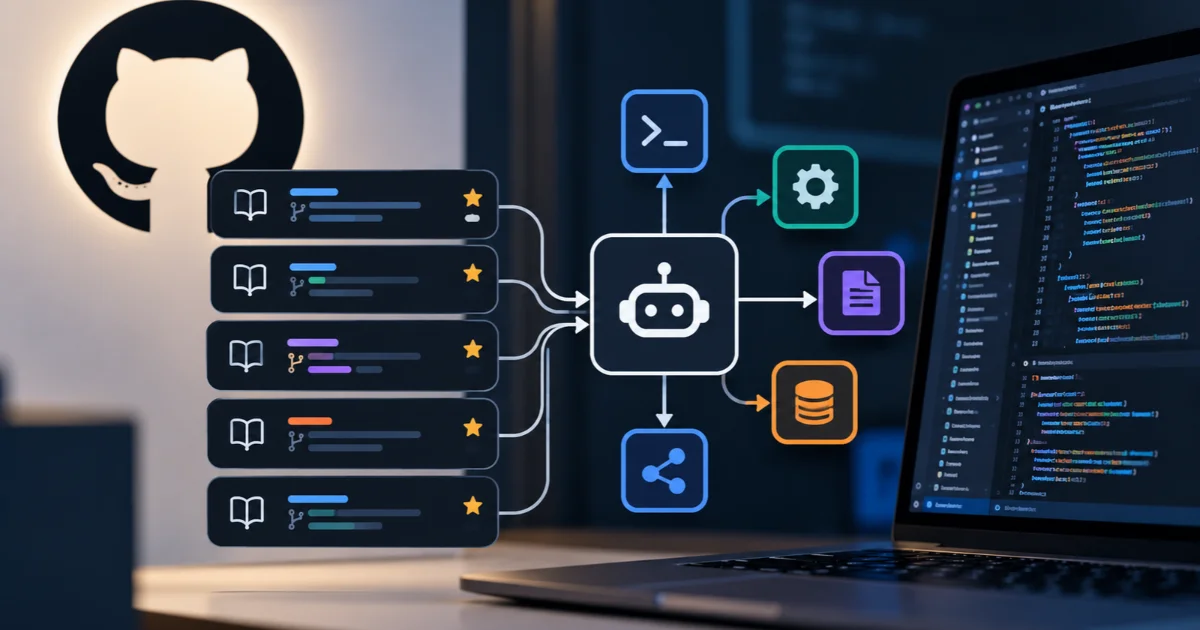
According to a recent breakdown of the best GitHub repositories for AI agent skills on KDnuggets, Affaan’s ECC project pushes this concept even further by introducing cross-session memory and continuous learning.
While other collections act as static skill libraries, ECC behaves more like a comprehensive engineering platform. It actively scans for security risks across agent configurations and learns from repeated debugging patterns, turning previous context into reusable assets that improve over time.
Bridging Application Experimentation with Production Realities
Beyond strict coding tasks, the focus inevitably shifts to how these models interact with existing infrastructure and production environments. Understanding How to Build Reliable AI Agents in 2026: Design Patterns That Work in Production is critical when transitioning from local experiments to enterprise codebases. Shubham Saboo’s Awesome LLM Apps repository serves as a massive testing ground for this exact intersection.
It moves past basic markdown skill files, offering a sprawling look at how retrieval-augmented generation and multi-model orchestrations actually function in practice. Developers use it to dissect how orchestrator agents delegate complex workloads to specialized worker agents, or how tools can autonomously scan Git histories to evaluate abandoned technical debt.
Deploying these systems safely requires rigorous quality gates, which Addy Osmani’s Agent Skills repository tackles head-on. Built entirely around the classic define, plan, build, verify, and ship lifecycle, this collection targets production reliability.
It introduces constraint-driven development directly into the agent’s workflow. Instead of running expensive integration tests, linting, and security scans after every minor edit, it intelligently defers these checks to the appropriate stage of the pipeline to reduce latency and overhead.
Ultimately, dropping massive, generalized skill repositories into a local development environment is a recipe for operational bloat. Engineering teams get the best results when they cherry-pick specific, isolated skills that map directly to their internal deployment bottlenecks.
By refining these modular configuration files over time, developers stop treating AI as a magic black box and start operating it as a predictable, heavily constrained pipeline tool.