
Workplace AI discussions usually focus on efficiency and massive productivity gains. Experts constantly say tools like ChatGPT will change how we work. They promise faster information processing and better project delivery. However, this operational view misses human psychology.
When an employee hands in a pristine report polished by a large language model, the technical quality of the work might be flawless, but the interpersonal dynamic shifts behind the scenes. Recent behavioral research reveals a significant and quiet career penalty hiding in plain sight.
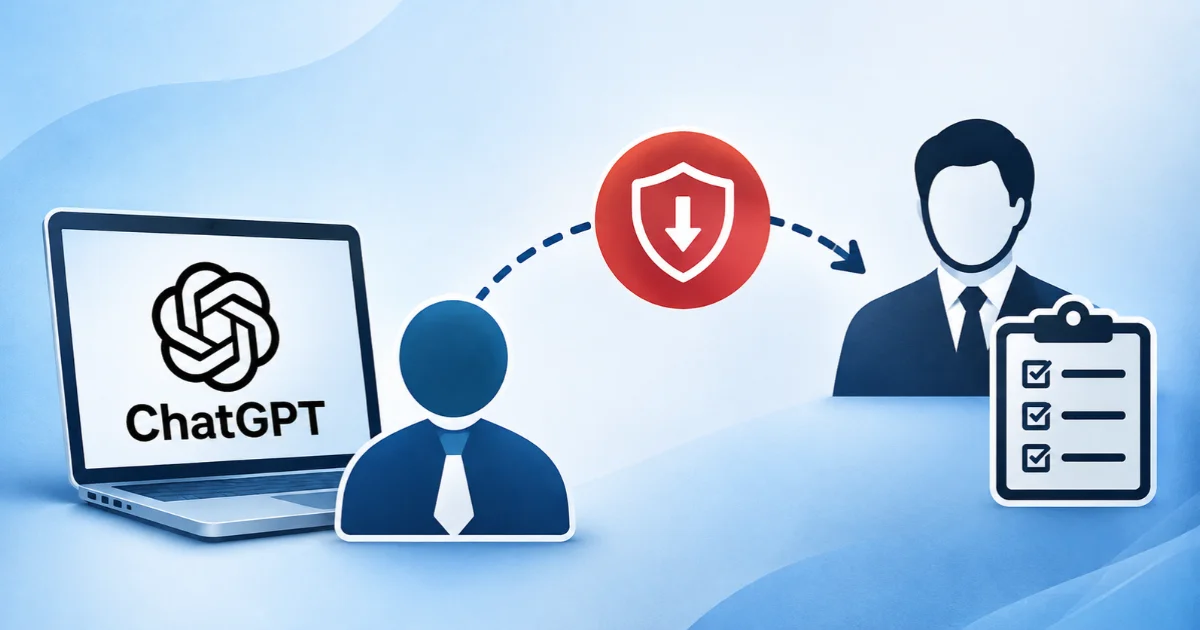
It turns out that when managers know an employee leveraged artificial intelligence to get the job done, their inherent trust in that individual drop dramatically.
This dynamic fundamentally changes how supervisors assess a team member’s underlying credibility, organizational dedication, and ultimately, who actually gets promoted.
The Hidden Cost of AI on Workplace Credibility
The actual mechanics of this trust deficit are fascinating and somewhat alarming for ambitious professionals eager to adopt new tech.
Researchers across multiple academic institutions conducted several economic experiments to see exactly how supervisors reacted to AI-assisted work compared to traditional independent effort.
The core issue isolated by the study wasn’t about the factual accuracy or quality of the final deliverable. Instead, it centered entirely on the supervisor’s perception of the worker’s integrity and raw effort.
In scenarios where managers had to decide whether to take an employee’s word regarding how much time a specific task required, those who worked independently were trusted nearly seventy percent of the time.
The moment AI was introduced into the workflow, that baseline trust plummeted to just twenty-four percent.
According to a comprehensive breakdown of this psychological research available at Peoplematters, this skepticism immediately bleeds into much broader career assessments.
Managers in these studies naturally began associating AI usage with poorer overall performance and a distinct lack of organizational citizenship.
Because the supervisor felt the employee took a technological shortcut, they unconsciously downgraded the employee’s suitability for future leadership roles.
Interestingly, even academic supervisors evaluating graduate students exhibited this exact same bias, proving that this cognitive penalty is deeply ingrained in human hierarchy.
Why Clear Corporate Policies Are the Only Fix
Executive leadership must address this psychological penalty. Otherwise, it creates a fractured environment. Employees feel forced to work in absolute secrecy. Capable workers realize efficiency tools make them look lazy. However, they rarely stop using the technology.
Instead, they simply stop talking about it. This creates a dangerous culture of “shadow AI.” Unauthorized data processing happens quietly behind the scenes. Fortunately, the research offers a clear operational fix.
The drastic drop in supervisory trust disappears entirely when a company implements explicit, documented policies that actively encourage the use of large language models. The root problem isn’t the technology itself, but rather the ambiguity surrounding its professional acceptance.
Leadership must officially sanction ChatGPT as a standard business tool. This action removes the stigma of cheating or corner-cutting. Silent companies rely on unwritten rules and fail to establish trust.
Their managers naturally default to baseline suspicions. Buying software licenses is inadequate for businesses scaling generative AI.
Executives must communicate that leveraging AI is the new standard. This clear stance ensures companies judge ambitious employees on their actual output.