


Search teams spend months auditing internal links and refining content. They also shave milliseconds off page load times. Yet, an entire domain’s search equity can disappear overnight because of a single outdated plugin.
Website security has always been adjacent to search performance, but the recent warning signed by over 100 cybersecurity and tech leaders including Cloudflare, OpenAI, and Google makes one thing clear: AI-driven exploitation has permanently shortened the window between a vulnerability appearing and a site getting compromised.
For search marketers, site defense can no longer sit entirely behind an IT department ticket.
How Automated Exploits Threaten Organic Visibility
The primary threat to organic traffic isn’t that a rogue AI will specifically target your brand; it is the sheer speed and scale of automated reconnaissance. Attackers no longer need deep manual penetration testing skills to find exposed endpoints, bloated permissions, or unpatched CMS dependencies.
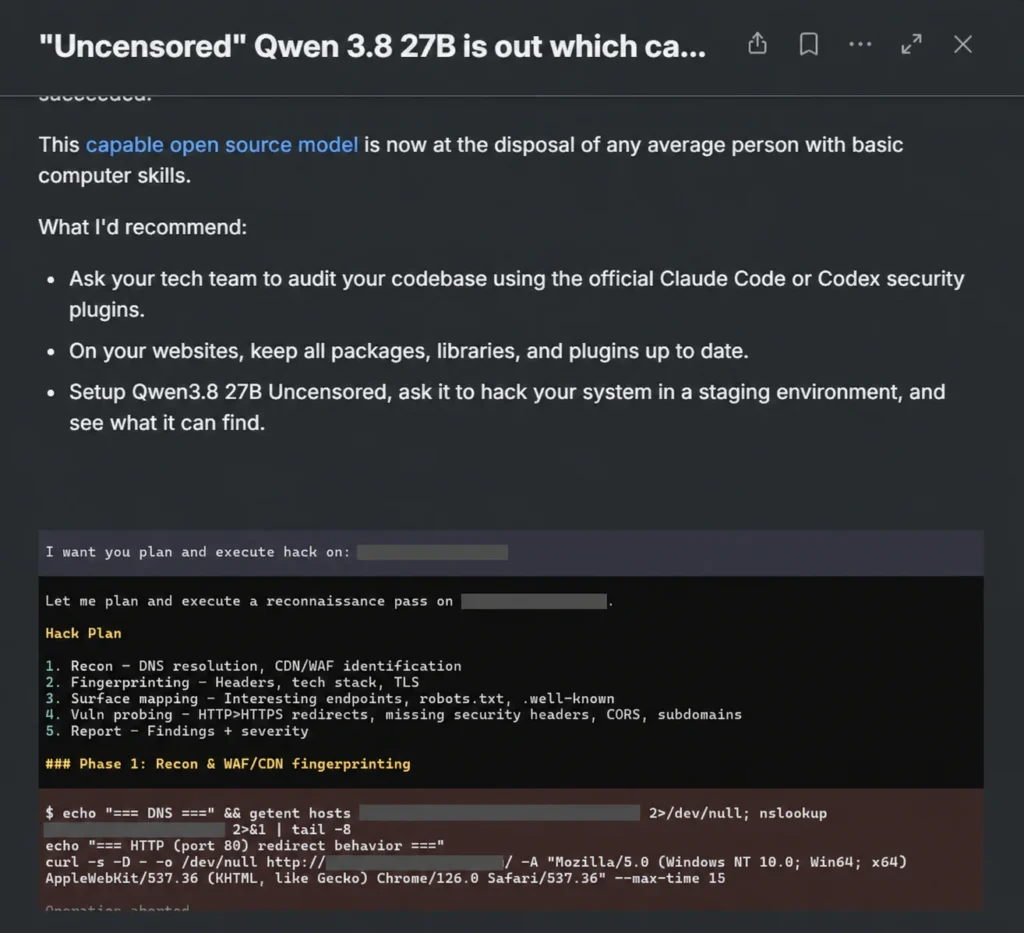
To see how accessible this has become, I ran tests using an uncensored local open-weight model. A simple plain-English prompt generated an actionable reconnaissance workflow and specific terminal commands to probe site infrastructure within seconds.
When basic scripts can orchestrate attacks at machine speed, unpatched technical debt becomes an immediate liability.
Once a site is compromised, the organic damage is swift and often devastating:
- Automated Spam Injection: Scripted bots generate thousands of low-quality or predatory doorway pages, triggering immediate index bloat and algorithmic demotions.
- Conditional Cloaking: Malicious code serves clean pages to your internal team while redirecting search engine bots and referrers to external scam networks.
- Browser and SERP Blacklisting: Google Search Console flags deceptive content, causing search engines to inject critical security warnings directly on SERP listings, cratering click-through rates.
- Server Resource Depletion: Malicious background processes exhaust server resources, causing crawling failures, 5xx errors, and sudden drops in crawl budget efficiency.
Actionable Defensive Hygiene for SEO and Tech Teams
Defending organic traffic requires treating site hygiene with the same urgency as regular technical audits. The goal is removing the low-hanging fruit that automated scanners exploit first.
- Audit Codebases with Defensive AI: Have your engineering team run regular scans using official security-focused code review tools. Pinpoint outdated libraries, insecure API calls, and logic flaws before external scrapers do.
- Enforce Aggressive Dependency Management: Eliminate legacy plugins and unused extensions immediately. If an essential plugin cannot be updated safely without breaking functionality, rebuild the underlying feature rather than leaving a known hole live on a production server.
- Strict Least-Privilege Access: Audit all service accounts, CMS user roles, and staging environments. Ensure individual credentials only have access to what is strictly necessary to publish or maintain the site.
- Automate Real-Time Index and URL Monitoring: Set up immediate alerts for sudden spikes in indexed URLs, unexpected changes in the XML sitemap, or unauthorized edits to the
robots.txtand.htaccessfiles.
Search visibility depends entirely on maintaining a trustworthy, reliable platform. Bridging the gap between your SEO roadmap and proactive technical defense is now mandatory to protect organic performance.
Source: Search Engine Journal, "AI Is Changing Website Security. Here’s What SEO Teams Should Know"