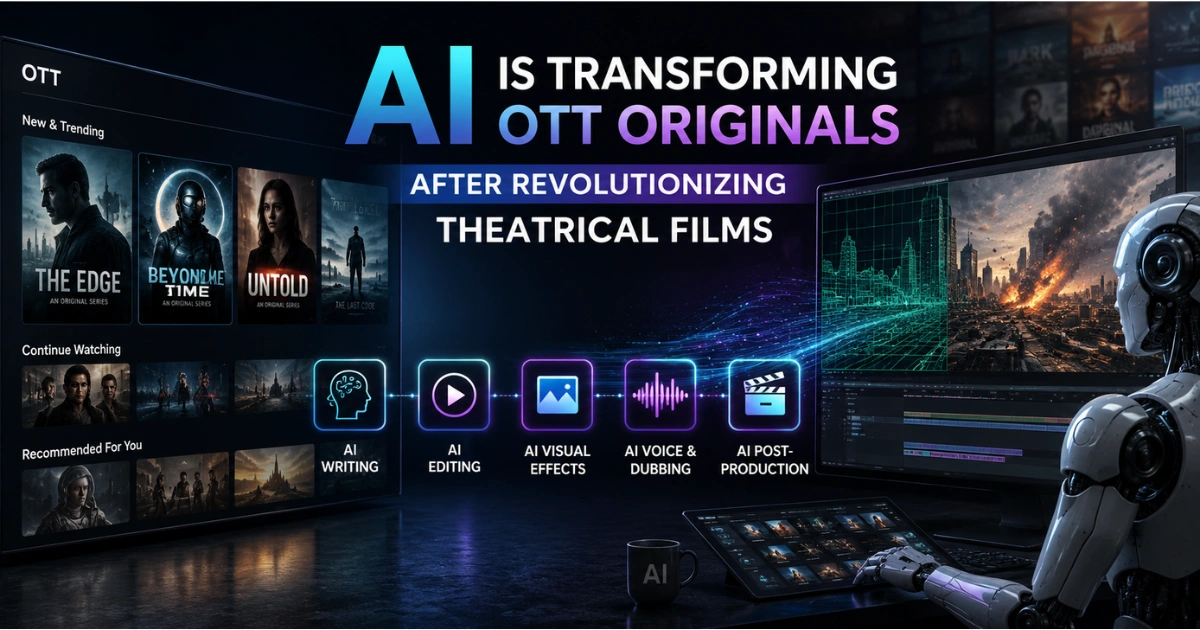

Artificial intelligence is no longer limited to blockbuster films with massive visual effects budgets. It is becoming a core part of how streaming platforms produce original content.
Netflix’s Q2 2026 earnings revealed that nearly 300 movies, series, and specials on the platform used generative AI during production, highlighting how quickly the technology is moving from experimentation to mainstream filmmaking.
Rather than replacing actors, writers, or directors, studios are increasingly using AI to speed up post-production, reduce repetitive editing work, and lower production costs.
Netflix’s Indian sports drama Glory, starring Divyendu, is one example where AI supported post-production workflows instead of changing the creative direction of the story.
The shift reflects a broader trend across the entertainment industry. As streaming platforms compete to release more original content, AI is becoming a practical production tool that helps teams deliver projects faster without compromising visual quality.
AI Is Reshaping Post-Production Workflows
The biggest impact of AI is happening behind the scenes. AI-assisted tools now complete tasks such as background replacement, rotoscoping, object masking, and lighting adjustments much faster than large visual effects teams once could.
Netflix said AI now helps artists complete some complex visual effects sequences in roughly half the time and at significantly lower cost.
Instead of manually editing every frame, artists can use AI to automate repetitive work while focusing on creative decisions that still require human expertise.
This approach also makes high-quality visual effects more accessible for streaming productions that operate with tighter budgets than major theatrical releases. As AI continues to improve, studios can create more ambitious scenes without proportionally increasing production costs.
AI Is Also Changing How OTT Platforms Deliver Content
AI’s role extends beyond production. Streaming platforms are increasingly using machine learning to personalize how viewers discover content.
AI systems can generate customized thumbnails, improve recommendations, optimize metadata, and even adapt show descriptions based on user interests. These tools help platforms match viewers with content more effectively while improving engagement across large content libraries.
At the same time, AI adoption continues to raise creative and ethical questions. Viewers are becoming more attentive to AI-generated visual artifacts and often criticize scenes that appear unnatural or overly automated.
As a result, streaming companies face the challenge of balancing production efficiency with audience expectations for authenticity.
The growing use of AI across both production and content discovery suggests that it is becoming a permanent part of the OTT industry.
While human creativity remains at the center of filmmaking, AI is increasingly handling the technical work that allows creators to spend more time telling stories and less time on repetitive production tasks.
Source: Gulte, "After Theatricals, OTT Originals Are Also Using AI"