


The rapid acceleration of generative AI has created a distinct tension. Specifically, rapid technological deployment often conflicts with systemic safety. For example, Anthropic CEO Dario Amodei recently advocated for pacing the development of frontier models.
His primary goal is to prevent large-scale vulnerabilities. However, political pressures emphasize pushing forward to maintain a global competitive edge. Consequently, this friction between moving fast and building resilient architecture has opened a massive, untapped market.
Accenture has recognized that mitigating system hallucinations and securing complex agentic workflows is no longer just a theoretical safety exercise for academics it is a highly lucrative enterprise requirement.
By stepping into this void, the global consulting firm is transforming widespread industry apprehension into a tangible, scalable business utility.
Pioneering the Frontier Model Testing Market
The traditional consulting landscape is rapidly shifting. First, enterprise spending is pivoting away from legacy operational advice. Furthermore, companies are moving aggressively toward AI transformation, data orchestration, and robust cybersecurity.
Accordingly, Accenture is actively reshaping its core service delivery. They are achieving this evolution through a landmark agreement with Anthropic.
Rather than merely deploying software, Accenture’s Faculty business is physically embedding AI evaluators inside Anthropic’s operations.
These specialized teams are tasked with rigorously red-teaming frontier models, probing alignment safeguards, and establishing strict protocols to keep increasingly capable systems under control as they transition from isolated prompts into live production environments.
According to recent market analysis provided by Barchart, this strategic partnership involves a combined investment of $1 billion over the next five years.
This substantial capital allocation directly responds to Amodei’s public commitment to responsible scaling. In addition, it directly addresses his warnings about advanced agents causing cyberattacks.
For Accenture, this engagement establishes an entirely new enterprise services category. Therefore, they are dedicating massive resources to AI evaluation and governance. Enterprise applications are undoubtedly becoming more sophisticated every day.
Consequently, the demand for independent, third-party validation will scale exponentially. Ultimately, this independent validation ensures trustworthiness and prevents catastrophic orchestration failures.
Financial Viability and Market Positioning
This pivot toward specialized AI testing offers a compelling financial narrative. Specifically, it helps investors evaluate the long-term ROI of the technology sector’s current trajectory.
Accenture already commands a formidable financial foundation. For instance, the firm reported a six percent year-over-year revenue increase in the third quarter of fiscal 2026. This impressive growth brought total revenue to $18.7 billion.
Furthermore, the firm’s ability to generate $3.6 billion in free cash flow provides massive liquidity. As a result, they can aggressively acquire talent and expand within emerging technical niches.
Management has also noted that hundreds of clients are actively engaging in advanced AI projects. Meanwhile, revenue originating from data ecosystem partners is currently outpacing general corporate growth.
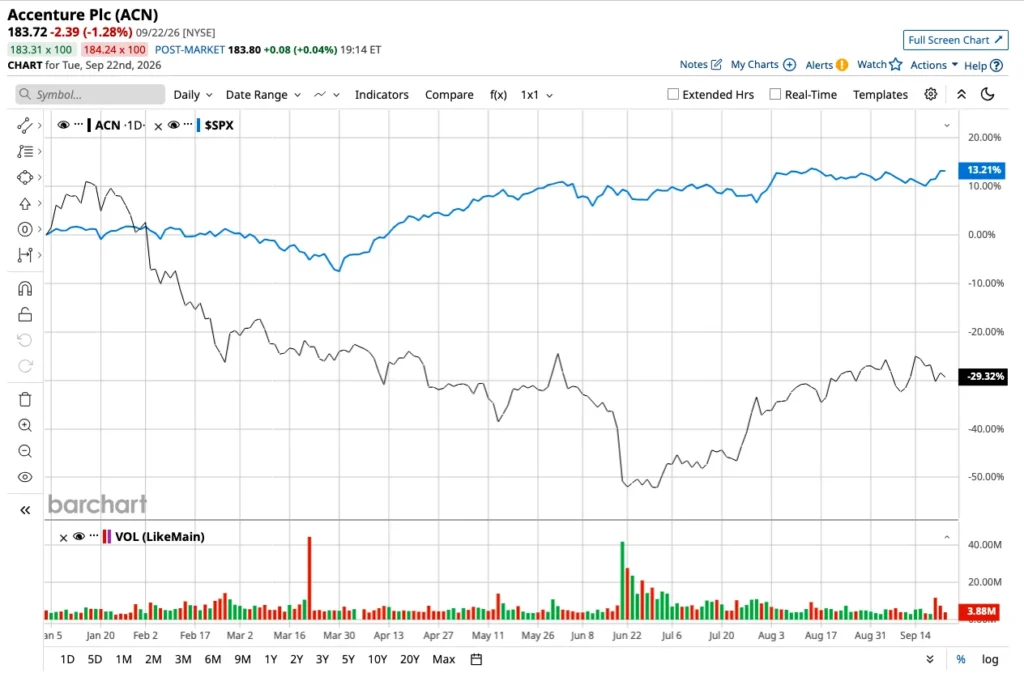
This Anthropic collaboration closely mirrors the company’s historical success in cybersecurity. That particular division expanded from roughly $700 million in 2016 to an impressive $10 billion by 2025.
By creating a functional blueprint for independent AI evaluation, Accenture can easily replicate this governance model. Consequently, they can apply it to other major industry players like OpenAI, Databricks, and Mistral.
Currently, the stock is trading at 13 times forward earnings. This figure sits well below its historical average of 23. Therefore, the stock presents an intriguing valuation for the broader market.
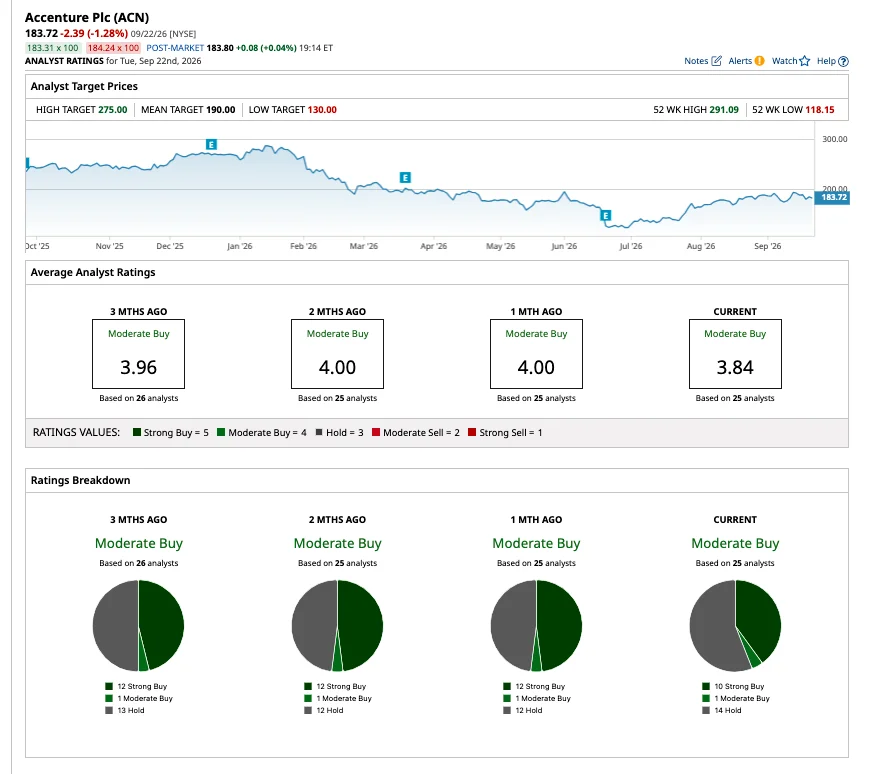
Ultimately, the firm must prove that securing agentic AI systems expands its addressable market. If it achieves this growth faster than automation erodes legacy consulting revenue, Accenture will have engineered a highly profitable transition.