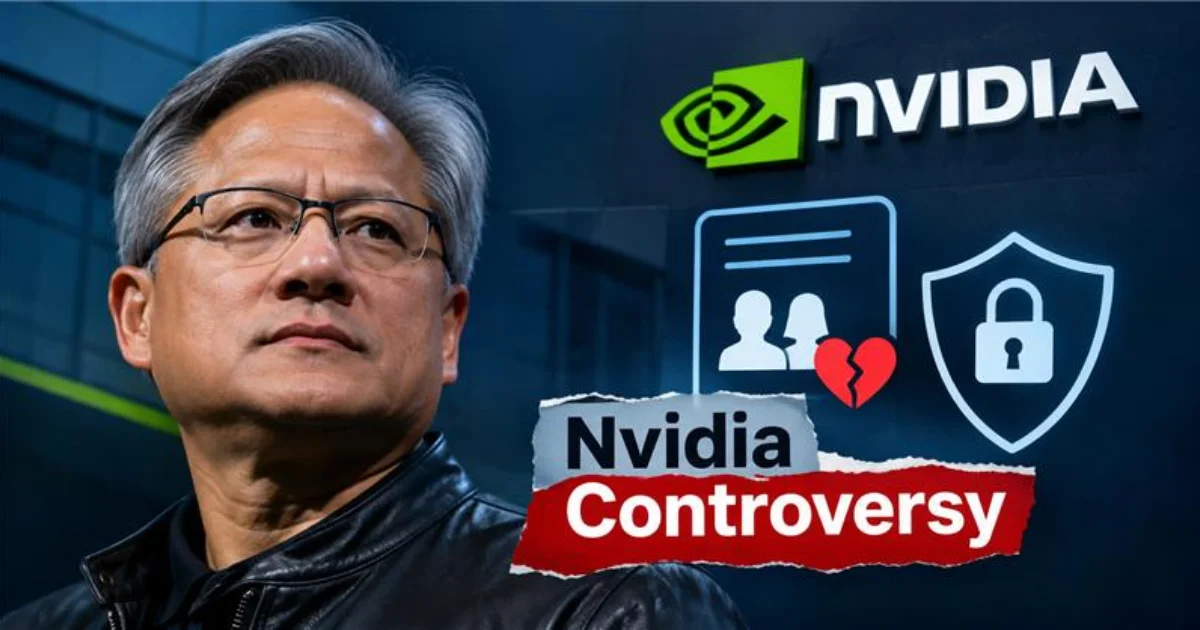
Nvidia founder and CEO Jensen Huang abruptly resigned. This move shocked the global tech industry and financial markets. Huang led the world’s most valuable chipmaker for over three decades. He steered a $4 trillion empire. This company powers the modern artificial intelligence boom.
A miscalculated product launch did not cause his sudden departure. Instead, a sprawling scandal involving extramarital affairs and international espionage allegations forced him out. Huang admitted to infidelity.
Reports also alleged inappropriate relationships with company employees. He stepped down, and the company’s stock plummeted.
A foreign intelligence operation allegedly compromised one of technology’s most powerful men. This revelation casts a dark shadow over Silicon Valley.
It exposes a terrifying vulnerability within the heavily guarded walls of America’s leading tech firms, proving that despite billions spent on digital cybersecurity, human frailty remains the ultimate backdoor.
The Mechanics of Corporate Compromise
Emerging details paint a picture of a classic espionage tactic. Operatives perfectly adapted this method for the modern technological cold war. Late last year, sources reportedly saw Huang with Alice Huang.
She manages Megaspeed, a Singapore-based data center firm. Their relationship seemingly evolved over several international meetings. This drew the acute attention of US intelligence officials. Officials were already investigating Megaspeed. The firm allegedly circumvented export controls to funnel restricted AI chips to China.
The situation reached a boiling point. A classified memo surfaced indicating the tech mogul’s entanglement with a suspected foreign operative.
According to an extensive investigation published at The Guardian, this highly compromised relationship ultimately appears to have facilitated the transfer of billions of dollars worth of advanced, heavily restricted Nvidia hardware directly to Chinese entities.
This staggering breach of national and corporate security highlights exactly how foreign intelligence assets utilize intimate personal relationships to gain leverage over high-ranking targets.
Security experts often refer to these entrapment strategies as honeypot operations, a method as old as the espionage trade itself. Threat assessment professionals note that these tactics exploit a consistent, undeniable weakness in human psychology.
While corporations invest vast resources into encrypting servers and monitoring employee emails for data leaks, executives traveling globally often lack the personal security oversight necessary to prevent such compromises.
In fact, corporate intelligence firms report a significant uptick in investigations related to coercion, blackmail, and honeypot schemes targeting executives over the last three years alone.
The sheer scale of the Nvidia breach has forced other tech giants to rapidly reevaluate their own internal security protocols, with some companies reportedly running specialized training sessions to help staff identify and report suspicious personal advances from unknown entities before sensitive intellectual property is exchanged.
A Legacy of Infiltration
Huang’s immense wealth and political connections make this scandal uniquely disastrous. Yet, the underlying tactics represent a decades-long effort to siphon American intellectual property. Silicon Valley historically remains a prime target for foreign adversaries.
These rivals want to bypass years of expensive research and development. During the Cold War, Soviet operatives routinely worked out of West Coast consulates. They mobilized vast networks of informants. They stole technological secrets their domestic industries could not produce.
The geopolitical landscape has shifted dramatically today, but the core objective remains the same. Intelligence analysts indicate acquiring advanced commercial technology is the top priority for competing global powers.
This especially includes hardware required to train massive AI models.
Hundreds of documented corporate espionage incidents have targeted commercial technologies in the United States over the past two decades.
Courts frequently convict former government engineers and tech employees for stealing confidential data. This stolen data benefits foreign governments. Yet, successfully targeting a sitting trillion-dollar company CEO represents a new echelon of intelligence victory.
The operation secured billions in restricted hardware. It also destabilized a critical pillar of the American economy. His resignation caused immediate market volatility, dragging the Nasdaq down significantly. Operatives effectively executed this massive operation against a figure who regularly advised on national tech policy. He even accompanied the US president on state visits.
This serves as a sobering wake-up call. The entire tech sector must acknowledge a hard truth. Complex code or malicious software do not execute the most sophisticated threats. Instead, quiet conversations in international bars and deeply misplaced trust cause the most damage.