
The tech industry has relied on the same rigid hiring mechanics for over a decade, putting candidates through grueling whiteboard sessions and isolated coding challenges to prove their worth.
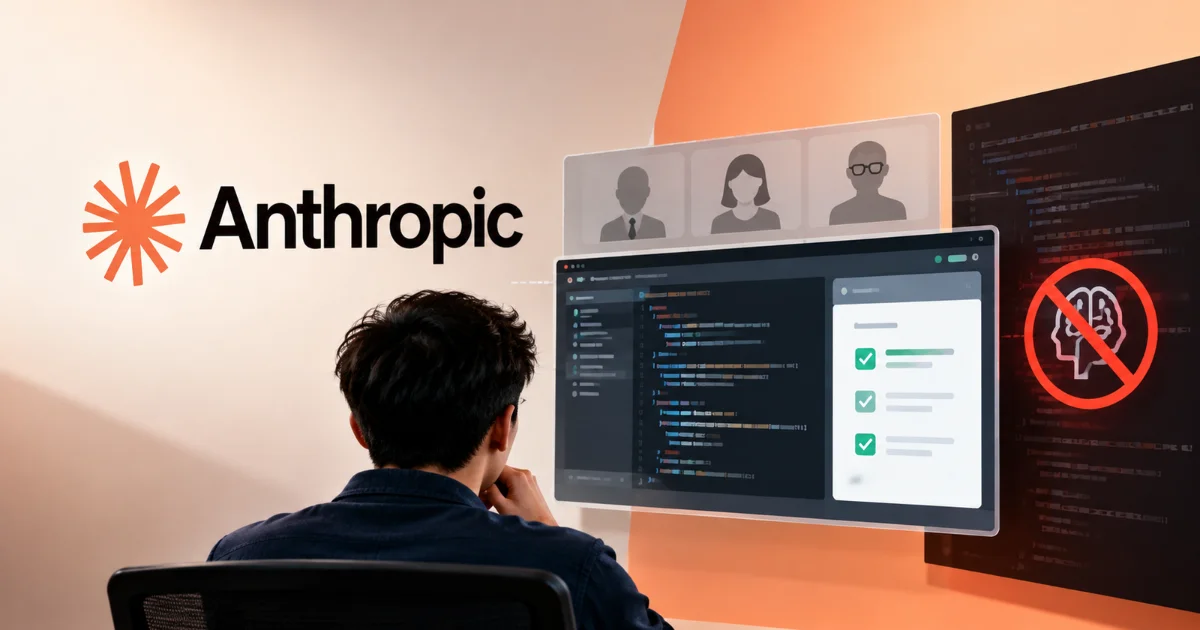
That era is rapidly drawing to a close. Felix Rieseberg, an engineering manager at Anthropic who has led teams for Claude.ai and Claude Code Desktop, recently made a decisive move that highlights a massive shift in software engineering.
He officially dropped the traditional coding interview from his team’s hiring process. While widespread anxieties persist about artificial intelligence erasing entry-level programming jobs, his reasoning cuts right to the core of a much more optimistic reality.
AI is simply better and faster at solving isolated technical puzzles than human applicants, meaning the way we measure engineering talent has to aggressively evolve.
Why the Traditional Assessment is Broken
For years, asking a candidate to build a quick React component or reverse a binary tree served as a flawed but functional proxy for their on-the-job potential. Now, those same tests provide zero meaningful signal.
When the very tools developers use every day can instantly output flawless boilerplate code, measuring a human’s ability to memorize algorithms becomes entirely disconnected from how real software is built in production.
According to a recent report at Times of India, Rieseberg realized that passing a standard coding test does not demonstrate whether an engineer actually possesses the empathy, product taste, and architectural foresight required to solve complex business problems.
The ability to write a function from memory is no longer a competitive moat. Instead, the focus has violently shifted away from the raw mechanics of writing code toward the higher-level orchestration of systems.
Engineers are hired to generate business value, not just to act as human compilers. When an AI can handle the repetitive syntax, hiring managers have to look for candidates who understand the broader scope of what they are building, how it scales, and why it matters to the end user.
The New Currency for Junior Developers
This paradigm shift sounds intimidating to newcomers. They spent years grinding through algorithm platforms. Yet, it presents a massive opportunity to bypass corporate gatekeeping. Rieseberg offers a pragmatic reality check about power dynamics. Junior employees lack status in large organizations.
You lack the social capital to push an idea. Executives rarely gamble on theoretical pitches from new hires. However, execution costs plummeted. Stop lobbying for permission. Young developers can use AI to build a functional prototype over a single weekend.
The strategy is precise and aggressive. Do not try to boil the ocean. Stop cramming twenty mediocre features into a demo. Rieseberg advises juniors to pick one bold idea. Execute that single concept flawlessly.
A working prototype instantly changes the conversation. It forces decision-makers to interact with your vision. They stop debating theoretical feasibility. Newcomers possess a distinct advantage here. You lack years of institutional baggage. You ignore historical reasons why features seem impossible.
Newbies spot friction points quickly. Veteran engineers accept these hurdles as the cost of doing business. A perfect example happened within Anthropic itself. Veteran staff accepted a clunky command-line interface. Two newer engineers built a weekend prototype.
They proved a graphical version offered a better path. Pair this fresh perspective with modern AI prototyping. Junior engineers prove their worth through tangible execution. Stop relying on a basic résumé. Ignore the timed technical quiz. Deliver working software instead.