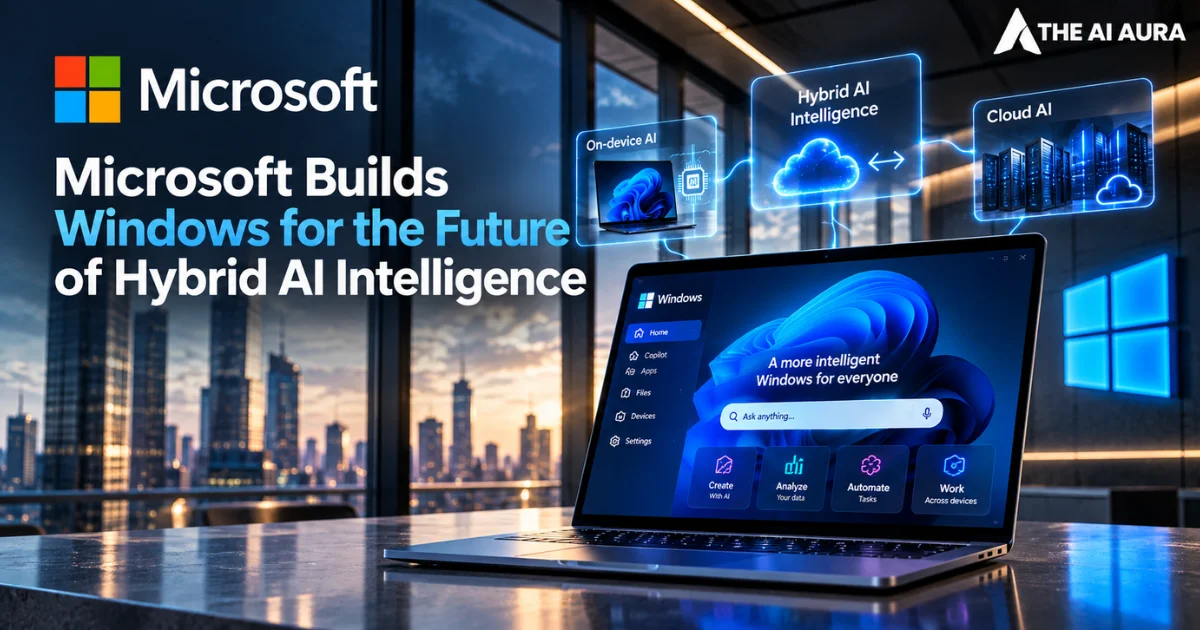

The operating system is no longer just a passive launcher for desktop applications. As artificial intelligence evolves from answering static queries to deploying autonomous agents that execute multi-step tasks across our systems, the underlying architecture of the PC has to fundamentally change.
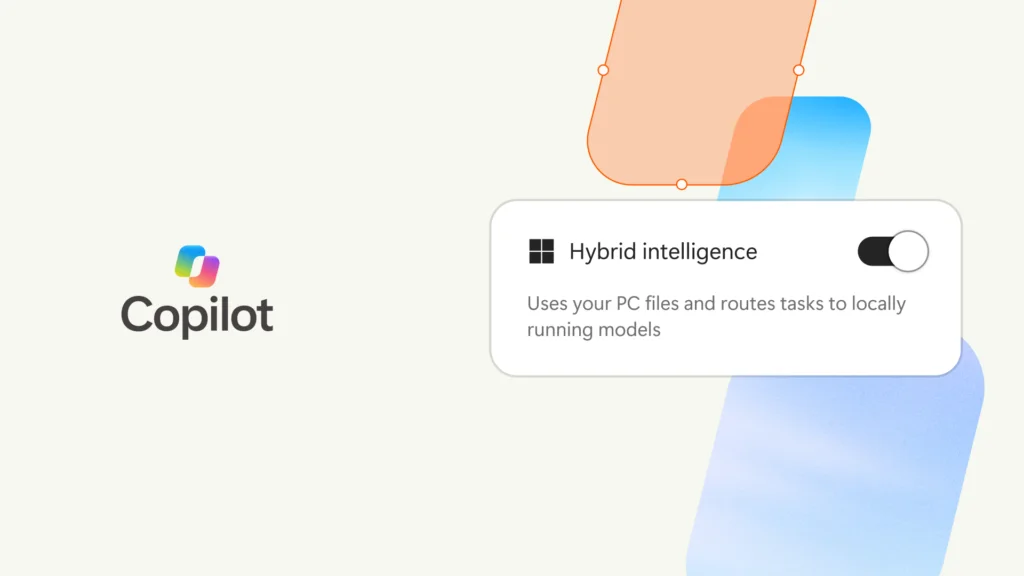
Microsoft is re-engineering Windows to lead this transition into hybrid intelligence. This new framework does not rely entirely on expensive cloud computing. Instead, it dynamically balances workloads between local chips and remote servers.
This strategic pivot handles the massive processing demands of modern AI. AI agents run persistently in the background to organize local files. They also troubleshoot internal diagnostics and generate code locally. This approach completely bypasses the inherent latency of cloud-only processing.
Img source: Microsoft
Re-engineering Security for Autonomous Agents
Traditional software sandboxing was built for apps that sit idle until a human clicks a button. Agents operate on a completely different paradigm. They run around the clock, interact with local files, write and execute code, and communicate across networks often with minimal human supervision.
This level of autonomy introduces unprecedented security risks if left unchecked. To prevent these systems from overreaching, Microsoft has introduced a dedicated security model built around strict containment and identity tracking.
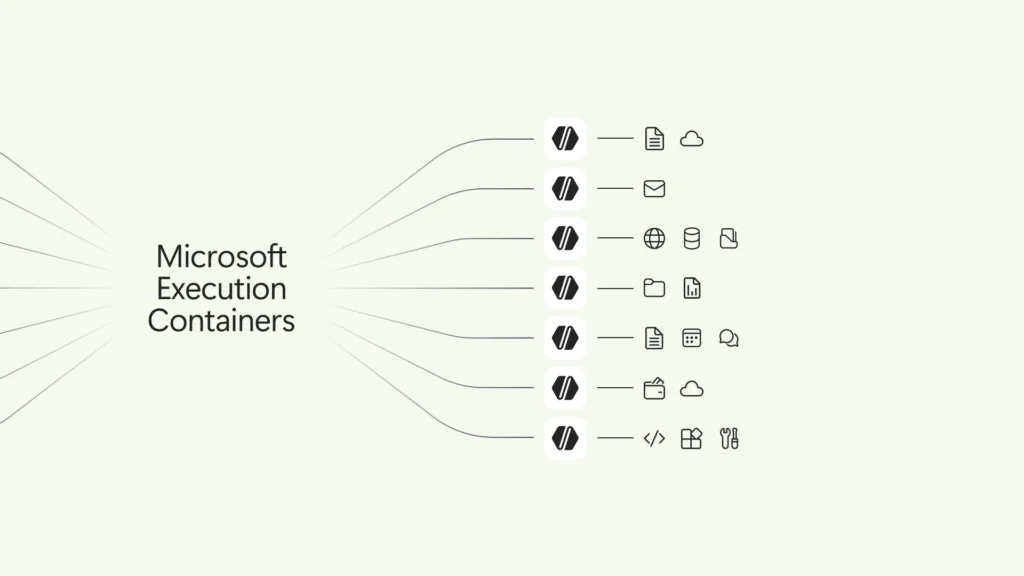
According to a recent update from Microsoft discussing their broader vision for hybrid intelligence, this framework relies heavily on Microsoft Execution Containers.
Img source: Microsoft
These containers are dynamically generated at runtime, establishing rigid, policy-driven boundaries that dictate exactly which files and internal networks a specific agent is allowed to access.
By isolating agent activity from standard user operations, IT administrators can monitor exactly what an AI is doing in real-time. Whether it is an open-source tool like OpenClaw or an enterprise coding agent from GitHub, the operating system effectively acts as a strict supervisor, ensuring autonomous actions never bypass established organizational security policies.
The Hardware Shift to Local Compute
Pushing every single AI prompt to the cloud has become financially unsustainable for enterprise environments.
The sheer volume of tokens required to sustain persistent background agents makes local processing an absolute necessity rather than just a hardware luxury. To solve this bottleneck, the hardware ecosystem is undergoing a massive transformation to support high-performance local inference.
The introduction of specific builder-focused hardware, powered by architectures like NVIDIA’s RTX Spark, represents a massive leap forward in local memory and processing capabilities.
We are now seeing laptops equipped with up to 128 gigabytes of unified memory capable of running massive models like MAI Code 1.1 Flash and heavily quantized iterations of Nemotron directly on the machine.
Img source: Microsoft
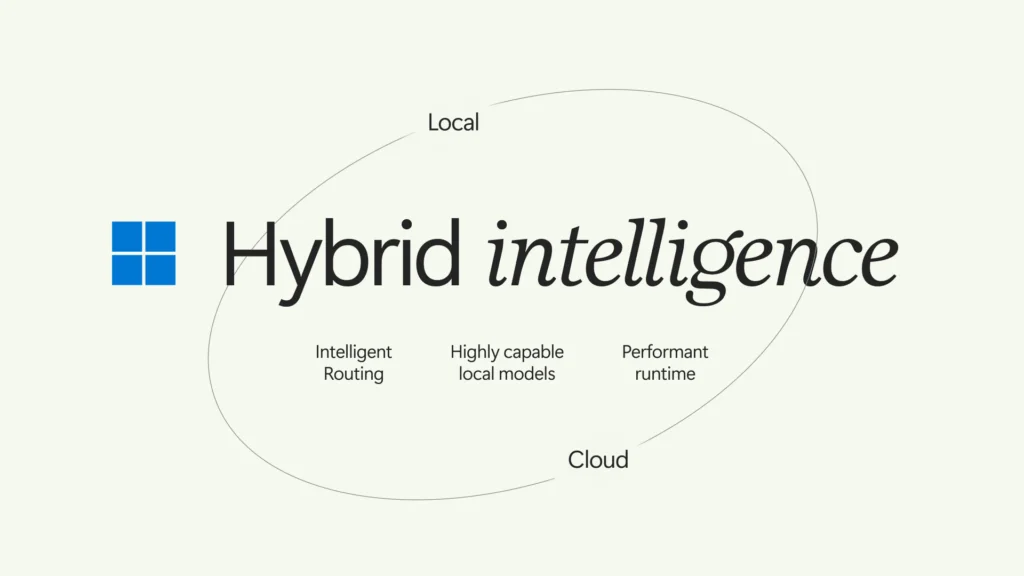
Intelligent routing systems assess each given task to optimize performance. They execute tasks locally whenever possible to save cloud bandwidth. This reserves remote servers only for the most complex enterprise queries. This computing power extends far beyond standard portable laptops.
Microsoft brings data-center-class performance straight to the traditional desk environment. DGX Station supercomputers now run Windows to support advanced research. Research teams can run trillion-parameter models locally on their machines.
This dramatically speeds up the crucial time to first token. It also severely reduces long-term operational costs for most businesses. Some organizations deal constantly with highly sensitive proprietary client data.
Local inference safely keeps this vital data entirely on local silicon. Microsoft is effectively turning the PC into an independent AI workstation. It sustains massive agent workflows without the burden of cloud dependency.