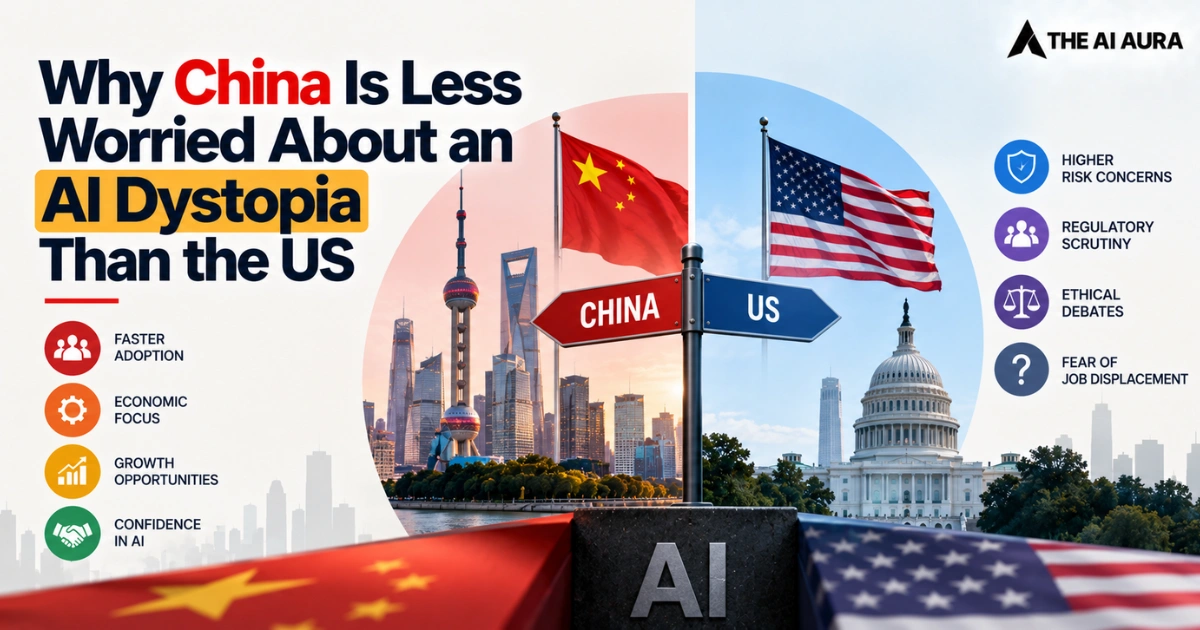

In the United States, debates over artificial intelligence often focus on existential dread. Many American tech leaders urge a slowdown because they fear catastrophic threats to humanity.
Conversely, across China, the prevailing attitude is characterized by an enthusiastic embrace rather than existential apprehension.
People are seamlessly integrating digital employees into local government services, utilizing automated feedback for student assignments, and receiving package deliveries directly from robots at their hotel doors.
This stark contrast highlights a fundamental divergence in how the two global superpowers perceive and integrate next-generation technologies.
Widespread adoption across China highlights a pragmatic approach. A recent Morgan Stanley survey found that most Chinese respondents use artificial intelligence weekly. In fact, their adoption rate far outpaces usage in the United States.
For many in China, the technology is fundamentally viewed as a tool designed to serve humanity and bring unparalleled convenience to everyday life.
Rather than fearing rogue machines, the public focuses on immediate benefits. Furthermore, citizens trust their government to manage emerging tech risks. This confidence stands in sharp contrast to the skepticism common in Western democracies.
The Cultural and Political Divide
Differing political systems and trust levels explain this sentiment gap. In the United States, public discourse remains divided. Americans frequently worry that tech giants prioritize rapid profit over user safety. Many fear that corporations operate without adequate oversight.
Americans often worry that unchecked corporate ambition will prioritize rapid advancement over safety, leading to potential catastrophe.
According to a recent analysis by CNN, there is a very strong confidence among the Chinese public that their government will swiftly intervene to establish necessary guardrails if any genuine threats emerge from the technology’s deployment.
This built-in trust acts as a buffer against panic, allowing the populace to enjoy the fruits of innovation without the looming fear of societal collapse.
Furthermore, the commercial trajectory of technology companies in China shapes this more grounded public reception. Operating in a hypercompetitive market, these enterprises aggressively deploy free chatbots and integrate smart features into universally used applications.
When the public first encounters the technology, it is typically as a low-cost, highly useful service rather than as a subject of intense philosophical debate. The focus remains heavily on how these tools can enhance productivity and commercial viability.
Chinese warnings about potential dangers are decidedly quieter and utilize a different vocabulary, concentrating on practical issues like the loss of operational control or malicious cyber applications rather than human extinction.
Consequently, the discourse remains tethered to manageable realities rather than science fiction scenarios.
Economic Progress and National Pride
Another factor behind this optimism is China’s rapid economic growth over the past few decades. The nation’s technological advances have strengthened its position on the global stage. They have also helped transform China into an economic powerhouse.
Domestic laboratories and tech firms are becoming increasingly capable. They are narrowing the gap with their American counterparts despite restrictions on advanced processing hardware. Many see this progress in artificial intelligence as evidence of China’s growing technological strength.
There is a deeply ingrained culture that views cutting-edge technology as a source of national pride, linking the mastery of advanced systems directly to collective prosperity and strength.
Over the past decade, China has made major advances in areas such as electric vehicles and supercomputers. These innovations have competed directly with international rivals. They have also created an expectation that technological progress will bring economic benefits and greater geopolitical influence.
The average citizen has witnessed firsthand how technology brings convenience and wealth, creating an unspoken assumption that this current wave of innovation will do exactly the same.
Because the government has repeatedly demonstrated its willingness to assert control over powerful enterprises, when necessary, citizens feel protected from the extreme risks that dominate Western anxieties.
Therefore, the belief that the benefits overwhelmingly outweigh the hypothetical dangers ensures that the nation will continue to invest heavily and prioritize rapid development, viewing any hesitation as a missed opportunity in the fierce global race for technological leadership.