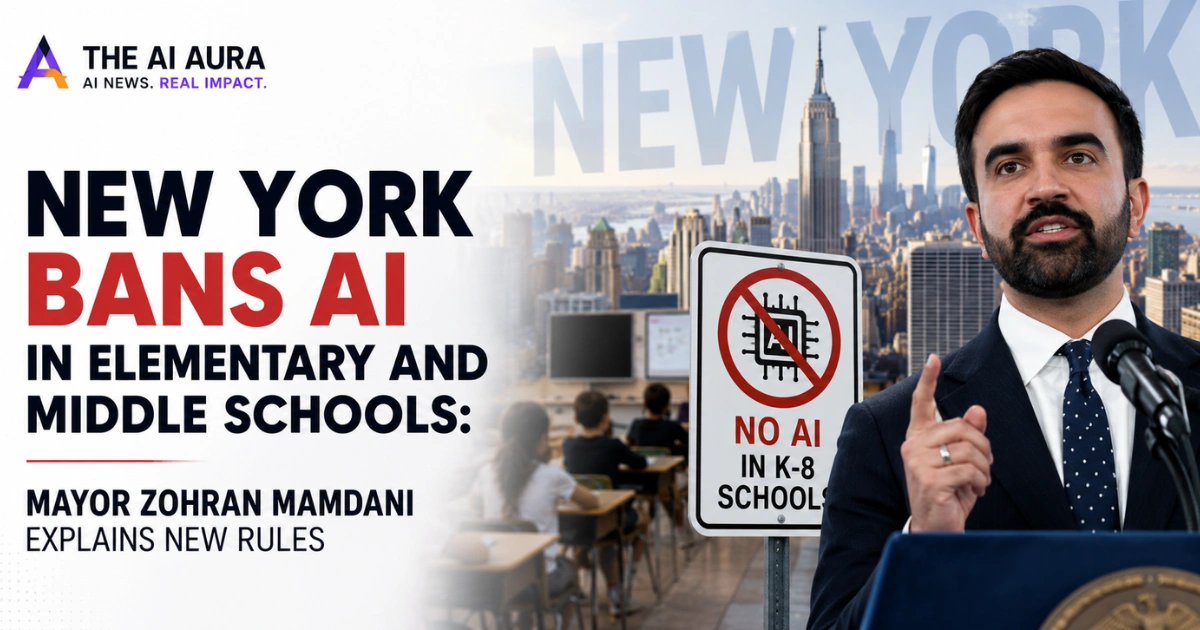

New York City is stopping the unregulated use of generative AI in classrooms. The city runs the largest public school system in the United States. It just launched a highly restrictive technology policy. This academic year brings a sweeping one-year moratorium.
The new rule blocks roughly 600,000 students from using student-facing AI tools. This applies to children from 2-K through eighth grade.
The policy overhaul targets more than just generative AI. It actively limits general digital device usage. This forces a return to fundamental, human-led learning.
Why Mayor Mamdani is Hitting Pause on Early EdTech
This rollback stems from a clear disagreement between city officials and tech developers. Mayor Zohran Mamdani explicitly rejected the tech industry narrative. Software companies claim AI integration in early education is unavoidable. Mamdani strongly disagrees.
Early childhood development relies on independent problem-solving and authentic human interaction. Independent data supporting AI benefits for young children remains virtually nonexistent.
Ed-tech corporations fund most available positive studies. Schools Chancellor Kamar Samuels noted that more technology does not equal real innovation.
To enforce this, New York is taking heavy-handed action against its existing digital infrastructure. The city will disable AI components across more than 38 previously approved educational software platforms.
New York City now strictly bans companion chatbots designed to provide mental or emotional support to students across all grade levels.
Under the new guidelines, the city will prohibit students from using individual screens until third grade.
For older elementary students (grades 3–5), the guidelines recommend limiting screen time to 30 minutes daily, while middle schoolers will have a 45-minute limit.
How the Rules Work for Teachers and High Schoolers
While the elementary and middle school AI policy is a strict blackout, the rules adjust as students age and educators navigate their workloads. AI is not entirely banished from New York public schools; it is simply being heavily compartmentalized.
High school students will have access to heavily vetted, limited AI pilot programs operating under strict educator supervision. Recognizing that older students are about to enter a tech-dominated workforce, the district is also implementing mandatory AI literacy classes twice a year.
These modules are designed to teach teenagers how to critically analyze AI tools, spot biases, and understand the ethical risks before they become overly reliant on the technology.
Teachers retain the ability to use AI for operational and administrative tasks. The policy explicitly allows educators to use generative tools to draft lesson plans, translate classroom materials, and write routine communications. However, a hard ethical line is drawn at high-stakes assessments.
Teachers are strictly prohibited from using AI algorithms to grade assignments, determine graduation eligibility, or guide counseling for a student experiencing a crisis.
Crucially, the city built-in necessary exemptions. Centrally approved instructional platforms for coding, e-books, and assistive technologies tailored for students with disabilities or English language learners will bypass the restrictions.
This policy shift creates an immediate impact nationwide. New York directs an annual education budget near $40 billion. Tech vendors must modify software tools to keep city contracts.
Source: The Times of India, "Read Mayor Zohran Mamdani's Statement as New York Bans AI in Elementary and Middle Schools; Says: Tech Industry Wants Us to Believe..."