
There is an ongoing debate in the advertising world about whether artificial intelligence will eventually replace human ingenuity. But what happens when you stop viewing AI as a competitor and start treating it as a limitless creative studio?
Recently, Google rolled out “The Small Brief” project a unique collaboration with the creative agency Johannes Leonardo, timed perfectly for Small Business Week.
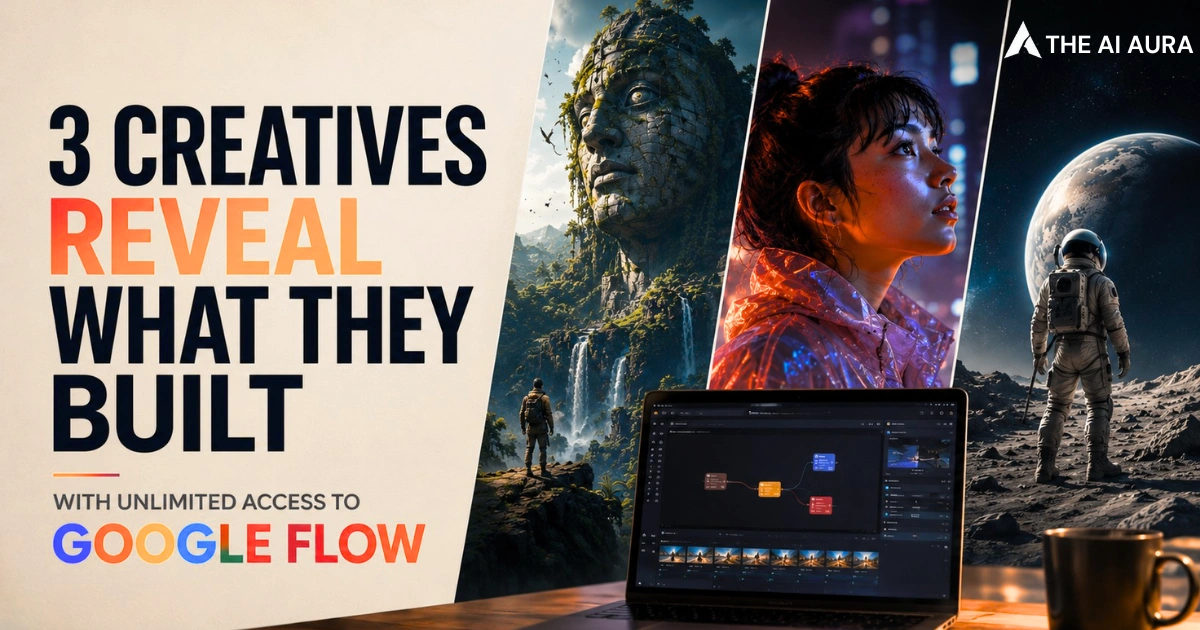
The premise was deceptively simple but incredibly ambitious: hand over the keys to Google Flow, an advanced AI creative studio, to three industry heavyweights.
The mission for Susan Credle, Jayanta Jenkins, and Tiffany Rolfe was to build compelling, top-tier campaigns that champion local businesses they personally love.
As an observer of the shifting tides in marketing technology, I found the results striking. The experiment wasn’t just about rendering impressive visuals; it was a masterclass in highlighting the storytelling power of AI when guided by world-class human instincts.
Merging Human Instinct with Artificial Intelligence
When seasoned directors and copywriters approach a brief, it always starts with the core truth of the brand. Susan Credle took this philosophy and applied it to Stonewood Farm, a nonprofit situated in the Hudson River Valley.
Her campaign leaned heavily into a linguistic pivot: “Just Farming.” Using Google Flow, Credle bypassed the traditional, often cumbersome production barriers to instantly illustrate the farm’s deep commitment to regenerative agriculture.
The AI translated her vision into a visual narrative demonstrating that nurturing the soil is inextricably linked to nurturing the surrounding community. It was a visceral reminder that technology can amplify rustic, grounded realities rather than sterilize them.
Similarly, Tiffany Rolfe turned her attention to South Ferry, a vital transit service operating in Long Island, New York. Rolfe didn’t just want to show a boat crossing the water; she wanted to unearth a 200-year-old historical narrative.
She utilized Google Flow to breathe life into an enduring promise made by the Clark family all the way back in 1833.
By feeding her historical insights into the platform, the resulting film became a sweeping visual chronicle. It captured the ferry’s relentless journey through shifting seasons, battling frozen waters, and completing everyday crossings that culminated in final homecomings.
The AI acted as a time machine, allowing Rolfe to generate period-accurate moods and generational transitions without requiring a massive budget or months of location scouting.
Elevating Emotional Storytelling Through Technology
Technology often struggles to capture genuine human empathy, but Jayanta Jenkins proved that the right creator can coax profound emotion from an algorithm. Jenkins focused his energy on ARCHANGELS, a public benefit corporation dedicated to supporting unpaid caregivers. His campaign navigated the complex emotional landscape of selflessness.
Through Google Flow, he developed a poignant visual metaphor revolving around a mirror.
The protagonist of the film peers into the glass, but instead of their own reflection, they see the faces of everyone they have dedicated their lives to serving aging parents, demanding doctors, distant family members, neighbors, and coworkers.
It is only at the very end of this visual sequence that the caregiver finally sees themselves.
Orchestrating this kind of layered, metaphorical imagery usually takes heavy visual effects and weeks of post-production. Jenkins achieved it by merging his directorial intuition with AI generation, creating a deeply moving tribute to unsung heroes.
What these three creatives demonstrated goes far beyond a tech demo. By using Google Flow, they proved that artificial intelligence does not flatten creativity; it acts as a force multiplier.
For small businesses that typically lack the capital to hire global ad agencies, these tools are beginning to level the playing field.
The technology allows local shops and nonprofits to tell their stories with the same cinematic grandeur and emotional resonance as Fortune 500 companies. The barrier to entry for world-class storytelling is rapidly shifting, leaving us to wonder what the next wave of creatives will build when given the same unlimited access.
Source: Official Google, "What 3 Creatives Built With Unlimited Access to Google Flow"