

Look at the 30-year bond markets right now, and you will see a blindingly clear warning sign. America, France, Japan, and Britain are seeing yields hit levels we haven’t experienced since the 2007-2009 global financial crisis.
Remember the brief, chaotic fiscal panic in Britain back in 2022? We’ve already blown right past those highs.
Investors who were holding their breath for a return to the cheap money of the 2010s finally have their answer: it’s not happening. Money is expensive again, and inflation’s recent retreat hasn’t dragged long-term borrowing costs down with it. If anything, the trajectory points higher.
Yet, paradoxically, governments aren’t pulling back. They are borrowing at a ferocious pace, seemingly unbothered by the crushing interest payments looming on the horizon.
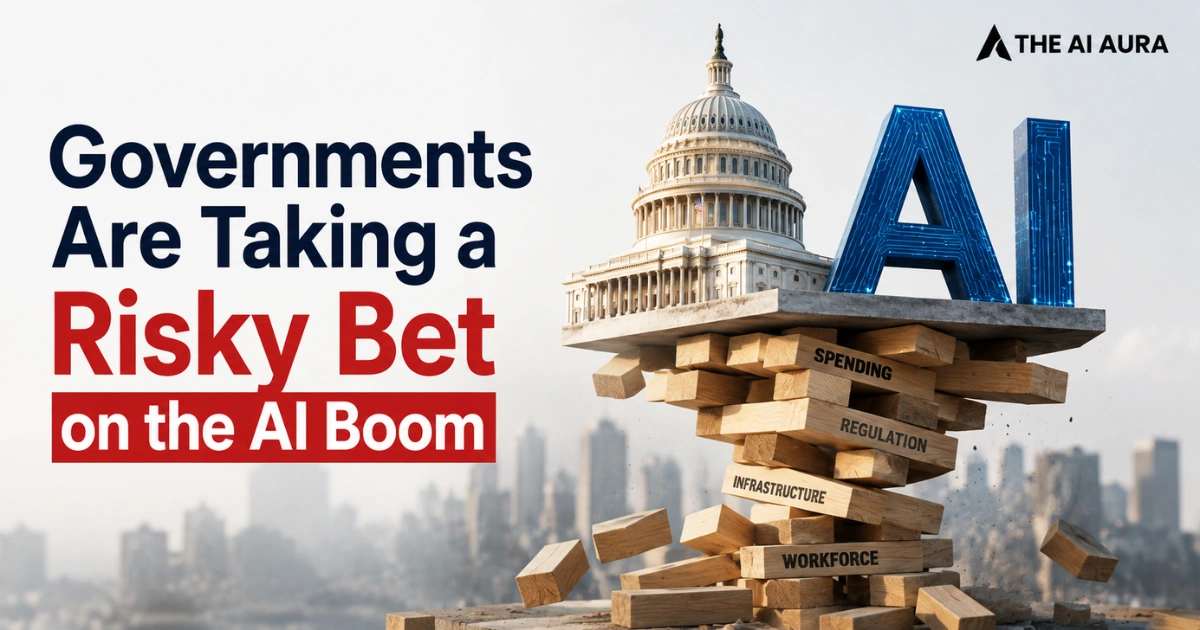
How does the math work? The quiet consensus in capital cities everywhere is that we are on the cusp of an economic miracle. Without stating it outright in their budgets, heavily indebted nations are staking our fiscal future on the artificial intelligence boom.
Betting on a Productivity Miracle
The underlying logic driving current fiscal policy is essentially a massive wager on tech. To justify issuing trillions in debt at premium yields, treasury departments have to believe that future economic growth will comfortably outpace these interest costs.
Historically, that requires either a massive population boom or an industrial revolution. With aging populations sweeping across the developed world, demographics are a severe headwind. That leaves technology to do the heavy lifting.
Policymakers are operating under the assumption that AI won’t just improve search engines or write better code they are betting it will radically shift the global productivity frontier.
If generative AI and machine learning can automate bureaucratic bloat streamline healthcare delivery, and supercharge corporate efficiency, the resulting economic expansion would generate a tidal wave of tax revenue.
In this scenario, today’s exorbitant borrowing costs are just the price of admission to the next golden age of growth. It’s a highly convenient narrative.
It allows politicians to avoid painful austerity, fund green energy transitions, and maintain expansive welfare states without balancing the books today. The AI boom has effectively become a get-out-of-jail-free card for politicians who refuse to cut spending.
The Timeline Trap
The glaring flaw in this strategy isn’t necessarily that artificial intelligence is overhyped, but rather how long technological revolutions actually take to reshape national accounts.
When the personal computer and the internet arrived, it took decades for the promised productivity gains to show up in macroeconomic data. Governments borrowing at today’s eye-watering yields simply don’t have decades to wait.
If the AI productivity miracle takes twenty years to materialize, or if the economic gains are strictly captured by a handful of Silicon Valley monopolies rather than broad-based wage growth, the fiscal math completely collapses.
Governments will find themselves trapped paying peak-crisis interest rates on bloated deficits, without the expected GDP surge to offset it.
Furthermore, AI could trigger aggressive short-term labor market disruptions.
If middle-class, tax-paying jobs are displaced faster than new economic roles are created, government revenue will shrink precisely when unemployment obligations spike.
Instead of a seamless transition to a hyper-productive future, we are staring down the barrel of a brutal sovereign debt crunch.
Betting the house on a technology that is still in its infancy, while the global bond markets scream caution, is a high-wire act without a net. If the algorithm takes too long to balance the books, the debt trap will snap shut.
Source: The Economist, "Governments Are Making a Dangerous Bet on the AI Boom"