

The line between political commentary and malicious technological manipulation is rapidly blurring, and Indian courts are now being forced to actively draw the boundary.
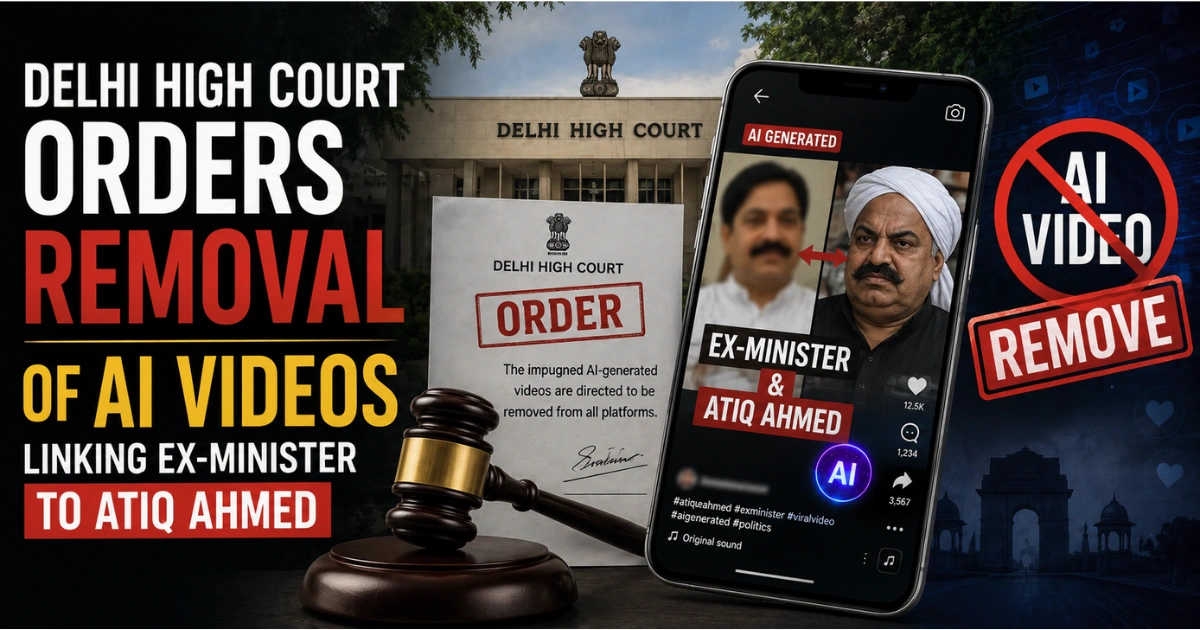
In a critical move against synthetic defamation, the Delhi High Court has directed Meta to pull down AI-generated videos attempting to link former Union Minister Saleem Iqbal Shervani with the late gangster Atiq Ahmed.
The ruling, delivered by Justice Tushar Rao Gedela, exposes a growing vulnerability in our digital ecosystem: the weaponization of artificial intelligence to rewrite political history and execute targeted smear campaigns.
The dispute centers around content published by a platform operating under the name “Jan Chaupal Post” on Facebook and Instagram. According to the defamation suit filed by Shervani, the platform uploaded AI-generated clips designed to damage his public standing.
Shervani is a five-time Member of Parliament and a veteran Samajwadi Party leader. The digital fabrications made serious allegations against him. One clip claimed that Shervani used Atiq Ahmed’s influence to suppress a factory strike in 1985.
A subsequent video went even further. It suggested that the SP leader had actively facilitated Ahmed’s violent grip over the region.
What makes this case particularly alarming is the sheer velocity of the misinformation. Before the legal machinery could halt them, the clips had already accumulated hundreds of thousands of views and likes.
Shervani is not a fringe political figure. He served as Union Minister of State for Health and Family Welfare. He later served as External Affairs Minister in the late 1990s.
For a reputation built over half a century to be threatened by overnight algorithmic generation highlights a severe regulatory gap.
The Mechanics of the Judicial Takedown
Justice Gedela’s interim order was unequivocal. It mandated that Meta remove the offending URLs within a strict 36-hour window.
This rapid turnaround is essential in the digital age. A defamatory video can spread across platforms and private messaging groups within minutes. Delayed justice can therefore become practically useless.
Furthermore, the court issued a strict injunction against the creators. Jan Chaupal Post was restrained from publishing or republishing the synthetic content until further orders.
The legal argument presented by Shervani’s counsel struck at the core of journalistic ethics. Despite presenting itself as a news platform, the creators bypassed basic reporting standards.
They never approached Shervani for a statement. They also skipped basic fact-checking and the right of reply before publishing the explosive claims.
This blatant disregard for Press Council of India (PCI) norms weakened any defense the publishers might have had regarding freedom of expression.
When technology is used to simulate reality, basic editorial verification becomes even more important. Without it, content can cross the line from journalism into targeted digital harassment.
Setting Boundaries in the Deepfake Era
This ruling represents more than temporary relief for a senior politician. It also provides an operational framework for how the judiciary can handle AI-driven libel.
We are witnessing an era where political rivals or malicious actors no longer need real footage or credible witnesses to damage a reputation. They only need an algorithm and an audience.
The videos explicitly linked Shervani to Atiq Ahmed. Ahmed remains associated with organized crime and recent high-profile controversies. This connection appears designed to trigger public outrage and gain algorithmic promotion on Meta’s platforms.
Social media algorithms often favor sensational content. As a result, AI-generated controversies can reach large audiences quickly. The truth, meanwhile, can struggle to catch up.
By holding the hosting platform accountable for the takedown, the Delhi High Court is taking a practical approach to modern defamation. The court also restrained the content creators from further publishing the material.
This places the burden of rapid compliance on major technology platforms. These companies profit from the engagement generated by viral content.
For public figures navigating modern Indian politics, this judicial approach offers a necessary shield. It can help counter the unrestricted spread of deepfakes and AI-generated defamation.
Source: Bar & Bench, "Delhi High Court Orders Removal of AI Videos Linking Ex-Union Minister to Gangster Atiq Ahmed"