
Cardiovascular disease killed an estimated 19.8 million people worldwide in 2022, according to the World Health Organization, and sudden cardiac death is the cruelest slice of that number precisely because it often gives no warning at all.
It can take a young athlete with a clean bill of health as easily as an older adult with a known heart condition, because the heart’s electrical system can fail catastrophically even when the muscle itself is pumping normally.
A study published in Nature this year, led by UC Berkeley associate professor Ziad Obermeyer, says AI has now found a warning sign hiding inside one of medicine’s oldest and most routine tests, one cardiologists never knew to look for.
How the AI found a signal doctors couldn’t see
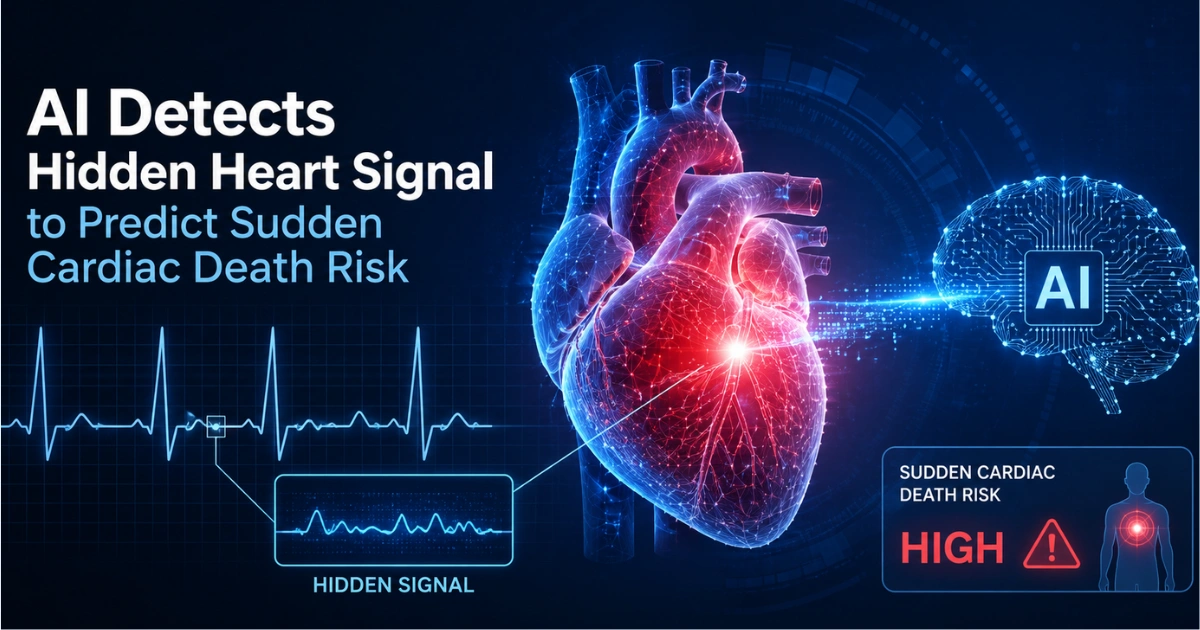
The research used two neural networks instead of one. The first predicted sudden cardiac death risk from a 10-second electrocardiogram (ECG).
The second revealed which ECG patterns the first model relied on, turning its opaque predictions into waveform features that cardiologists could recognize. Building the dataset took nearly a decade.
Obermeyer’s team linked more than 440,000 ECGs collected over six years through Sweden’s unified health system to national death records.
Researchers then validated the model using separate, de-identified patient datasets from a hospital system in San Diego and another dataset from Taipei.
Rather than producing only a risk score, the model uncovered a previously unknown ECG waveform pattern. That pattern points to a possible physiological mechanism behind sudden cardiac death that researchers had not formally identified before.
Why this could change who actually gets a defibrillator
The clinical problem is well known but remains difficult to solve.
Doctors currently rely on left ventricular ejection fraction, a measure of how efficiently the heart pumps blood, to decide who should receive an implantable defibrillator.
However, many people who later die from sudden cardiac arrest have normal ejection fraction readings. Others were never tested. At the same time, many patients identified as high risk never need the device.
The AI model improved on both fronts. It identified a high-risk group representing about 2.2% of the study population. This group had an annual sudden cardiac death rate of 7%, compared with 4.6% among patients flagged by standard screening.
Today’s screening methods would have missed more than 86% of the patients identified by the AI.
Researchers also studied patients who received defibrillators after the AI identified them. Their mortality fell by about 54% compared with expected outcomes without the device.
Obermeyer has been careful to frame the tool as a trigger for more testing rather than a standalone diagnosis, arguing that its real value is directing people toward the traditional risk markers doctors already trust, not replacing a cardiologist’s judgment with an algorithm’s output.
Extracting new medical knowledge
The bigger significance may be less about this one biomarker and more about the method.
Rather than simply automating an existing diagnostic process, the two-model approach let researchers extract a genuinely new piece of medical knowledge from data that already existed in hospital archives worldwide, then hand that discovery back to human clinicians in a form they can independently verify.
Obermeyer has since built a public interest list for people who want access once the tool moves beyond research use, though that step still depends on further clinical validation before it reaches a doctor’s office as a standard test.
Source: Official UC Berkeley research announcement, "AI Detects Hidden Heart Signal That May Predict Sudden Cardiac Death"