
Generative artificial intelligence is evolving rapidly. As a result, it is reshaping how we interact with digital media. In fact, harmless creative projects can quickly spiral into major real-world disruptions.
What might begin as a fleeting experiment with an AI generator on a smartphone can rapidly spiral into a massive public safety response.
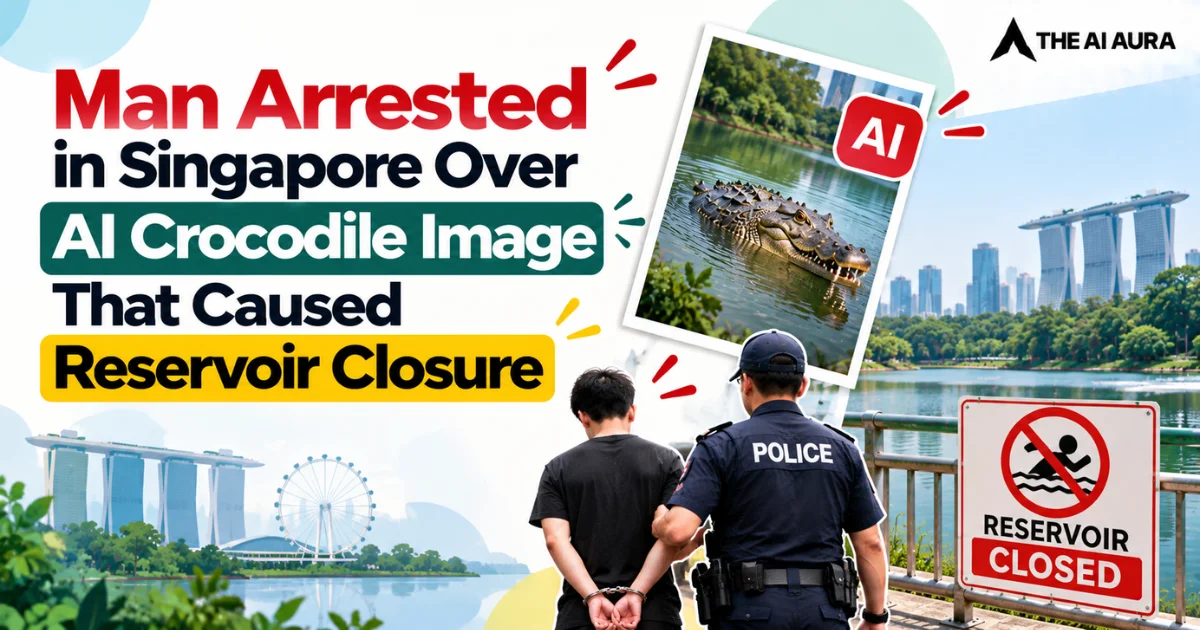
This exact scenario recently unfolded in Singapore. A hyper-realistic image of a crocodile swimming in a local reservoir triggered widespread panic. Consequently, civic authorities had to spend substantial resources investigating the false alarm.
The Real-World Cost of a Digital Hoax
The fake image showed a large reptile swimming in Pandan Reservoir. Because Singapore prioritizes citizen safety, officials took the report seriously. Therefore, the national water agency immediately halted operations around the reservoir for two days. In addition, local sports clubs felt the disruption right away.
For example, rowing and canoeing groups canceled all scheduled water activities. Meanwhile, reservoir personnel and wildlife specialists conducted an extensive search of the water body.
According to a detailed report published by NDTV, authorities eventually concluded that the entire scare was a digital fabrication. The ensuing police investigation quickly traced the origin of the manipulated media to a 30-year-old Myanmar national named Ye Lin.
Court documents revealed that on August 20, Lin utilized an AI application to render the fake image and sent it directly to a colleague named Min Min Oo, inadvertently setting off a chain reaction of municipal disruption that wasted valuable time and taxpayer resources.
Legal Repercussions and the Attempted Cover-Up
Once the gravity of the reservoir closure became apparent, Lin took deliberate steps to distance himself from the chaos. Recognizing that law enforcement was investigating the origin of the panic, he actively attempted to conceal his digital footprint.
The day after sharing the fabricated image, he systematically deleted the picture from his device and scrubbed the log history from the Gemini application he had used to generate the hoax.
However, this panicked effort to hide his tracks only escalated his legal peril once the Singapore Police Force successfully identified him as the primary suspect.
Authorities swiftly moved to prosecute, charging Lin with communicating a false message. Under Singapore’s strict regulatory framework regarding public misinformation, this offense alone carries a potential penalty of up to three years in prison alongside a fine of nearly $8,000.
The situation worsened due to his subsequent actions. By intentionally wiping the generative AI application and its data logs to thwart the police inquiry, Lin earned a secondary, much heavier charge of obstructing the course of justice.
This specific offense carries a maximum sentence of seven years behind bars, a substantial fine, or both.
Legal representatives indicate that Lin fully intends to plead guilty to the charges when he returns to court on November 10.
The swift arrest and severe charges highlight the Singapore Police Force’s zero-tolerance policy toward digital misinformation. The incident serves as a definitive warning that hiding behind advanced technology will not shield individuals from the severe real-world consequences of inciting public panic.