
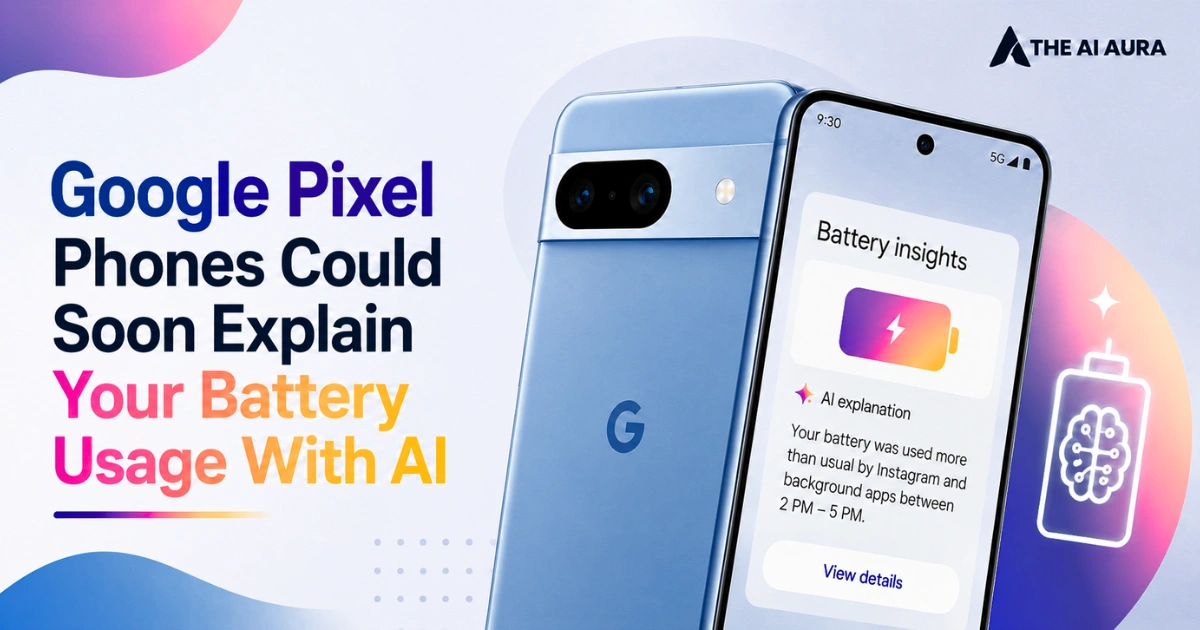

We have all been there: staring blankly at the battery menu on our smartphones, trying to decipher a generic, sloping graph to figure out where the last 30% of our charge went.
Despite manufacturers packing physically larger cells into devices every year, managing screen-on time remains an incredibly frustrating guessing game.
For over a decade, Android’s battery health section has essentially acted as a passive observer. It shows you that a specific app drained a certain percentage of power, but it stops short of telling you what to actually do about it.
Google is evidently aware that these basic charts are no longer enough for the modern smartphone user.
Based on recent code strings buried within Android beta builds, the company is preparing a fundamental shift in how Pixel devices diagnose power consumption.
By integrating on-device artificial intelligence, Google wants to transform the battery menu from a confusing data dump into an active, personalized consultant that explicitly tells you how to keep your phone alive longer.
Demystifying Power Drain with Local AI
Google internally calls the upcoming feature “Battery usage summaries.” This tool will fundamentally change how Android analyzes your daily habits.
The system goes beyond tracking raw drain. Instead, it leverages Gemini Nano to read and interpret your battery logs. Gemini Nano is Google’s highly efficient, on-device AI model.
When you navigate to the Battery Health section and trigger the summary, Gemini Nano instantly begins looking at your exact usage patterns over a rolling 14-day period. What makes this implementation particularly clever is its selective focus.
The AI is specifically programmed to ignore system-level applications. Since core software like Google Play Services or the Android operating system itself cannot be disabled or heavily restricted without breaking the phone, generating insights about them would be a waste of computing power.
Instead, the AI focuses exclusively on the third-party apps you actively open, swipe through, and leave running in the background.
Privacy is a massive concern when dealing with this level of behavioral tracking, which is exactly why Google is relying on Gemini Nano. The processing happens entirely on device. Your exact app usage, screen times, and habits never leave your phone, ensuring that your data remains strictly confidential while the AI generates its personalized tips.
Moving From Passive Stats to Actionable Advice
This feature offers actionable solutions rather than just raw data. The AI parses your two-week history and goes beyond simple bar charts. It generates plain-text, personalized recommendations to stretch your battery life.
These tips perfectly match your unique daily routine. Google built a direct feedback loop into the interface to ensure helpful results.
Users can rate the AI’s advice using tags like “Insightful” and “Useful actions.” Alternatively, they can flag summaries as “Inaccurate” or “Hard to understand.”
This diagnostic process relies heavily on local machine learning. Therefore, a hardware compatibility catch exists. Generating these complex summaries requires dedicated neural processing power.
Google will almost certainly restrict this feature to devices supporting Gemini Nano. Users holding devices older than the Pixel 8 series will likely miss out.
The interface currently throws standard “check back later” errors in beta testing. However, Google already put the underlying framework firmly in place.
Pixel users can expect these AI-powered battery diagnostics soon. They will likely roll out in an upcoming Pixel Drop. This update will bring much-needed intelligence to everyday smartphone endurance.
Source: Official Android Authority, "Pixels Could Soon Get AI-Powered 'Battery Usage Summaries'"