
The fundamental architecture of white-collar labor is collapsing under the weight of generative models. We are no longer talking about simple task automation where an algorithm sorts of emails or formats a spreadsheet. The current shift is structural.
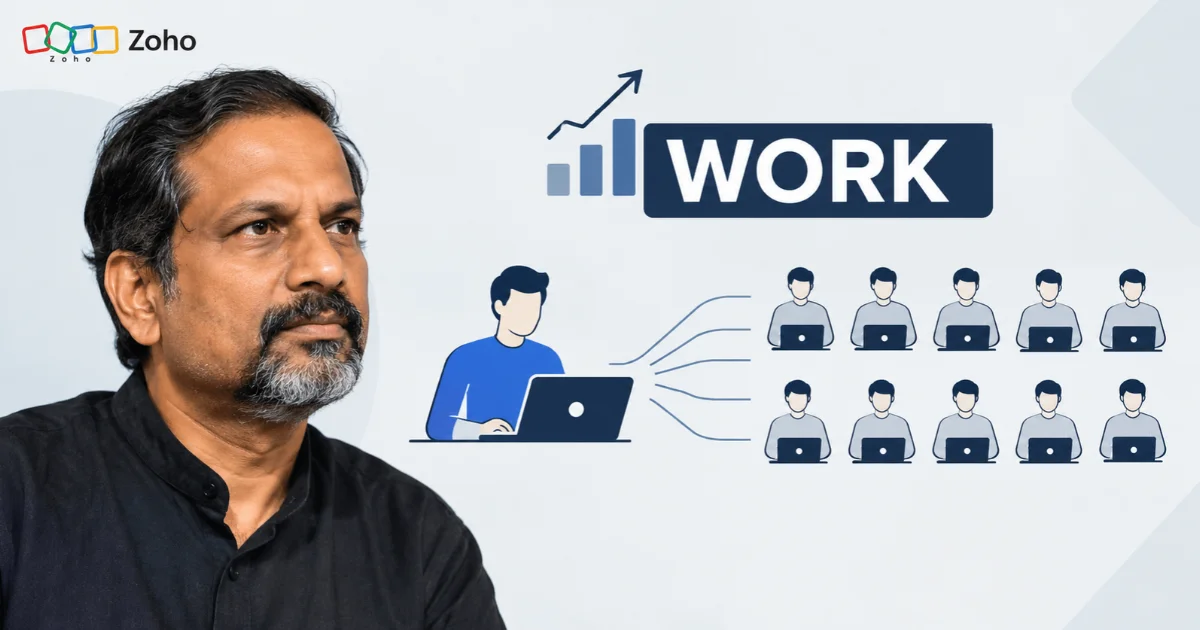
Zoho founder Sridhar Vembu recently articulated a brutal reality for the software industry and screen-bound knowledge workers: the amplification of individual output has reached a tipping point where a single capable operator can absorb the bandwidth of an entire department.
This is not a futuristic projection. It is a live operational dynamic playing out in enterprise deployments right now.
The Mechanics of Workflow Compression
To understand exactly how one developer or digital worker replaces ten, you have to look at the friction inherent in traditional corporate production. Historically, building a software feature required a supply chain of human capital. A senior architect designed the system, junior developers wrote the boilerplate code, QA engineers tested it, and operations deployed it.
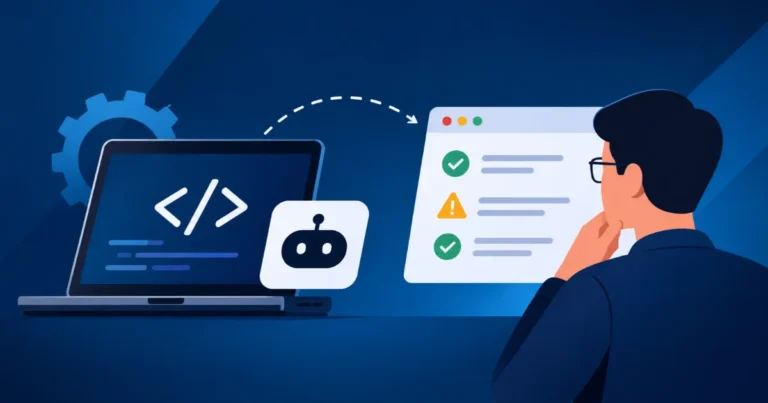
Every handoff introduced latency, miscommunication, and idle time. Generative AI fundamentally flattens this supply chain. A senior operator now functions as an orchestrator, directing a swarm of large language models to instantly scaffold databases, write API connectors, and generate test scripts concurrently.
According to a recent report by India Today at India Today, Vembu stressed that any job performed entirely on a computer carries this extreme vulnerability because the raw execution of digital tasks has been commoditized. But the reality on the ground is highly chaotic.
This 10x output requires a massive cognitive load on the single human in the loop. The AI frequently hallucinates phantom dependencies, drops crucial logic when context windows overflow, and spits out spaghetti code that looks functionally correct until it crashes in a staging environment.
The single operator isn’t just typing faster; they are spending their days frantically debugging aggressive AI outputs, managing API throttling limits, and fixing broken syntax.
The ten displaced workers aren’t missing because the AI is flawless. They are missing because one exhausted, highly competent veteran armed with sophisticated models can brute-force the project to completion faster than managing a team of juniors.
The Eradication of the Coordination Layer
The secondary driver of this massive job consolidation is the absolute destruction of the middle coordination layer. In a standard ten-person team, at least three people exist purely to manage the other seven.
Product managers, scrum masters, and technical writers spend their days moving project tickets and translating requirements between technical and non-technical staff. AI inherently eliminates this translation overhead.
An experienced developer no longer needs a business analyst to interpret a client request. They feed the raw client transcript directly into a model, which instantly outputs the required technical architecture and user stories.
The human operator then commands an agentic coding framework to build the prototype. The bottleneck shifts rapidly from human communication to machine latency
When you strip away the daily stand-up meetings, the endless chat threads, and the agonizing peer review cycles waiting on human availability, the raw speed of software delivery multiplies exponentially.
Yet, this consolidation introduces a fragile single point of failure. If that lone operator misconfigures the semantic routing or fails to catch a subtle logic vulnerability hallucinated by the model during a late-night sprint, the entire deployment pipeline fractures.
Organizations are realizing that a bloated engineering team actually slows down an AI-augmented senior developer, but they are also discovering the brutal cost of algorithmic technical debt.
The enterprise calculation is permanently shifting from hiring more human hands to renting more cloud compute, forcing a labor market where only the hyper-vigilant orchestrator survives.