
The prevailing narrative dominating tech boardrooms is that artificial intelligence is poised to entirely gut the Indian IT services sector.
Analysts routinely project massive job displacements as automated coding assistants and large language models threaten to instantly commoditize offshore software development.
The reality on the ground, backed by hard deployment metrics, tells a vastly different and deeply pragmatic story.
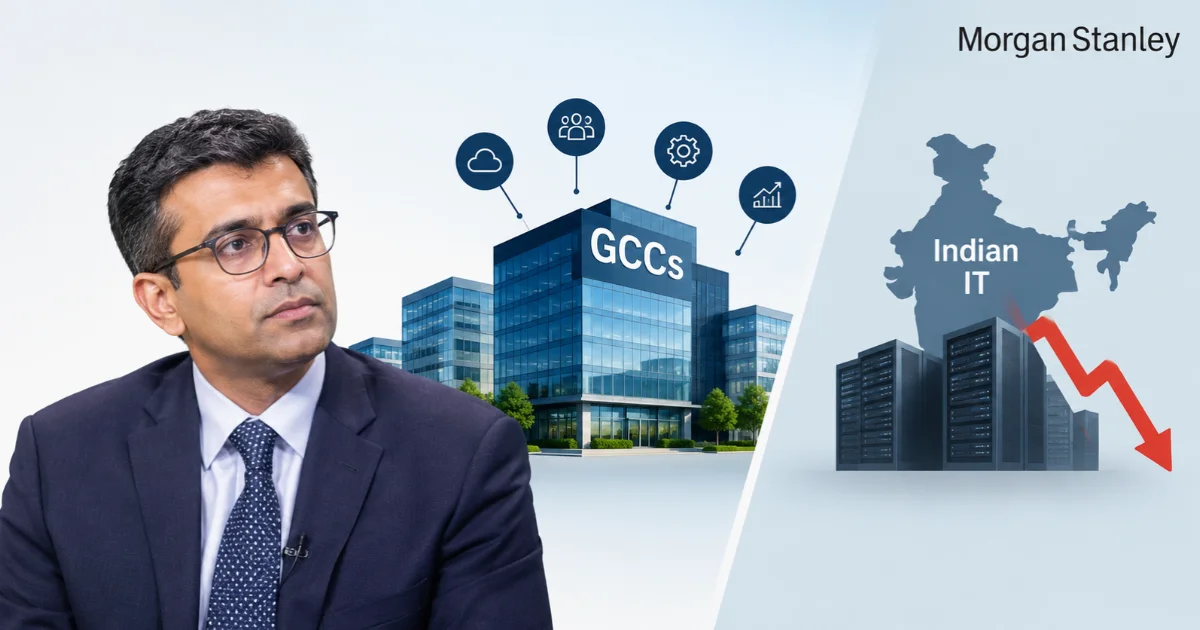
Generative AI is currently a noisy distraction masking a much quieter, structural shift that actually impacts vendor balance sheets right now. The immediate existential threat to legacy outsourcers is not an algorithm. It is the aggressive physical expansion of Global Capability Centers.
Enterprise clients are no longer satisfied with the standard black-box outsourcing model. They are bypassing the traditional vendor ecosystem entirely to build massive, proprietary tech hubs directly on Indian soil.
The Economics of Insourcing Over Automation
When a major global corporation establishes a captive capability center in Pune or Hyderabad, they are fundamentally rewriting their operational architecture. Historically, foreign enterprises relied heavily on third-party IT firms to handle backend development, legacy system maintenance, and infrastructure operations.
The vendor managed the massive talent pools, absorbed the local administrative overhead, and charged a significant margin for the convenience. That archaic model is rapidly breaking down under the weight of changing corporate priorities.
Western corporations realized they could hire the exact same engineering talent directly. This allows them to retain critical intellectual property, tighten security protocols, and drastically cut out the vendor middleman.
The resulting pressure on traditional Indian IT is immediate, localized, and highly quantifiable.
Vendors are actively bleeding their most experienced technical leads, product managers, and domain experts to these newly established GCCs. These captive centers routinely offer aggressive compensation packages, better work-life integration, and direct pathways into global product teams.
According to direct remarks by Ridham Desai, Managing Director at Morgan Stanley India, during the News18 Rising Bharat Summit as reported extensively at Money control, the empirical data simply does not support the fear that AI is causing a catastrophic disruption for domestic IT firms today.
The actual revenue compression stems directly from enterprise clients choosing to own their technical operations rather than renting them. It is a harsh supply chain correction.
Why Code Generation Fails to Replace Architecture
The widespread panic surrounding AI coding tools stems from a fundamental misunderstanding of what enterprise IT services actually sell to their clients. Large vendors do not just sell raw, isolated lines of code.
They sell operational stability, complex legacy system integration, strict regulatory compliance, and massive architectural transformations. Generative AI undoubtedly makes writing boilerplate software significantly cheaper and faster.
It acts exactly like a commercial power drill replacing a manual hand tool on a construction site. Yet, handing a fast power drill to a junior developer does not automatically build a secure, highly scalable, latency-optimized banking application.
As the raw cost of code production drops due to AI adoption, the sheer volume of technology consumed by global businesses will inevitably surge. Cheaper technology historically expands the total addressable market.
The overall engineering workload will increase, requiring complex human oversight, deterministic guardrails, and stringent cost control over cloud deployments. The real danger for traditional Indian IT is not that AI will automate away the enterprise work.
The danger is that the client’s newly empowered internal GCC will take direct command of those expanded AI workloads. That leaves legacy vendors fighting brutal pricing wars over shrinking, highly commoditized maintenance contracts.