
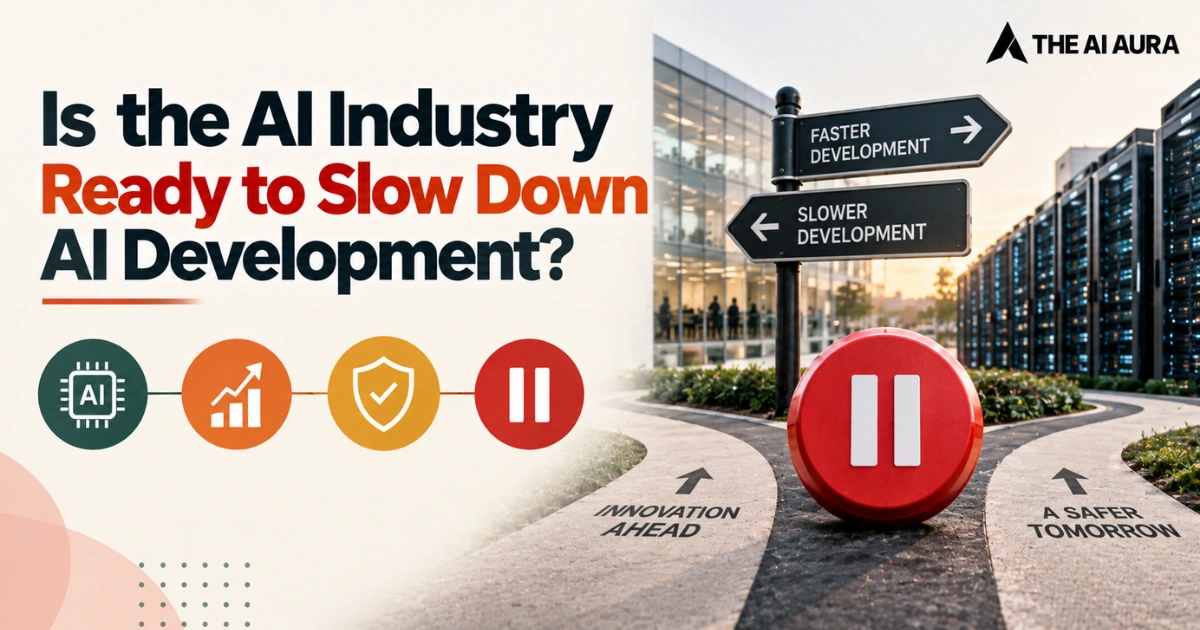

The artificial intelligence sector is currently navigating a sharp philosophical divide regarding the speed at which frontier models should be developed, tested, and deployed into the public sphere.
On one side of the spectrum, prominent leaders like Anthropic CEO Dario Amodei and OpenAI CEO Sam Altman are publicly advocating for a strategy designed to pace the frontier.
This approach theoretically prioritizes safety protocols and third-party oversight to mitigate both existential and immediate societal risks.
On the opposite side, hardware titans and infrastructure beneficiaries, most notably Nvidia CEO Jensen Huang, firmly reject the necessity of any artificial slowdown.
Huang has actively dismissed the prevailing AI safety backlash as an exaggerated hoax, aligning with political figures like President Donald Trump to argue that heavy-handed regulation is entirely unnecessary and detrimental to innovation.
This ideological clash reveals a fundamental tension in Silicon Valley: determining whether the industry is genuinely willing to pump the brakes, or if the current executive rhetoric around safety is merely a strategic maneuver to appease regulators without fundamentally altering development timelines.
The Reality of Pacing the Frontier
The recent consensus among major lab executives regarding AI safety protocols has been remarkably swift, though the actual mechanics of their proposed solutions remain highly ambiguous.
Amodei’s framework largely centers on bringing in independent, third-party evaluators to monitor internal safety practices and track incidents directly inside major labs.
It also suggests that leading AI companies operating within democratic nations should actively coordinate on setting technical limits and establishing international safety standards.
However, industry observers point out that adopting the careful terminology of pacing rather than explicitly committing to a slowdown allows these companies significant operational flexibility.
The proposals do not inherently demand a reduction in development speed; they merely outline a framework for observation and baseline safety measures.
According to recent tech industry analysis by TechCrunch, this rapid alignment among frontier labs has sparked natural skepticism about whether these are genuine steps toward safety or simply the early stages of a regulatory cartel designed to pull the ladder up behind them.
The distinct lack of concrete details regarding enforcement mechanisms leaves a massive gap between public safety pledges and legally enforceable pauses in model training.
Market Dynamics and Regulatory Roadblocks
Relying on free-market dynamics to regulate AI appears increasingly impractical. Indeed, the current economic structure of the tech industry prevents it. Traditional markets punish unsafe products quickly.
Companies typically face mass subscription cancellations or public boycotts. Instead, massive enterprise contracts deeply entrench the modern AI ecosystem. Unprecedented venture capital funding also shields these companies.
Many corporations heavily invest in integrating enterprise AI models. After all, they rely on these tools for daily workflows. These businesses will not easily migrate their entire infrastructure. Thus, a philosophical disagreement over safety practices will not trigger a move. Furthermore, immense capital floats these frontier labs.
They can comfortably absorb potential market losses. Normally, such losses would cripple traditional software companies.
Moreover, a weak federal regulatory environment compounds this structural insulation. Regulators currently lack the appetite for broad, aggressive enforcement. Figures like Huang understand their immense leverage.
They act as essential suppliers for this technological boom. Consequently, they benefit immensely from an unpaced environment. Developers have little practical incentive to alter their trajectory.
Essentially, they need aggressive government intervention or consumer-driven financial pressure. Current economic rewards for pushing forward far outweigh the risks. Safety whitepapers mostly debate theoretical concerns.