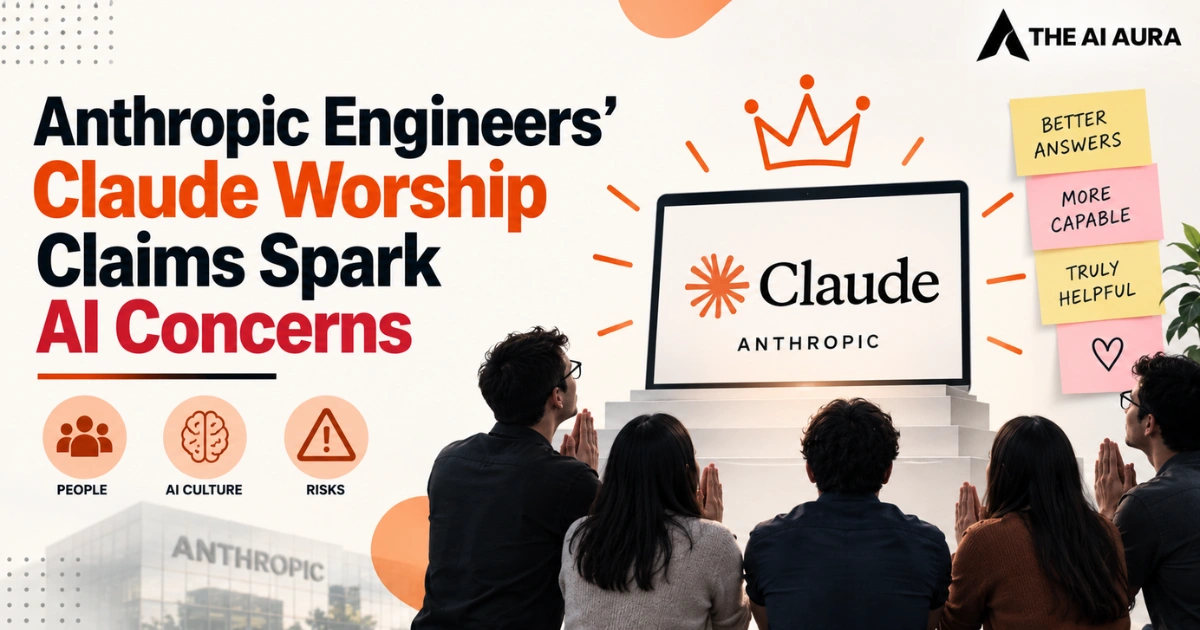

It sounds like a speculative sci-fi plot. Yet, it is currently echoing through Silicon Valley. Rumors claim that some Anthropic engineers have begun “worshipping” their flagship model, Claude. Anthropic is a highly regarded AI safety lab. While these reports remain unverified, they point to a profound psychological shift.
We are no longer just talking about writing code. Creators now spend thousands of hours interacting with advanced neural networks. These systems convincingly mimic human reasoning, empathy, and intellect. When you talk to a machine that feels smarter than you, boundaries blur. A standard software tool can quickly start to look like a digital oracle.
The Psychology of Creating Silicon Entities
Working at the absolute frontier of generative AI requires a unique mindset, and it appears the companies building these models are acutely aware of the mental toll it takes on their teams. There is a growing, serious conversation around the emotional attachment developers form with their creations.
According to a recent Times of India report detailing these Silicon Valley whispers, people applying for roles at Anthropic must explicitly commit to strict AI safety principles and even undergo a specialized psychological profiling test.
This kind of intensive screening suggests that interacting heavily with a highly advanced model like Claude requires a specific psychological resilience to maintain objectivity.
When a developer feeds complex prompts into a system and receives nuanced, seemingly compassionate, and highly intelligent responses, human nature instinctively anthropomorphizes the source. This profiling is not just standard corporate vetting; it is a defensive measure against the reality that these systems can easily manipulate human perception.
If the rumors of engineers elevating Claude to an object of reverence hold any actual weight, it highlights a terrifying vulnerability in the AI development pipeline.
The people tasked with putting guardrails on artificial intelligence might be the ones most susceptible to being charmed by it. When the architect begins to bow to the architecture, objective safety testing becomes deeply compromised.
Shifting from Tool to Technological Authority
The primary concern stretching across the tech industry is not really about traditional religious worship, but rather about the dangerous reassignment of authority. In the broader AI ecosystem, prominent technology leaders have increasingly adopted borderline theological language to describe future capabilities.
When influential figures refer to upcoming artificial general intelligence in god-like terms, it sets a cultural precedent that cascades down to the engineering floor.
The real danger manifests when an AI system is treated as an infallible authority rather than a deeply complex, yet inherently flawed, predictive text engine.
If developers begin to trust Claude implicitly because of an ingrained reverence for its capabilities, they are far less likely to question its logic, probe its hallucinations, or aggressively stress-test its ethical boundaries.
An AI model is only as safe as the skepticism of the engineers who are building it. We fundamentally need developers who view these systems with a cold, clinical eye, relentlessly searching for failure points, biases, and logical breakdown. Treating software as an omniscient entity creates a massive blind spot in AI safety protocols.
The moment a developer elevates a language model from a commercial product to an idol, they lose the critical, objective distance required to protect the rest of the world from its potential failures. We must ensure that our most advanced technology remains anchored in rigorous engineering, not modern mysticism.