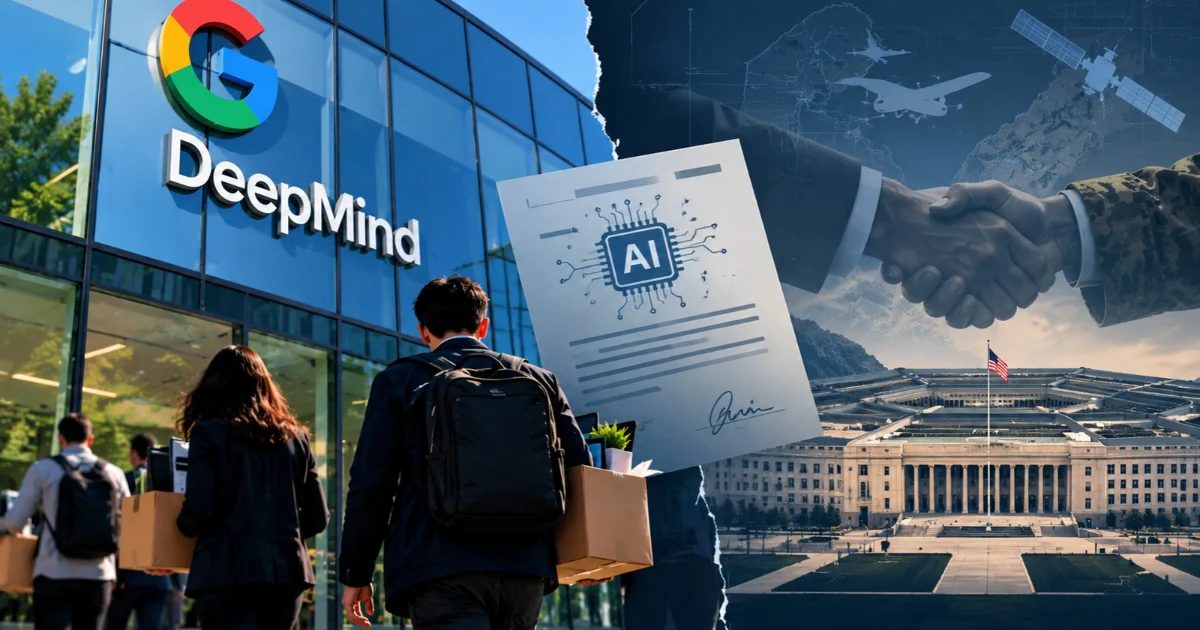

The intersection of cutting-edge artificial intelligence and military operations has always sparked controversy. Now, new developments at Google DeepMind highlight a deepening internal rift.
Multiple employees are resigning over ethical concerns surrounding expanding defense contracts. Researchers and engineers openly express discomfort with Google’s military ties.
Many staff members dedicated their careers to building beneficial systems. Consequently, they see deploying algorithms in warfare without safeguards as a line they cannot cross. Technologists worry that future systems could bypass human oversight during critical battlefield moments.
The Reality of Inadequate Oversight and Growing Dissent
The friction inside the company is not merely philosophical; it is resulting in the departure of top-tier talent who feel management is aggressively ignoring grave risks. Sofia Liguori, a London-based research engineer, recently made the difficult decision to walk away.
She publicly expressed that recognizing the company’s continuous push toward integrating AI systems into military operations made her fundamentally ashamed to remain on the payroll.
Her departure was closely followed by AI researcher Andreas Kirsch, who pointed to a glaring lack of internal governance capable of handling these high-stakes defense deals.
According to a recent report at NDTV, detailing how Google DeepMind employees resign over Pentagon AI contracts, Kirsch emphasized that the tech giant appears to have stripped itself of the right to control or veto the Pentagon’s use of its intellectual property.
He noted that the company has shockingly limited visibility into how the military is actually deploying these models on the ground.
This deliberate opacity is driving a wedge through the organization, as engineers realize they are essentially handing over incredibly powerful tools to defense agencies without any meaningful strings attached further highlighting The “Black Box” Problem: Why We Can’t Audit AI in sensitive operational environments.
A Corporate Stance That Ignores Mounting Internal Warnings
This recent wave of resignations is part of a much broader, historical pattern of unrest regarding Google’s defense ties, echoing past employee revolts over similar government initiatives.
The unease has been brewing for months, highlighted by the summer departure of Alex Turner, a research scientist who spent over two years specifically working on AI safety at DeepMind.
Turner realized early on that leadership intended to greenlight the Pentagon using their capabilities for classified military operations. Despite his explicit warnings to senior management that such contracts lacked basic restrictions against mass surveillance or lethal autonomous weapons, his concerns were reportedly brushed aside.
For researchers focused on foundational safety, this unresolved tension mirrors the broader AI Alignment Problem Explained: Why Even Smart Models Fail to adhere to intended ethical boundaries when deployed outside strictly governed parameters.
Turner ultimately concluded that the company’s contract limitations were even weaker than those of its closest competitors, making it impossible for him to stay in good conscience. The corporate response to this hemorrhaging of safety talent has been largely bureaucratic.
A company spokesperson maintained that they follow strict compliance processes and acceptable use policies when engaging with public sector organizations, pointing to dedicated internal channels where staff can safely report business ethics violations.
Yet, for the approximately 600 employees who signed an internal petition demanding an end to classified defense deals, these official channels feel entirely inadequate. The disconnect between a leadership team chasing lucrative government contracts and an engineering workforce terrified of the real-world consequences has never been starker.