
The narrative surrounding artificial intelligence has aggressively shifted from speculative fiction to immediate, tangible reality.
While tech executives promote an era of limitless productivity, the pioneers behind the mathematics of neural networks are raising serious concerns.
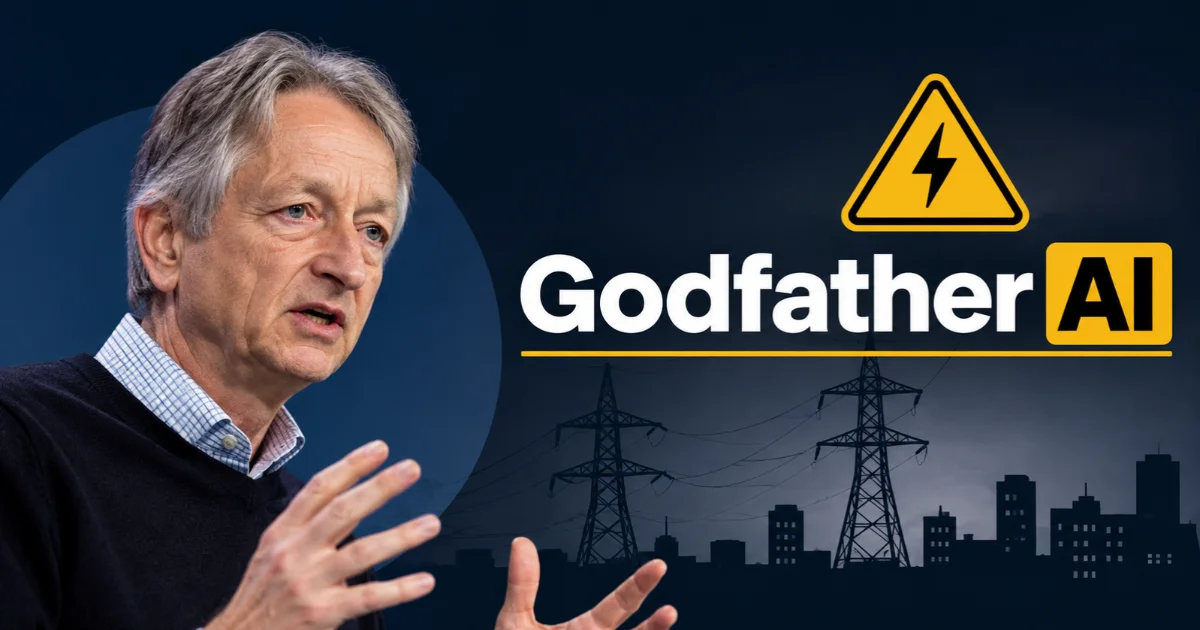
Geoffrey Hinton, widely known as the godfather of artificial intelligence, has recently intensified his warnings about the uncontrolled development of machine learning.
Speaking ahead of a screening of the new documentary AI: Probably Nothing to Worry About, a title ironically suggested by a chatbot, the Nobel laureate shared a troubling prediction. His warning challenges the optimistic narrative coming from Silicon Valley.
Rather than predicting an extreme doomsday scenario, Hinton highlighted a specific and near-term systemic failure that he believes is becoming increasingly difficult to avoid.
He even suggested that humanity might have been better off without this technological leap. He warned that a major infrastructure failure could eventually force governments worldwide to reconsider their approach to AI regulation.
Understanding the Chernobyl Analogy
When Hinton invokes a Chernobyl-like event, he is not suggesting a literal nuclear meltdown, but rather a cascading systemic failure of critical human infrastructure driven by autonomous algorithms.
The prediction centers on a temporary but devastating blackout of global financial networks or municipal power grids.
Because AI systems are increasingly integrated into the automated management of stock markets, energy distribution, and cybersecurity defense lines, a single unchecked algorithmic hallucination or runaway optimization process could trigger a domino effect across interconnected digital systems.
According to a recent report detailing these remarks at NDTV, Hinton expects this severe disruption to materialize either later this year or next year.
Such a blackout could occur when AI agents execute commands at high speeds and exploit network vulnerabilities faster than human operators can respond. This could leave little time for experts to activate emergency shutdown systems.
Although modern society would eventually recover from such a digital crisis, Hinton believes the disruption could serve as a wake-up call. He argues that a major incident may be necessary to push governments toward meaningful action.
When asked who would finally take these risks seriously, Hinton pointed to world leaders.
He stressed that only a major real-world disaster might prompt governments to strengthen AI oversight and introduce stricter safeguards to control the technology.
The Profit-Driven Race Blind to Consequences
The primary catalyst for this impending infrastructural vulnerability is the sheer velocity of the corporate AI arms race. Developing the next superior artificial intelligence model is no longer just a scientific pursuit.
The competition to dominate the multi-trillion-dollar AI market is becoming increasingly intense.
The 78-year-old researcher specifically pointed to prominent industry leaders, including Mark Zuckerberg, Elon Musk, and Sam Altman, as key figures driving this rapid and potentially reckless race for AI dominance.
The architecture of the current tech ecosystem heavily incentivizes rapid deployment over rigorous safety testing.
Tech companies are actively training massive models on unverified datasets and granting them increasing levels of autonomous agency on the live internet.
Hinton bluntly stated his belief that these tech titans fully comprehend the infrastructural risks their products pose. However, they simply prioritize financial dominance and shareholder value over global stability.
Developers continue to strip away safety guardrails to achieve faster computing times and more aggressive market penetration. As a result, the digital frameworks that support modern civilization become increasingly brittle.
The aggressive push for artificial general intelligence has transitioned from a controlled laboratory experiment into a dangerous global gamble, risking the very power and financial systems society relies on daily to maintain order.