
Elon Musk’s recent forecast of a mass extinction event among AI cloud providers has injected a dose of financial reality into a market historically driven by hype. While hardware giants like Nvidia continue to report unprecedented demand for computing capacity, the underlying infrastructure sector is beginning to crack under the weight of rapid expansion.
This tension centers entirely on “neoclouds” specialized companies that borrow aggressively to build data centers packed with high-end GPUs, which they then lease to AI developers.
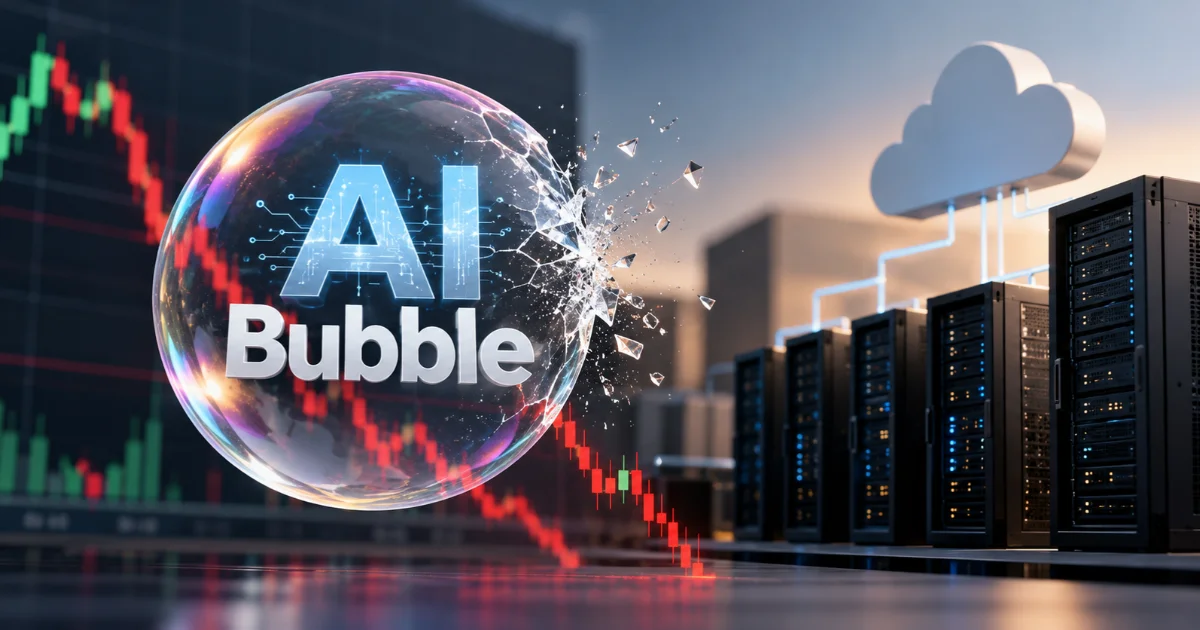
The current turbulence in this sector suggests we are not witnessing the outright bursting of the AI bubble, but rather a violent financial correction where tightening credit markets systematically squeeze out the excess.
The Squeeze on Debt-Fueled Infrastructure
The fundamental vulnerability of neoclouds lies in their capital-intensive business model. These providers must finance massively expensive hardware long before they generate the steady rental revenue required to pay for it.
When borrowing costs rise and bond prices fall, their unit economics deteriorate rapidly, regardless of how strong customer demand remains. We are already seeing this operational strain manifest in real time.
According to a recent market analysis published at The Economic Times, prominent players in the space have seen their long-term bonds trade significantly below face value, signaling severe investor anxiety over credit risk and debt servicing.
Market strategists view this dynamic not as a systemic collapse, but as a necessary deflation of speculative excess. Lenders are simply demanding higher yields from companies heavily leveraged with fragile balance sheets.
This dynamic forces undercapitalized providers to sell off assets or halt expansion, effectively transferring computing capacity to better-funded operators. The credit market is stepping in to enforce a strict financial discipline that equity investors largely abandoned during the initial rush to secure AI computing power.
Revenue Realities and the Big Tech Buffer
The broader concern extends beyond near-term borrowing costs to the long-term viability of AI monetization. Industry forecasts project that data center owners will require massive cumulative revenue by the end of the decade to cover their hardware investments, financing costs, and a baseline return on invested capital.
Current projections suggest actual AI-driven revenue will fall trillions of dollars short of that necessary breakeven point. Rapidly improving chip efficiency also threatens to make existing hardware less competitive before its initial cost is fully recovered.
This expected revenue shortfall leaves a massive portion of infrastructure spending exposed to impairment, driving estimates that a vast majority of independent neocloud providers will either be absorbed by larger entities or fold entirely over the next few years.
The survival of these specialist firms depends heavily on the spending habits of their largest customers. Big Tech hyperscalers like Amazon, Microsoft, and Alphabet possess massive legacy software and cloud revenues that insulate them from the acute cash-flow crises facing neoclouds.
However, these technology giants are also committing hundreds of billions of dollars to future infrastructure
If the pace of end-user AI monetization fails to accelerate, these hyperscalers may eventually delay or cancel future data center projects.
Should that happen, the localized stress currently contained within the neocloud sector could quickly migrate up the supply chain, impacting chip manufacturers, energy suppliers, and broader technology valuations. The hardware buildout continues today, but the era of unquestioned, unlimited capital for AI expansion has officially closed.