
The market is sprinting toward artificial intelligence, leaving many traditional investors puzzled. Tech firms trade at sky-high multiples, making people wonder if fundamentals still matter.
Billions of dollars now pour into generative models, data centers, and advanced chips. This rapid influx creates a market that feels both promising and frothy.
Aswath Damodaran, widely known as the Dean of Valuation, tracks this shift closely. He avoids the breathless hype without dismissing the underlying technology.
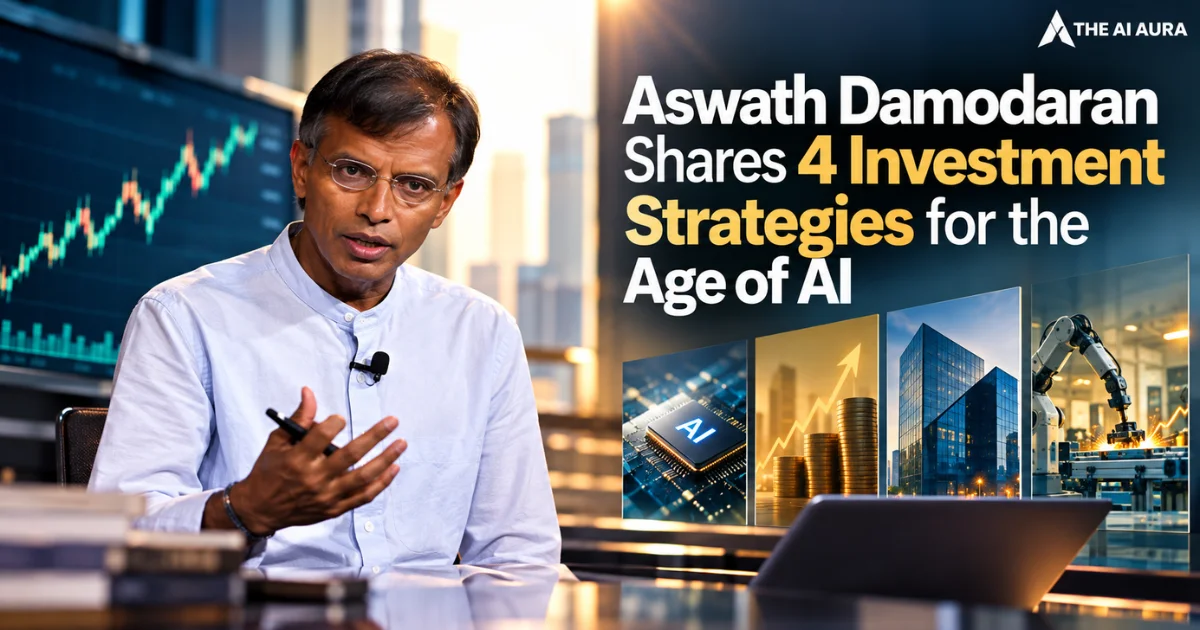
Instead, he evaluates the boom with disciplined corporate finance logic. He argues that investors should not try to guess which startup builds the top model. Instead, they must choose a clear philosophy for a market reshaped by a single megatrend.
Decoding the Market’s AI Obsession
Damodaran organizes the market landscape into clear mental models. The first path leans directly into disruption. Investors take this path when they believe AI productivity gains will rewrite the global economy.
Under this view, capital moves toward the picks and shovels of the digital gold rush. These assets include semiconductor makers, cloud infrastructure providers, and large data aggregators. This aggressive stance requires high risk tolerance and confidence that future cash flows justify current valuations.
If that feels far too concentrated for your risk appetite, there is a second, more moderated approach. According to recent coverage of his framework by Money control, Damodaran suggests that investors can simply choose to ride the broader market consensus.
This strategy acknowledges that the major indices are already heavily weighted toward the presumed AI winners. By holding a diversified index fund, you are implicitly taking a position on artificial intelligence without having to play the dangerous game of picking individual corporate winners or losers.
As capital allocation shifts across the corporate landscape, understanding where 2026 AI budgets are actually going can provide valuable clarity on whether this market momentum is backed by sustained enterprise spending.
It is a pragmatic way to participate in the upside while letting the collective wisdom of the market manage the heavy lifting for your portfolio allocations.
Choosing Your Stance in a Volatile Landscape
Of course, not everyone buys into the idea that valuations can infinitely stretch, and Damodaran explicitly outlines two paths for the non-believers. The third strategy involves staying cautiously skeptical. Taking this route doesn’t mean you have to short the technology sector, but rather that you tilt your portfolio away from the most heavily inflated tech valuations.
You would intentionally pivot toward sectors that the AI hype has largely ignored. You might look for deep value in traditional industrials, energy, or defensive consumer staples that offer a genuine margin of safety.
It is essentially a play on mean reversion, operating on the assumption that the massive gap between high-flying growth stocks and boring value companies will eventually narrow as the initial euphoric phase cools off.
Then there is the fourth option, designed for those who believe we are witnessing a speculative bubble directly mirroring the late nineties dot-com mania. This involves positioning your portfolio for a crash.
It is the most aggressive defensive posture you can take, requiring you to move heavily into cash, highly secure government bonds, or utilize hedging instruments to protect against a sudden, violent repricing of technology assets.
Skeptics often point to operational reality checks such as why 80% of AI projects fail as evidence that enterprise monetization will fall short of market expectations.
Damodaran makes it clear that while this strategy protects your capital during a sharp downturn, it carries a massive opportunity cost if the AI narrative proves to be structurally sound over the next decade.
You have to consciously choose which of these four realities you believe in and align your money accordingly, because sitting entirely on the sidelines without a cohesive thesis leaves your wealth entirely at the mercy of shifting economic winds.